 ·
5 minute read
·
5 minute read
Office fit-out costs are influenced by much more than material prices.
Building condition, labour, specification, programme, procurement, workplace requirements and the timing of key decisions can all affect the final investment.
In 2026, construction input costs remain under pressure, while contractor competition is limiting how quickly those increases are feeding into tender prices. BCIS reported that UK tender prices increased by 3.2% in the year to Q3 2026, while underlying labour, material and energy costs continued to rise.
[BCIS – Construction input costs are outpacing tender prices.
For businesses planning an office refurbishment, relocation or fit-out, the best way to control cost is therefore not to predict exactly what the market will do. It is to reduce uncertainty before construction begins.
.png?width=805&height=805&name=image%20(81).png)
What affects the cost of an office fit-out?
The biggest factors include:
- the size and condition of the building;
- mechanical and electrical requirements;
- design and specification;
- furniture, AV and technology;
- programme and phasing;
- sustainability requirements;
- landlord and statutory works;
- labour and material costs;
- procurement strategy;
- changes made after construction begins.
Two offices of the same size can therefore require very different levels of investment.
If you are setting an initial budget, our Commercial Fit-Out Cost Guide provides indicative UK and European fit-out costs alongside the main factors that influence project spend.
1. Define what the workplace actually needs
One of the simplest ways to control cost is to avoid fitting out space the organisation does not need.
Before developing the design, understand:
- projected headcount;
- peak occupancy;
- working patterns;
- meeting room demand;
- team adjacencies;
- client requirements;
- future growth.
This is where workplace strategy becomes part of cost planning.
A brief based on assumptions can result in too much space, the wrong type of space or expensive design changes later.
Our guide to what large organisations should assess before developing a workplace strategy explains how occupancy, business growth and property requirements should shape the brief. You can also use workplace data to understand how much space is genuinely required.
2. Investigate the building early
Unexpected building conditions are one of the biggest causes of cost increases.
An office may need:
- additional power;
- HVAC upgrades;
- fire strategy changes;
- acoustic improvements;
- structural work;
- accessibility upgrades;
- landlord approvals.
These issues are far easier to deal with during feasibility than during construction.
Technical surveys should therefore happen early enough to influence both the design and the budget. This is particularly important when deciding whether to refurbish an existing office or relocate.
A cheaper property may not result in a cheaper project if significant infrastructure upgrades are required.
3. Keep design and budget aligned
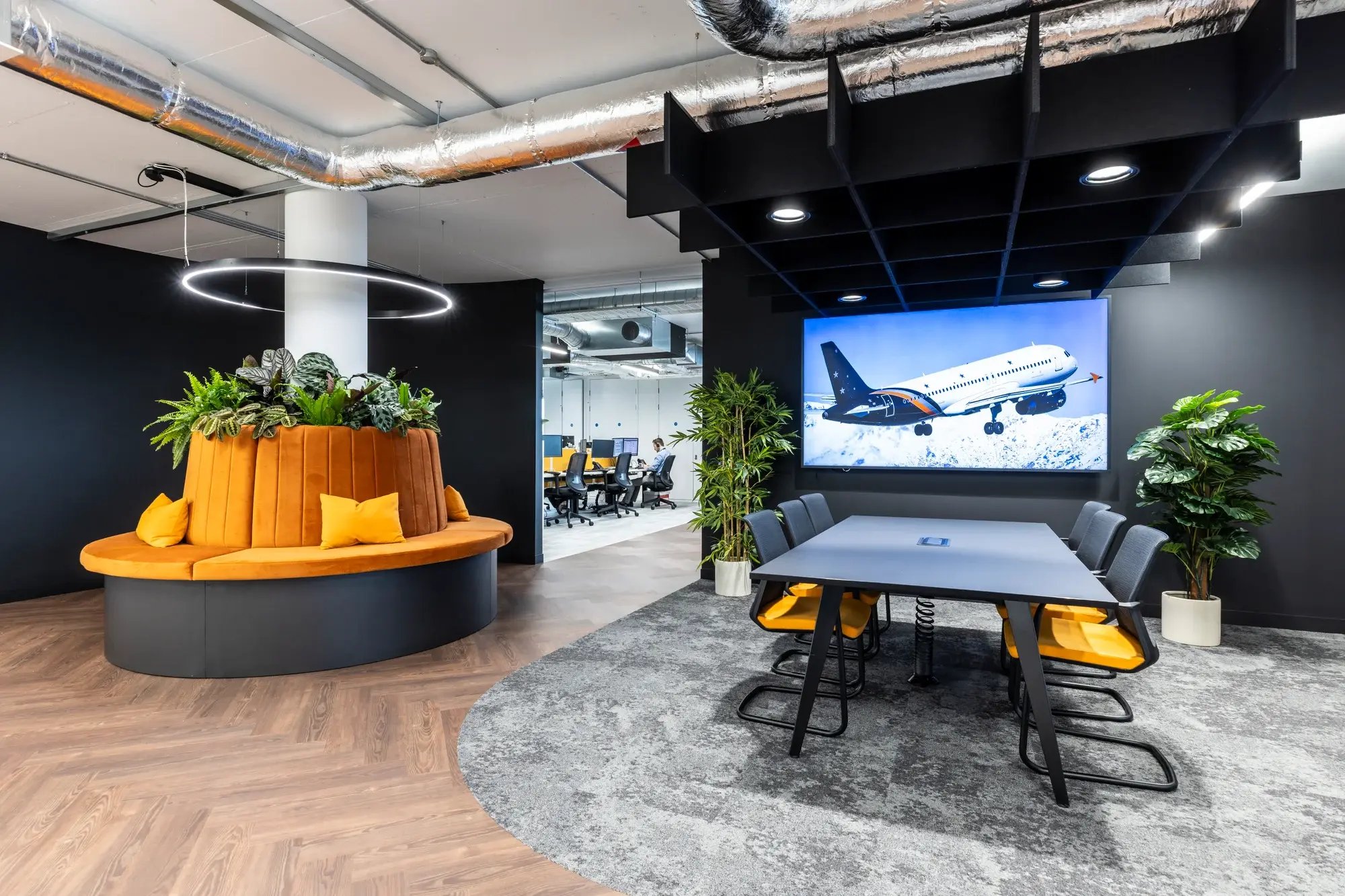
Value engineering works best during design, not at the end of it.
Rather than asking what can be removed once the project is over budget, ask throughout the design process: Can we achieve the same requirement more efficiently?
That might mean:
- simplifying a construction detail;
- changing a material;
- retaining an existing element;
- selecting a more readily available product;
- reducing unnecessary complexity.
The aim should not be to make the workplace as cheap as possible. It should be to protect the elements that deliver the most value while reducing spend elsewhere.
Design ambition and cost are easier to manage when they develop together.
4. Identify procurement risks early
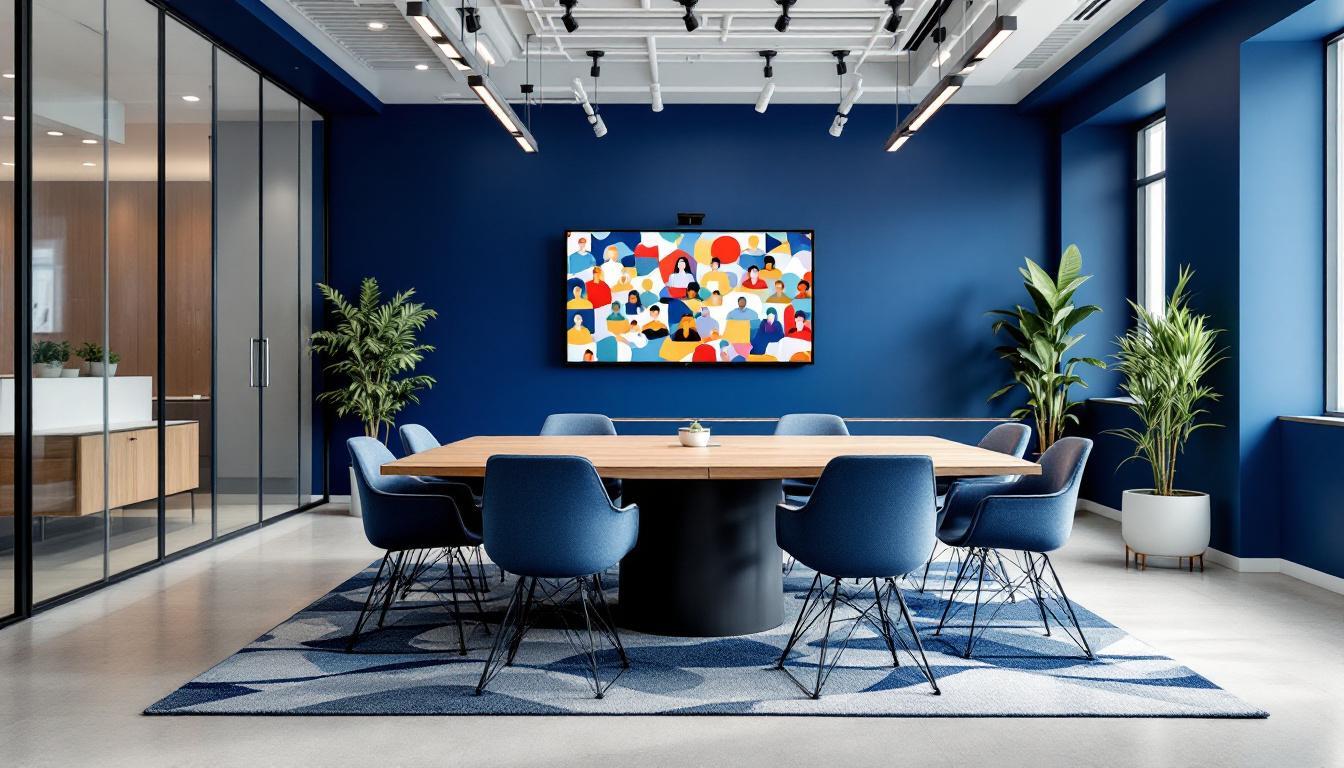
Cost and programme are closely linked.
Long-lead products such as mechanical equipment, specialist lighting, bespoke joinery, switchgear, furniture and AV can affect both.
If these items are identified too late, the project may face a choice between delaying completion or selecting an alternative.
BCIS continues to highlight uncertainty around labour, material, energy and supply-chain costs, making early procurement planning increasingly important. [BCIS – Construction input costs are outpacing tender prices]
Early decisions allow the team to determine whether an item should be:
- ordered early;
- reserved;
- substituted;
- redesigned;
- protected within the programme.
The earlier these risks are understood, the easier they are to manage.
5. Reuse before replacing
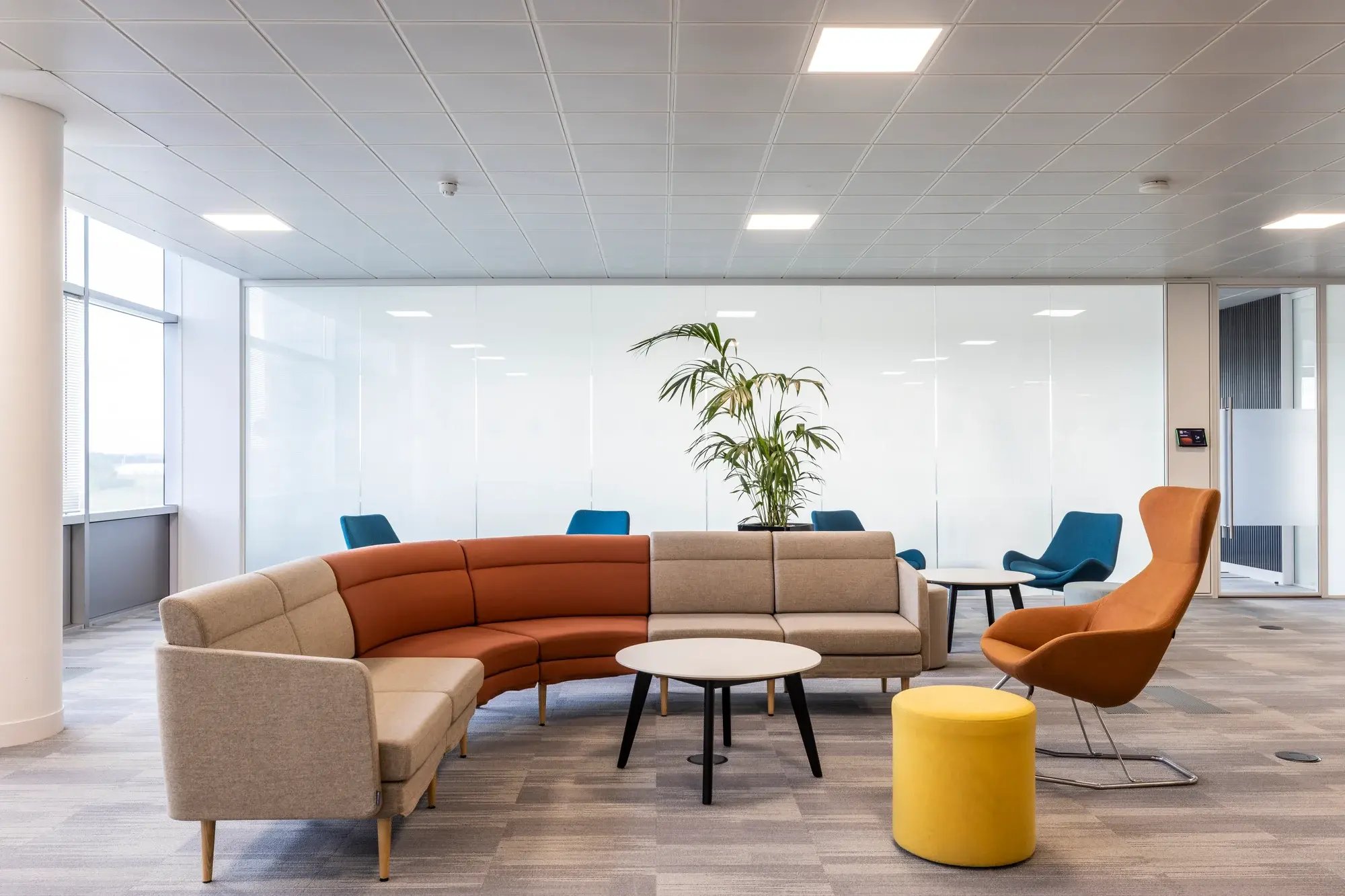
Retaining existing elements can reduce both project cost and embodied carbon.
Furniture, doors, partitions, flooring, ceilings and some building services may still have useful life remaining.
Every item retained can potentially avoid:
- removal costs;
- disposal costs;
- replacement costs;
- delivery;
- installation.
That does not mean keeping infrastructure that no longer performs properly. It means asking what genuinely needs replacing before automatically starting again.
Our guide to designing a more sustainable office looks at this in more detail through the hierarchy:
Retain → Reuse → Refurbish → Recycle → Replace.
6. Allow for genuine project risk
Contingency should reflect the level of uncertainty within the project.
An early-stage fit-out with limited surveys and an undeveloped brief carries more risk than a fully designed project with confirmed suppliers and completed investigations.
Typical risks include:
- unknown building conditions;
- design development;
- programme changes;
- landlord requirements;
- material inflation;
- supply-chain issues;
- client changes.
As those risks are resolved, contingency can become more accurate.
The aim is not to predict every possible problem. It is to identify which uncertainties could materially affect the budget and plan for them.
7. Involve the delivery team before construction
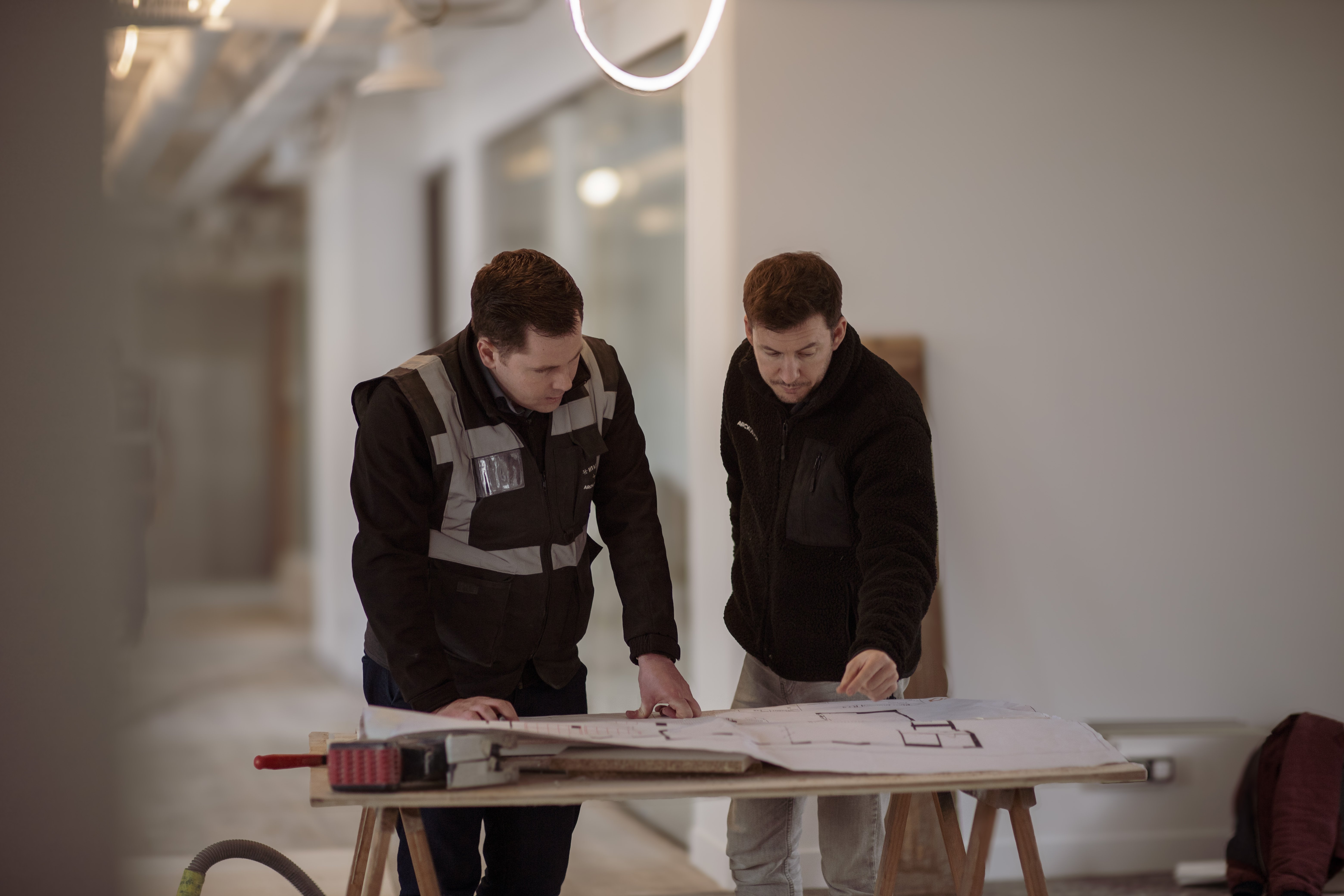
Early contractor involvement can help identify cost and programme issues while there is still time to respond.
This can include advice on:
- buildability;
- procurement;
- logistics;
- phasing;
- product availability;
- programme;
- live-environment working.
This is particularly important when the business needs to remain operational during the works.
Our guide to phasing an office refurbishment explains how sequencing and operational constraints can affect project delivery.
8. Avoid late changes
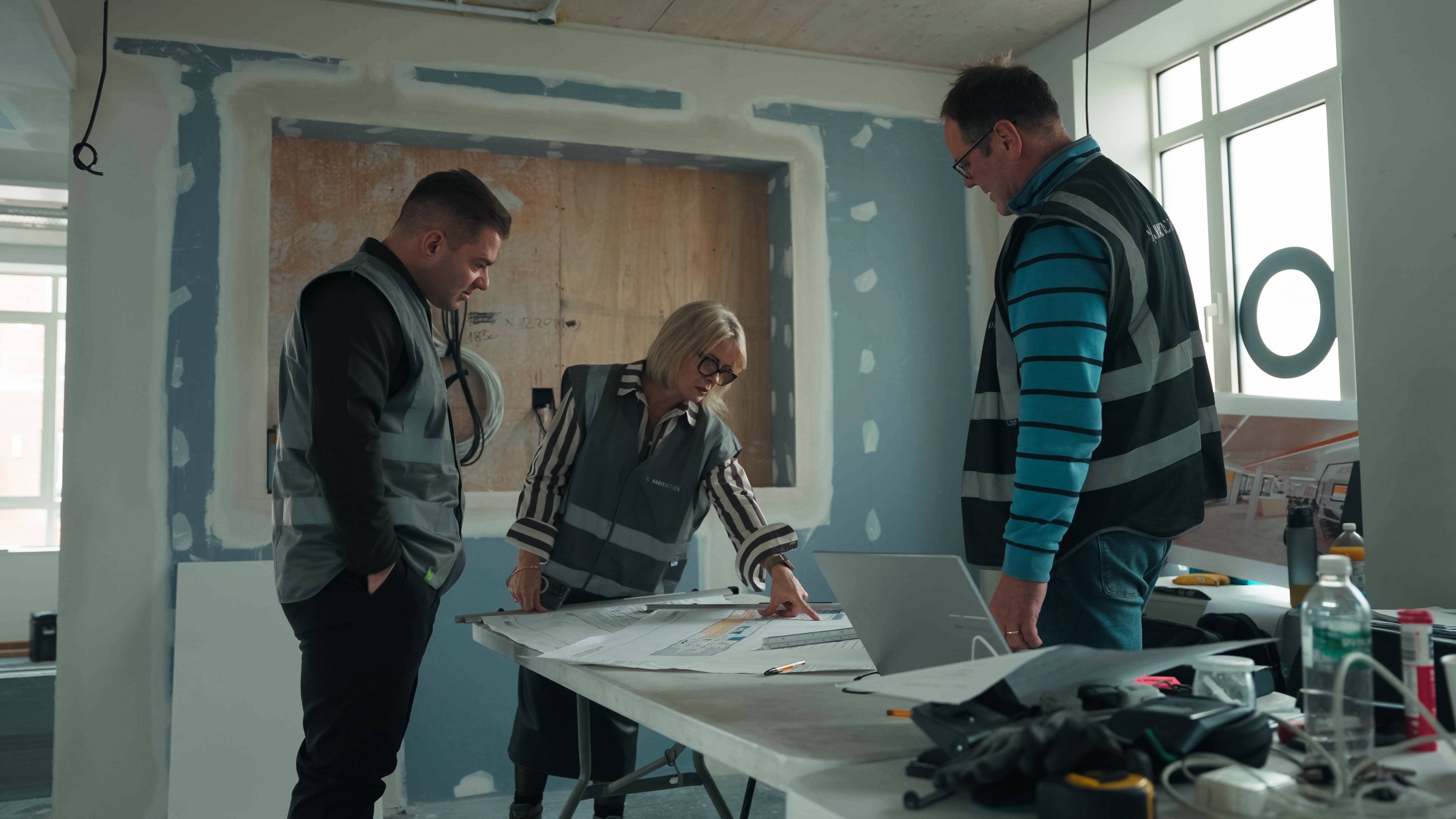
Changes become more expensive once construction begins.
Moving a meeting room, for example, may affect:
- partitions;
- lighting;
- ventilation;
- sprinklers;
- power;
- data;
- furniture.
Good project governance can reduce this risk. Agree who is responsible for decisions, when approvals are needed and which stakeholders need to be involved.
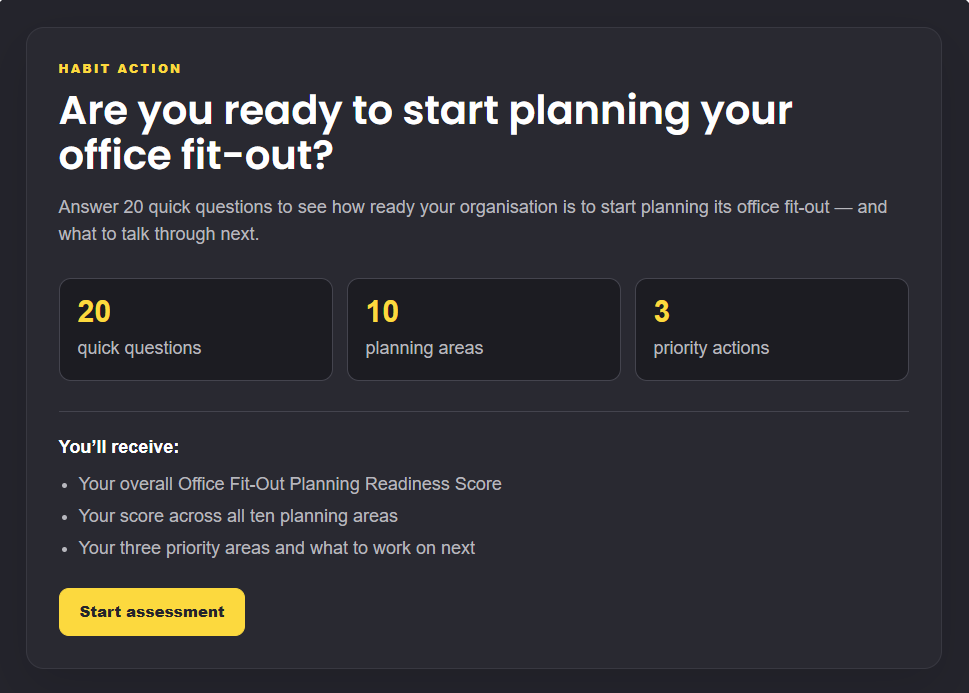
If the business is still uncertain about its budget, programme, space requirement or internal decision-making, the Office Fit-Out Readiness Assessment can help identify what needs resolving before the project progresses.
Are office fit-out costs rising in 2026?
The picture is mixed.
Underlying construction costs remain under pressure, but contractor competition is currently moderating tender-price growth.
BCIS reported annual tender-price inflation of 3.2% in Q3 2026 and noted that contractors remain keen to secure work. [BCIS Tender Price Index Q3 2026]
For clients, this means broad statements such as “construction prices are rising” are not particularly useful.
The better question is: What are the specific cost risks affecting this project, in this building, at this point in the market?
How much does an office fit-out cost?
There is no single cost per square foot that applies to every office.
The final investment depends on the building, location, specification, services, technology, furniture, programme and project complexity.
For indicative UK and European costs and a breakdown of the main factors that influence fit-out budgets, download our Commercial Fit-Out Cost Guide.
Cost certainty starts before construction
The biggest cost risks are often created long before work begins.
A clear brief, good surveys, realistic budgeting, early procurement planning and timely decisions can remove many of the uncertainties that lead to cost increases later.
The objective should not simply be to secure the lowest tender price. It should be to deliver the workplace the organisation needs while reducing the likelihood of expensive surprises.
At Habit Action, our design and build teams work together from the early stages of a project so that workplace requirements, design, programme, procurement and cost are considered together.
Frequently asked questions
What are the biggest factors affecting office fit-out cost?
The biggest factors are usually building condition, M&E requirements, specification, furniture, technology, programme, location and project complexity. Late changes and unexpected building conditions can also significantly increase cost.
How can a business reduce office fit-out costs?
Define the workplace requirement early, complete technical surveys, retain usable existing elements, identify long-lead items and involve the delivery team before construction. The aim should be to remove uncertainty rather than simply reduce specification.
Should an office fit-out budget include contingency?
Yes. Contingency should reflect the level of uncertainty within the project and reduce as design, surveys and procurement information become clearer.
When should a contractor be involved?
For larger or technically complex projects, contractor involvement during design and pre-construction can help identify buildability, procurement, cost and programme risks before key decisions are fixed.
Is refurbishment cheaper than relocation?
Not always. Refurbishment may allow more existing infrastructure to be retained, but some buildings require significant upgrades. The comparison should include fit-out, property costs, relocation, landlord works, programme and long-term suitability.