
At first glance, the UK workplace market in early 2026 appears subdued. Office moves are fewer, board approvals take longer, and capital scrutiny is intense. Yet this is not a market in retreat. It is a market recalibrating.
The dominant narrative of “pause and wait” misses a more important shift taking place beneath the surface. Companies are not freezing workplace decisions, they are becoming markedly more selective. This selectivity is the missing 20% that defines how space decisions are now being made.
A More Cautious Economic Backdrop
High interest rates, persistent inflationary pressure and tighter access to capital have reshaped boardroom priorities. According to the Bank of England, interest rates remain elevated to pre-2020 norms, and capital expenditure across UK businesses has been deliberately constrained.
ONS data shows that while overall business investment has softened, investment has not disappeared, it has become more targeted, with organisations prioritising projects that deliver operational resilience, efficiency and long-term value.
For workplace decisions, this means fewer speculative moves, but greater scrutiny of outcomes.
Why Fewer Moves Do Not Signal Less Ambition
A reduction in relocations is often misread as a loss of confidence. In reality, many organisations are choosing to extract more value from existing assets rather than incur the cost and risk of wholesale change.
This is evident in the rise of:
- Refurbishments over relocations.
- Re-stacking rather than expansion.
- Phased upgrades rather than full fit-outs.
CBRE and JLL reporting indicates that a growing proportion of occupiers are investing in optimisation strategies, not contraction. The ambition remains, but it is focused on performance, not scale.
In this context, space is no longer a symbol of growth. It is a tool for efficiency, retention and control.
Why are organisations focusing on smarter space instead of reducing office size?
Many organisations are prioritising performance over footprint. Rather than simply shrinking space, they are optimising layouts, upgrading existing environments, and aligning space with hybrid work patterns to improve efficiency, employee experience, and long-term value.
The Shift Toward Smarter Footprints
Rather than asking “How much space do we need?, organisations are increasingly asking:
- Which parts of our space actually work?
- Where is space underperforming?
- How can layout, adjacencies and infrastructure support hybrid realities?
This has driven demand for smarter footprints, offices that are better aligned to attendance patterns, work modes and operational rhythms.
Gensler research shows that workplaces aligned to actual work behaviour outperform larger but misaligned spaces in both engagement and perceived productivity. In other words, effectiveness now outweighs size.
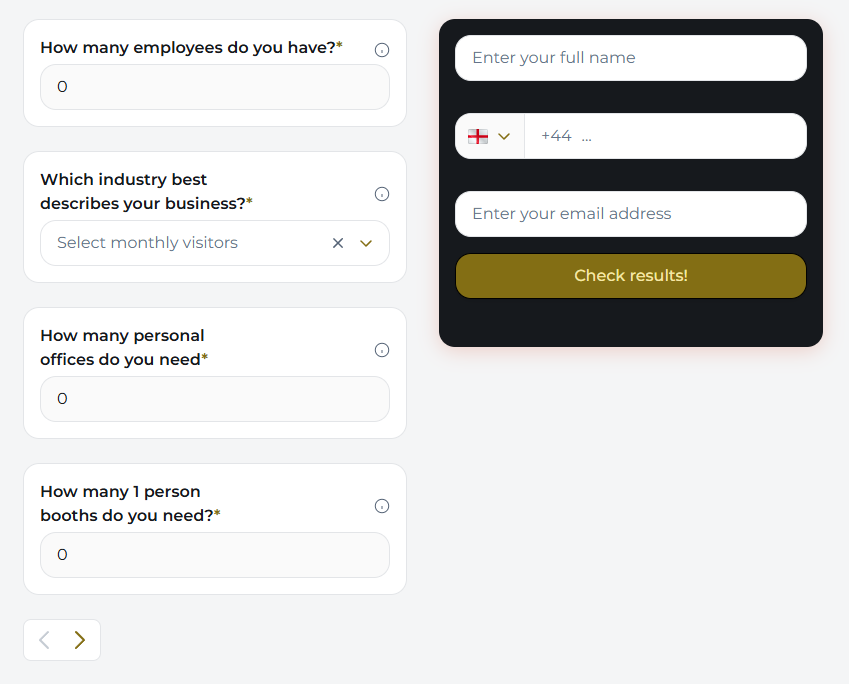
Before deciding whether to reduce, expand or reconfigure your office, it helps to understand how much space your organisation actually needs. Our Office Space Calculator can help you estimate your requirements, giving you a starting point for making smarter workplace decisions.
Refurbishment and Re-stacking as Strategic Moves
Refurbishment is no longer a compromise solution. In 2026, it is often the most strategic choice available.
Compared to relocation, refurbishment and re-stacking:
- Reduce capital exposure.
- Shorten delivery timelines.
- Minimise operational disruption.
- Allow phased investment.
Importantly, they also allow organisations to respond incrementally to uncertainty rather than making irreversible bets. This flexibility has become a defining feature of confident decision-making in uncertain markets.
Risk Removal as the New Value Driver
In previous cycles, workplace value was often measured in aesthetics, brand expression or amenity. Today, value is increasingly defined by risk reduction.
Boards are asking:
Can this be delivered on time?
Can cost certainty be maintained?
Can disruption be controlled?
Can future change be accommodated?
Design and build models that integrate design, cost control and construction delivery have become more attractive precisely because they remove variables. In volatile conditions, certainty is a commercial advantage.
This is the missing 20% many still overlook: in uncertain markets, the workplace decision itself must reduce risk, not introduce more of it.
Smarter space starts with knowing how much you need
More space doesn't always mean a better workplace. And less space doesn't necessarily mean better efficiency.
Before committing to a refurbishment, relocation or new layout, get a clearer understanding of your organisation's space requirements.
Our Office Space Calculator helps you estimate how much space your business needs, giving you a practical starting point for making more informed property and workplace decisions.
.png)