 ·
7 minute read
·
7 minute read
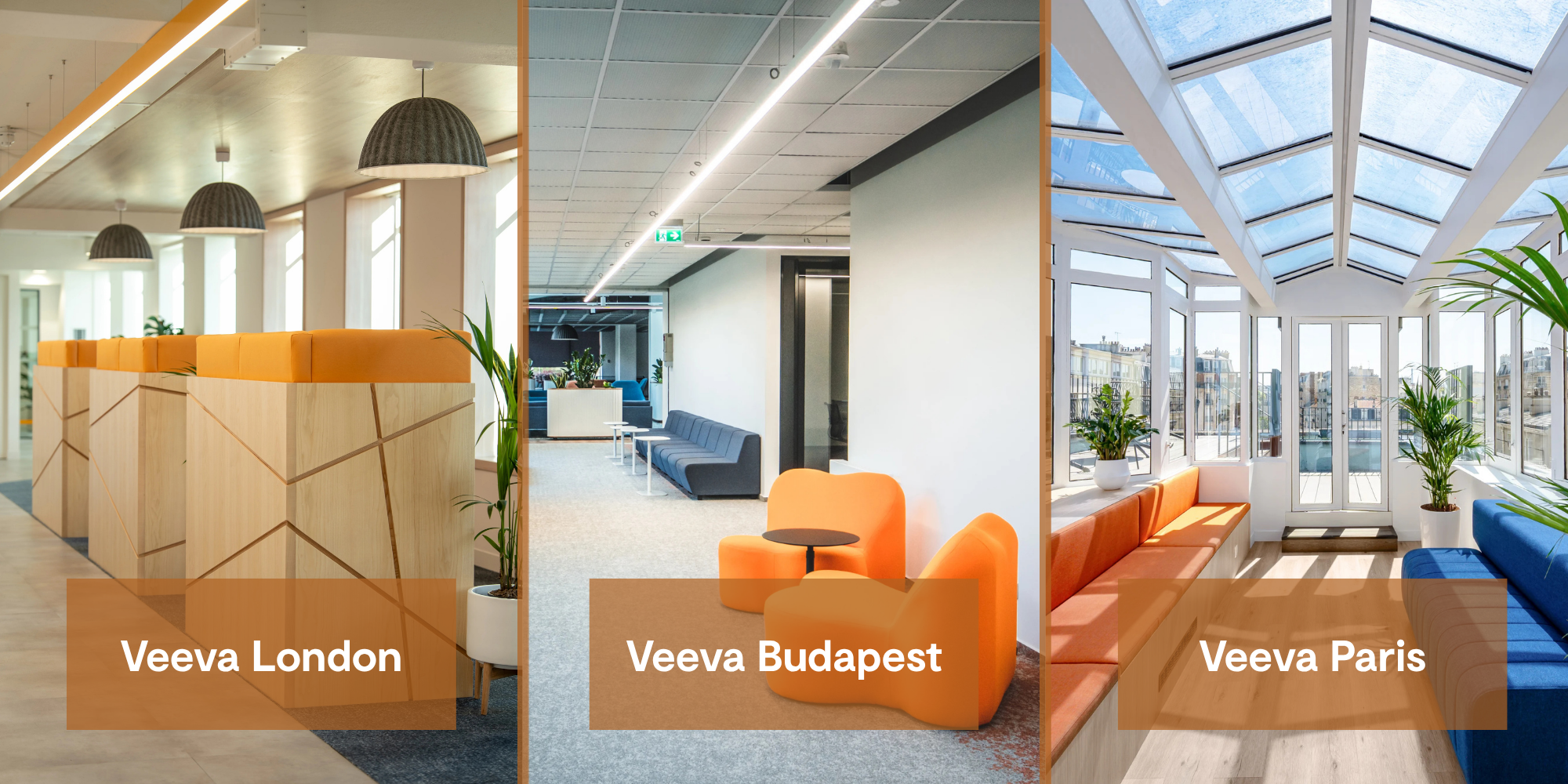
Walk into Veeva’s offices in London, Paris or Budapest and each one has its own distinct character. Yet they all feel like they belong to the same company.
And that is exactly the point.
Each workplace has its own character, shaped by its building, location and people. Yet there is a clear connection between them. The same brand, workplace principles and design language run through each one.
That is the real challenge of delivering an office fit-out across multiple locations: how do you create a consistent workplace experience without making every office look and feel exactly the same?
Veeva’s European offices provide a useful example. Habit Action has delivered workplaces for Veeva in different locations, using the company's design principles as a foundation while adapting them to each individual building and workforce.
The result is consistency without repetition.
What does consistency mean in a multi-location office fit-out?
Consistency does not mean copying the same floorplan, furniture arrangement or colour scheme into every office.
It means creating a set of shared principles that employees and visitors recognise wherever they are.
These might include:
- Workplace settings and how they are used
- Brand identity and visual language
- Furniture and technology standards
- Meeting and collaboration spaces
- Acoustic and lighting principles
- Sustainability targets
- Employee wellbeing
- Quality and finish standards
The individual offices can then respond to their own circumstances.
Veeva's projects demonstrate this particularly well. The London office is a modern workplace designed around collaboration, connection and client engagement, while the Paris office occupies a historic residential building and had to balance contemporary workplace requirements with the character of its surroundings. Budapest, meanwhile, was shaped through a workplace strategy process that involved Veeva's design guidelines alongside the specific needs of its employees and building.
The offices are different, but they still belong to the same workplace family.
So how do you go about designing consistent offices?
Before deciding what an office should look like, you need to understand how it needs to work.
This becomes even more important when an organisation operates across multiple locations. If each office starts its own design process without a shared strategy, differences can quickly appear.
A workplace strategy establishes the principles that should carry from one location to another.
It can look at:
- How people work individually and collaboratively
- How much space different teams need
- How employees use meeting rooms
- Where technology needs to be integrated
- What employees need from the workplace
- How the office supports recruitment and retention
- How the business expects its workplace to change
Veeva's Budapest project is a good example of this approach. Habit Action worked with Veeva's leadership and employees through interviews and workshops to understand its requirements, including collaboration, wellbeing and technology integration. Those findings then informed the workplace design.
That process matters because a workplace standard should be based on how the organisation works, rather than simply how it wants its offices to look.
How Do You Create a Design Language Rather Than a Template?
Once the workplace strategy is established, the next step is translating it into a design language. Think of this as the visual and practical DNA of the workplace.
It could include a defined material palette, furniture standards, meeting-room types, signage, lighting principles and brand elements.
But it shouldn't become a rigid template. Take Veeva's use of colour.
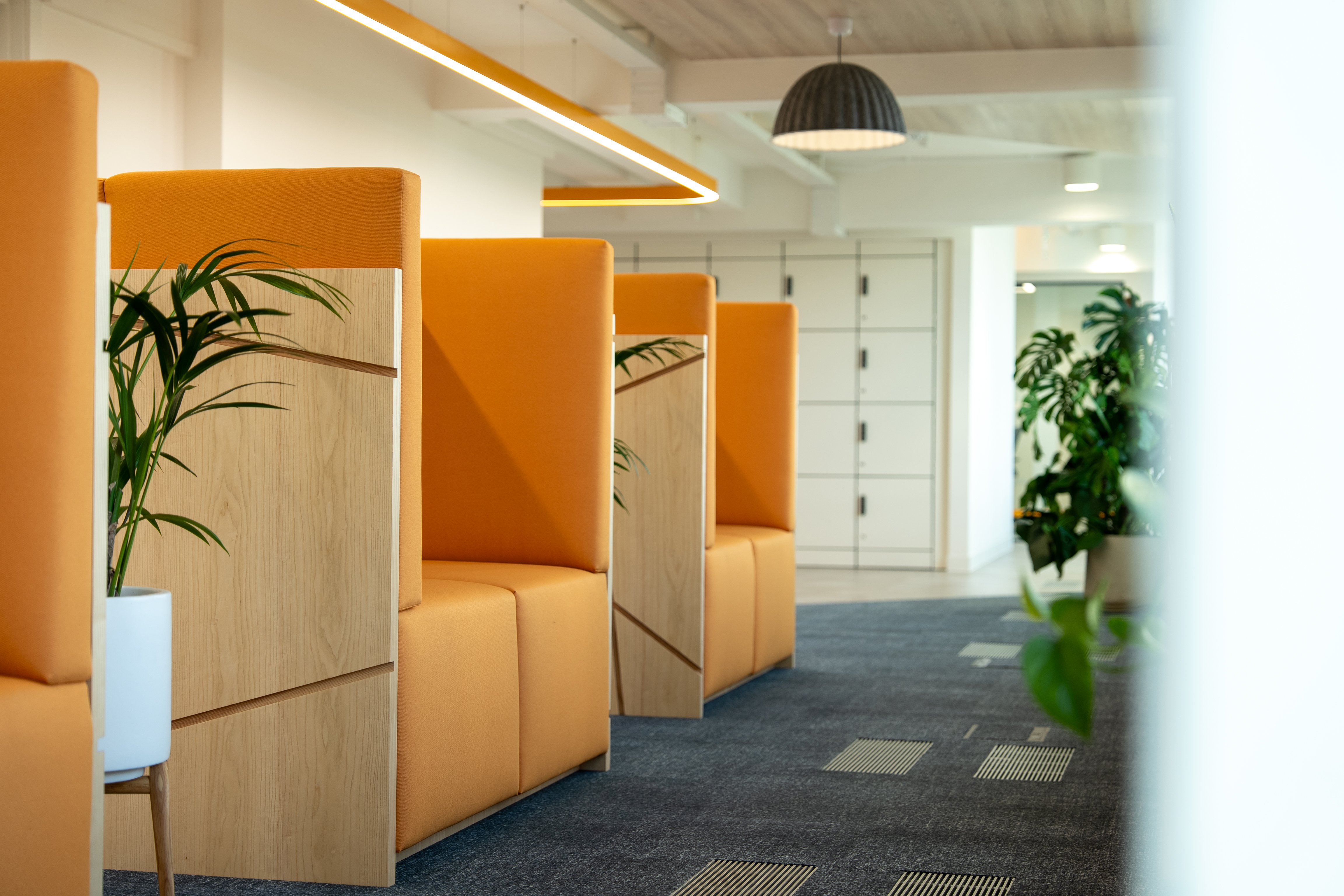
Its signature navy and orange appear across its workplaces, helping connect different locations. But the colours don't have to be used in exactly the same way.
In Paris, the navy and orange are woven more subtly into the material palette and wall graphics. The approach works alongside the character of the historic building rather than overpowering it.
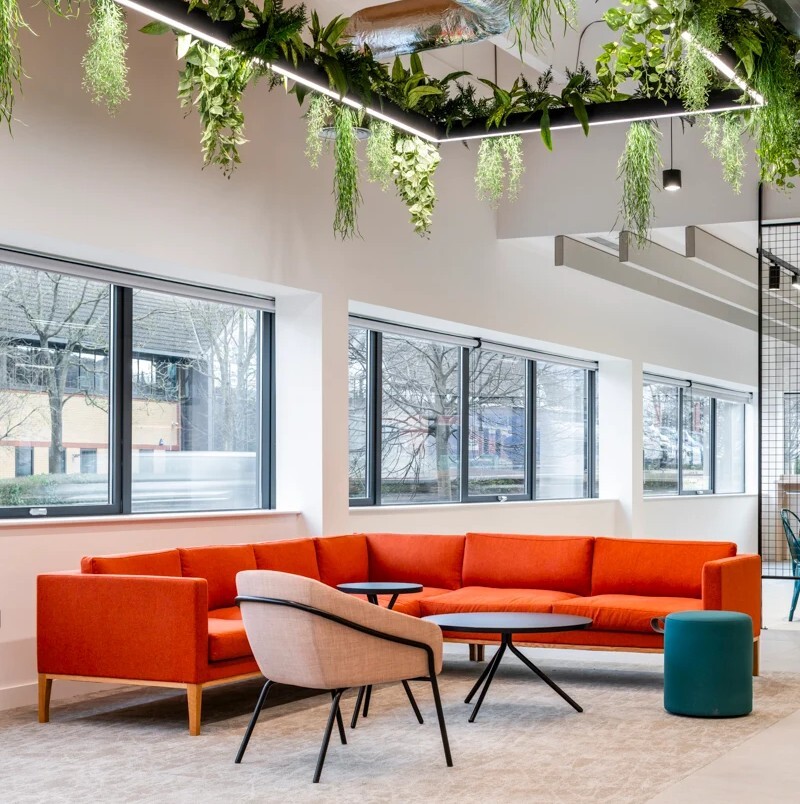
In London, the orange becomes much more of a focal point. A bespoke orange lighting feature runs through reception, helping guide visitors towards the client suite and employees into the wider workplace.
Same brand. Different expression. That is what a good design language allows you to achieve.
How Can You Adapt the Design to Different Buildings?
One of the easiest mistakes in a multi-site programme is assuming that consistency requires the same layout everywhere. It doesn't.
Buildings rarely cooperate with a standard floorplan.
One office might have a large open floorplate with plenty of natural light. Another might occupy several floors of an older building. Ceiling heights, structural columns, windows, services and access arrangements can all change what is possible.
The workplace principles should stay consistent. The physical solution needs to adapt.
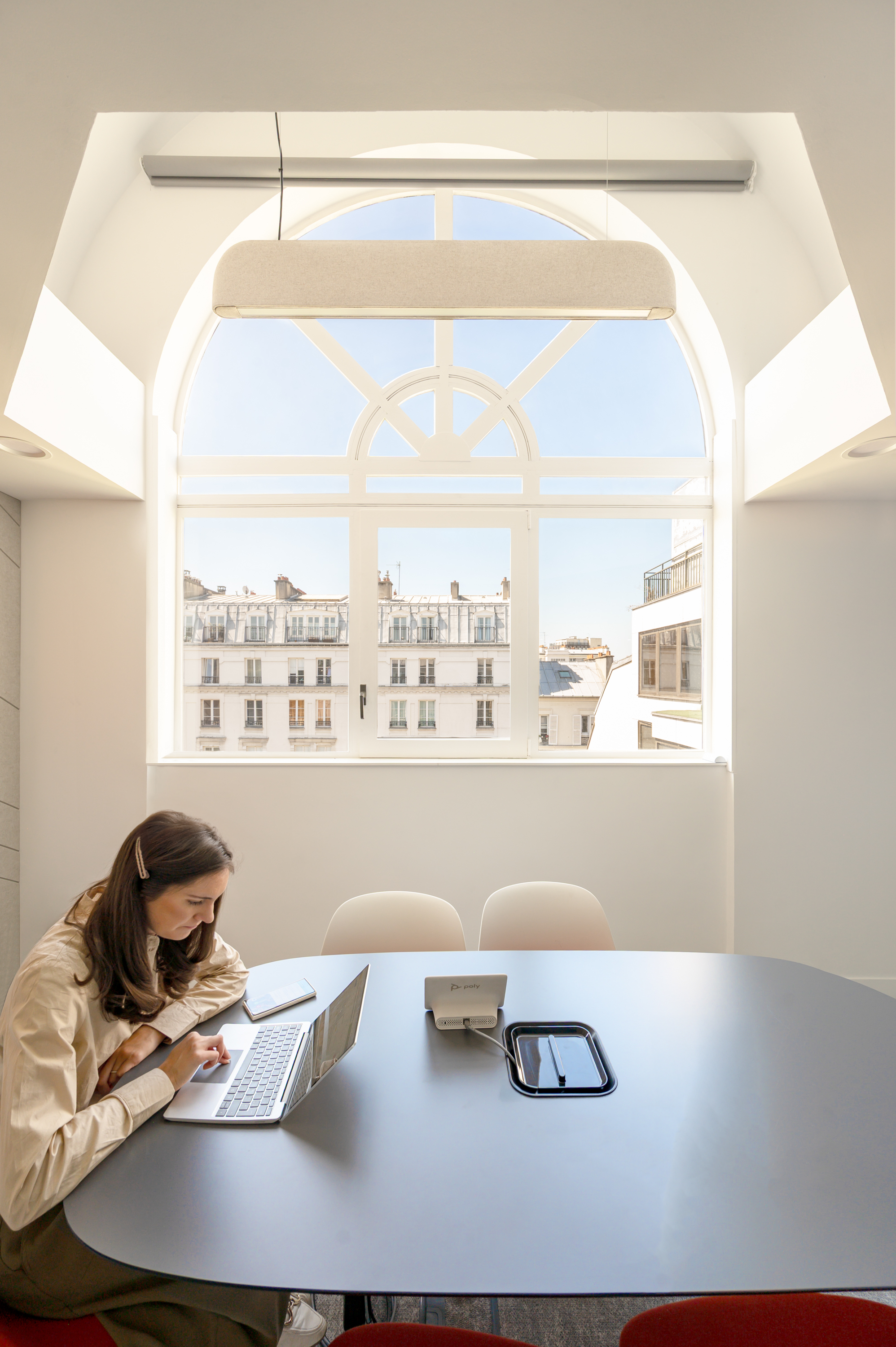
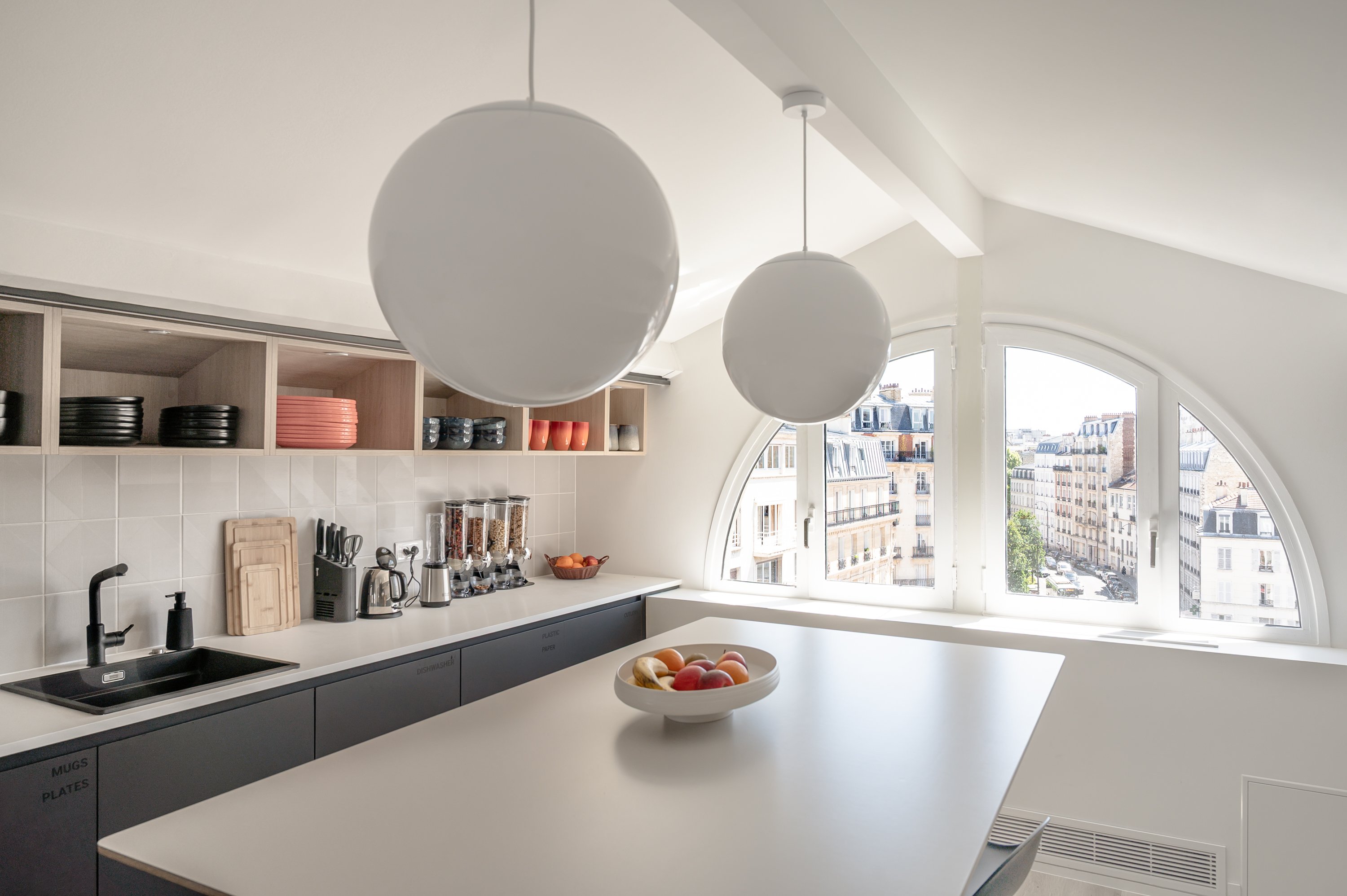
Veeva's Paris office demonstrates this particularly clearly. Located within a historic residential neighbourhood, the project had to respect the architectural character of the existing building while creating a modern workplace. Polished concrete, warm timber, acoustic finishes and a mixture of exposed and covered ceiling treatments were used to create a contemporary environment without simply erasing the building's original character.
That is much more effective than trying to force a standard corporate template into a building where it doesn't belong.
How Can You Standardise Without Making Every Office the Same?
There are some things where consistency really does make sense. Technology is a good example.
If employees regularly move between offices, they shouldn't have to relearn how to use every meeting room. Consistent technology standards, connectivity and room functionality can make moving between locations much easier.
The same applies to furniture, where appropriate.
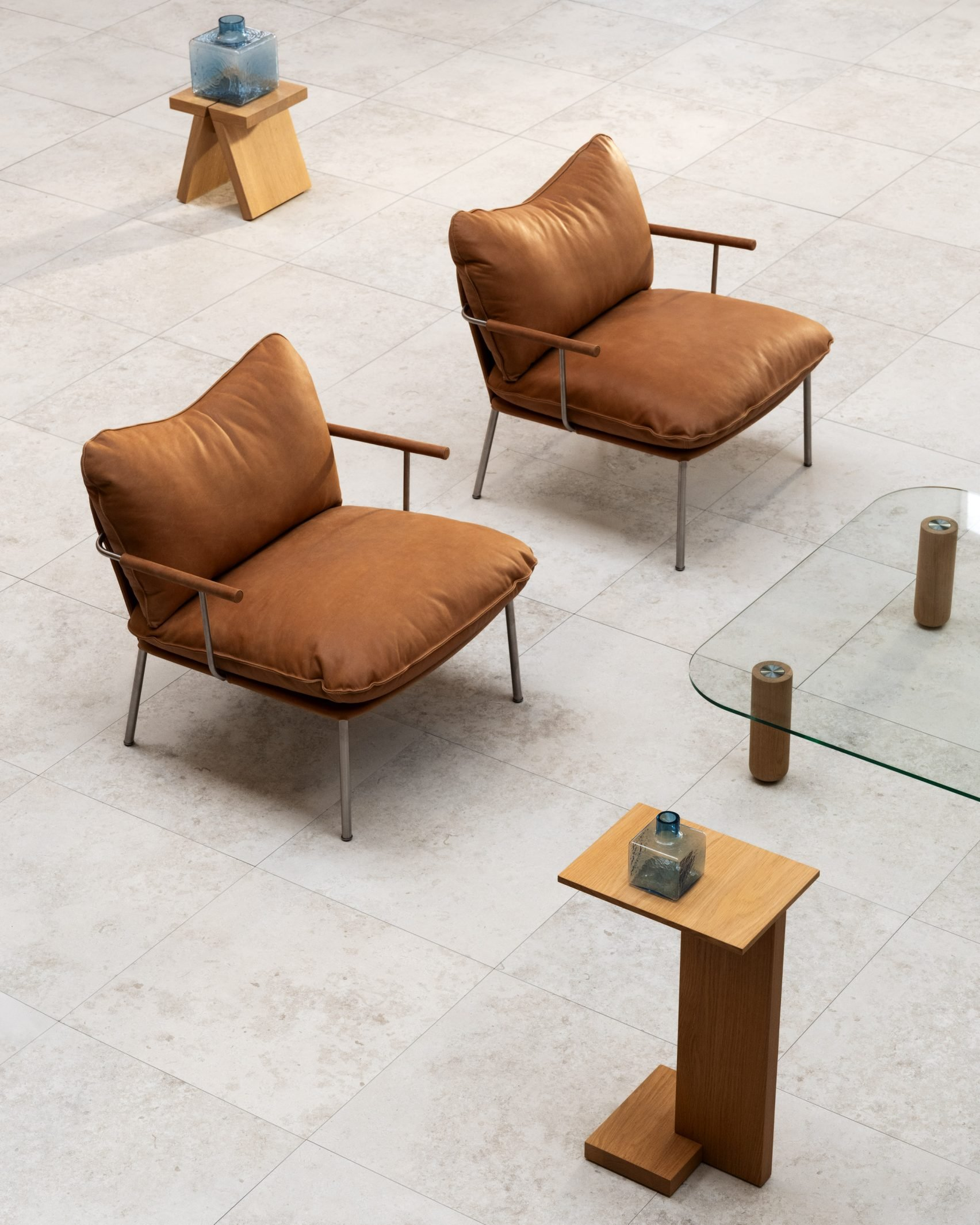
Standardising preferred products can simplify procurement, maintenance and replacement. It can also make it easier to manage costs across a larger programme.
But standardisation should always have a reason behind it. The question shouldn't be: "Can we make every office use the same product?"
It should be: "Would using the same product improve the experience, performance or efficiency of the workplace?"
If the answer is no, there may be a better local solution.
Give each location its own identity. There is a balance to find between global consistency and local character.
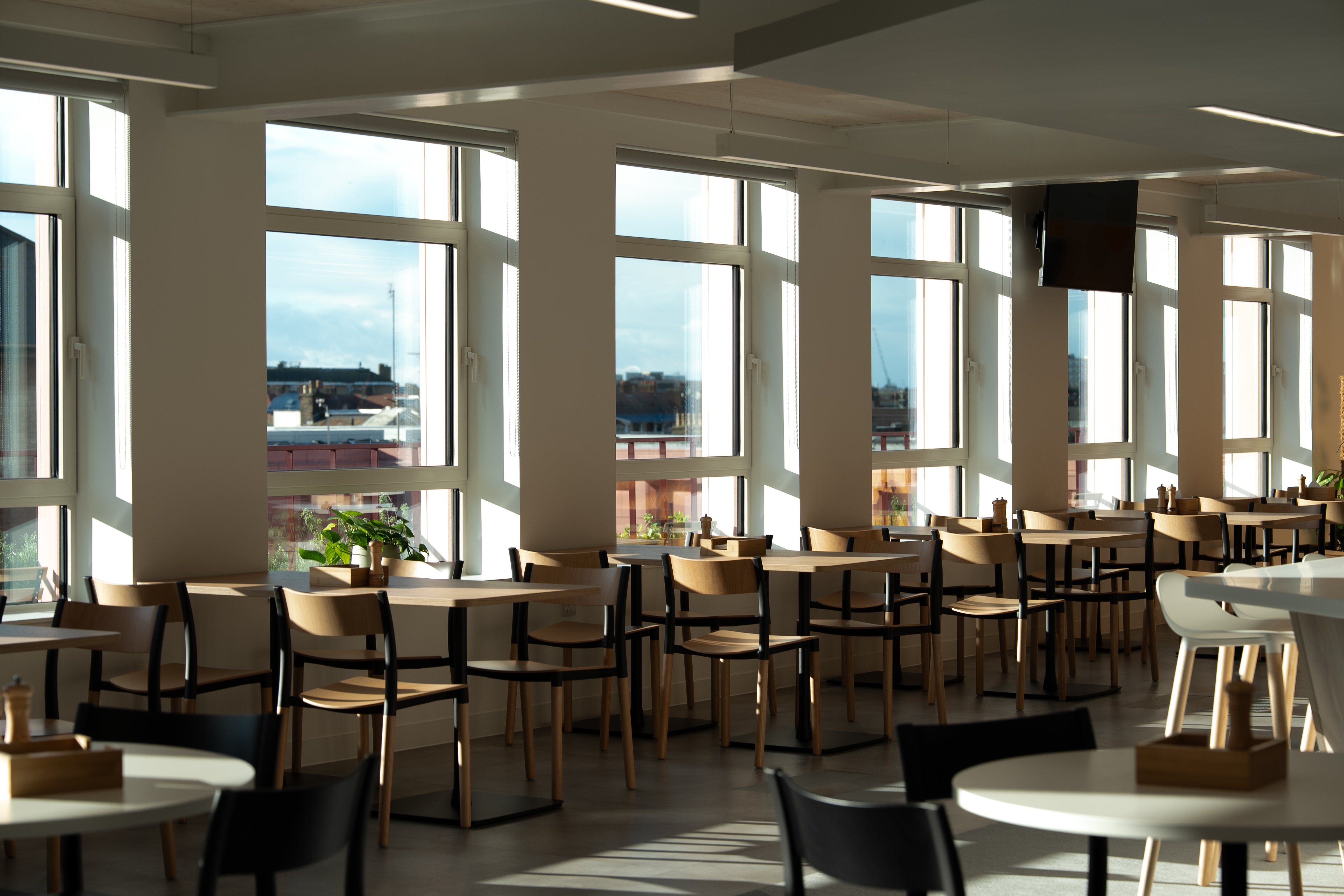
Employees should be able to walk into an office and understand that it belongs to their organisation. But they should also feel that the workplace belongs to their city and the people who use it.
Veeva's offices demonstrate this balance.
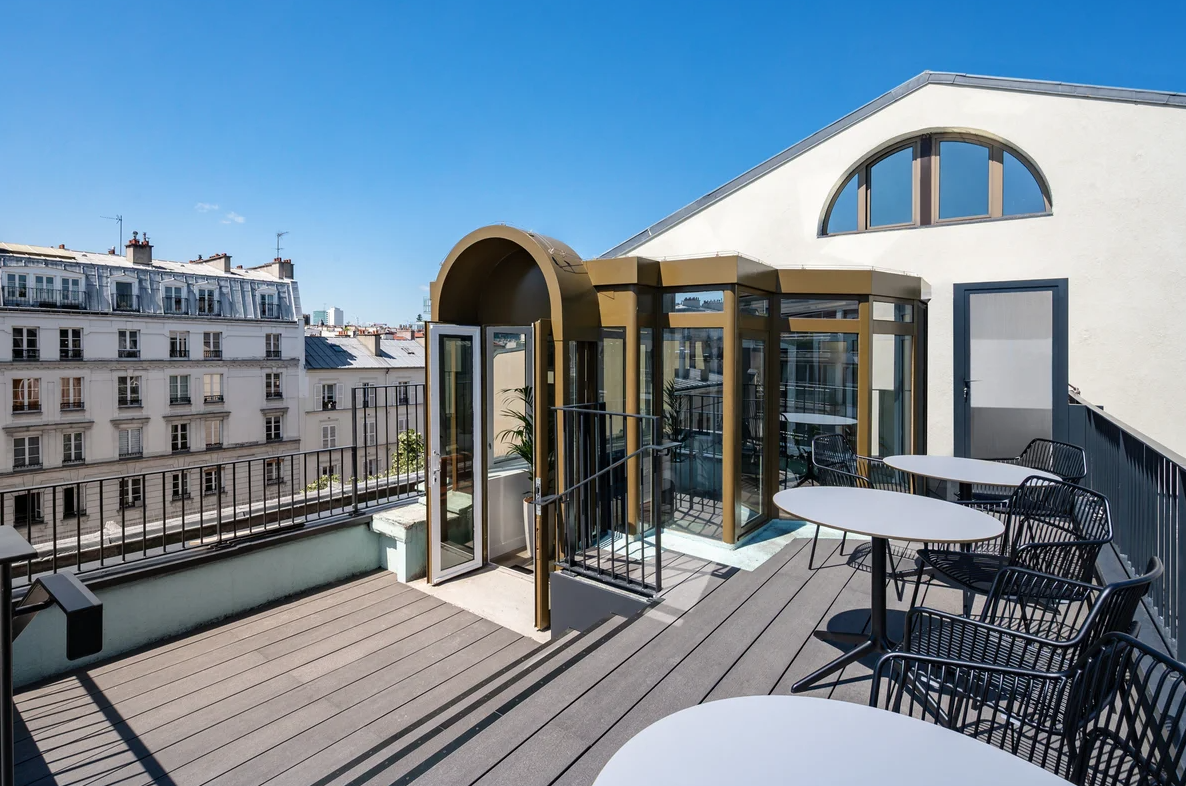
The Paris workplace draws on its architectural setting and includes spaces designed around client interaction, employees and social connection, including a rooftop terrace overlooking the Paris skyline.
London takes a more contemporary approach, with the orange reception feature, varied working environments and spaces designed to support a work-from-anywhere culture.
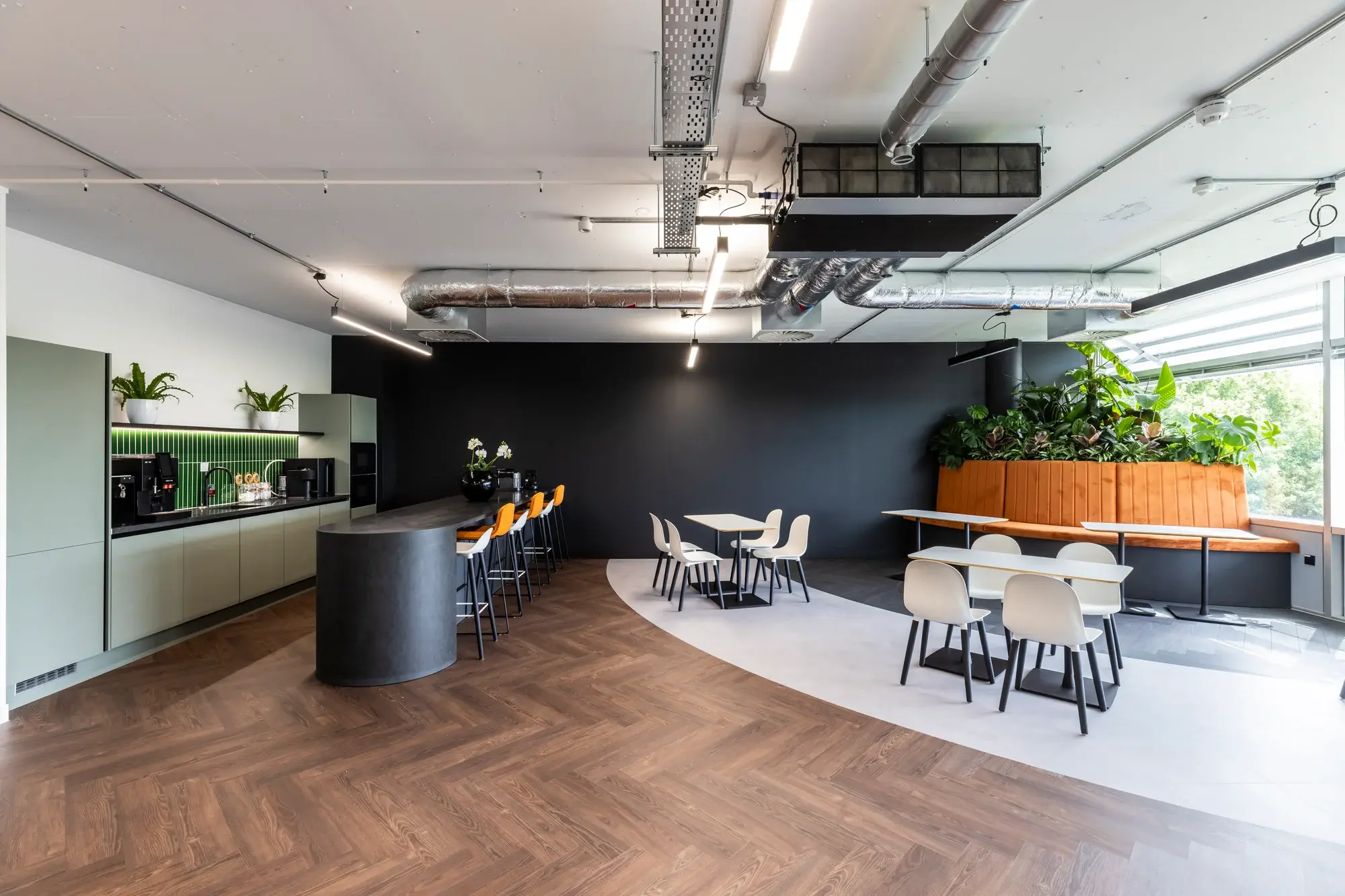
Budapest places greater emphasis on natural light, collaboration, wellbeing and adaptability, with an open-plan environment, modular furniture, breakout areas and an outdoor terrace.
None of these differences weaken the overall brand. They make the workplaces more relevant to the people and places they serve.
.png?width=2000&height=1000&name=Supporting%20Visuals%20for%20Defence%20White%20Paper%20(1).png)
How Do You Keep Quality Consistent Across Every Office?
Consistency isn't only about what employees see. It also needs to exist behind the scenes.
If one office receives a high-quality finish and another is delivered to a lower standard, employees will notice. The same applies to acoustics, lighting, furniture, technology and the quality of the installation.
This is where having a controlled specification and delivery process becomes important.
A multi-site programme can establish:
- Approved materials and finishes
- Furniture standards
- Technology requirements
- Quality benchmarks
- Design review processes
- Preferred suppliers
- Handover standards
- Consistent project documentation
These controls give individual project teams a clear framework to work within.
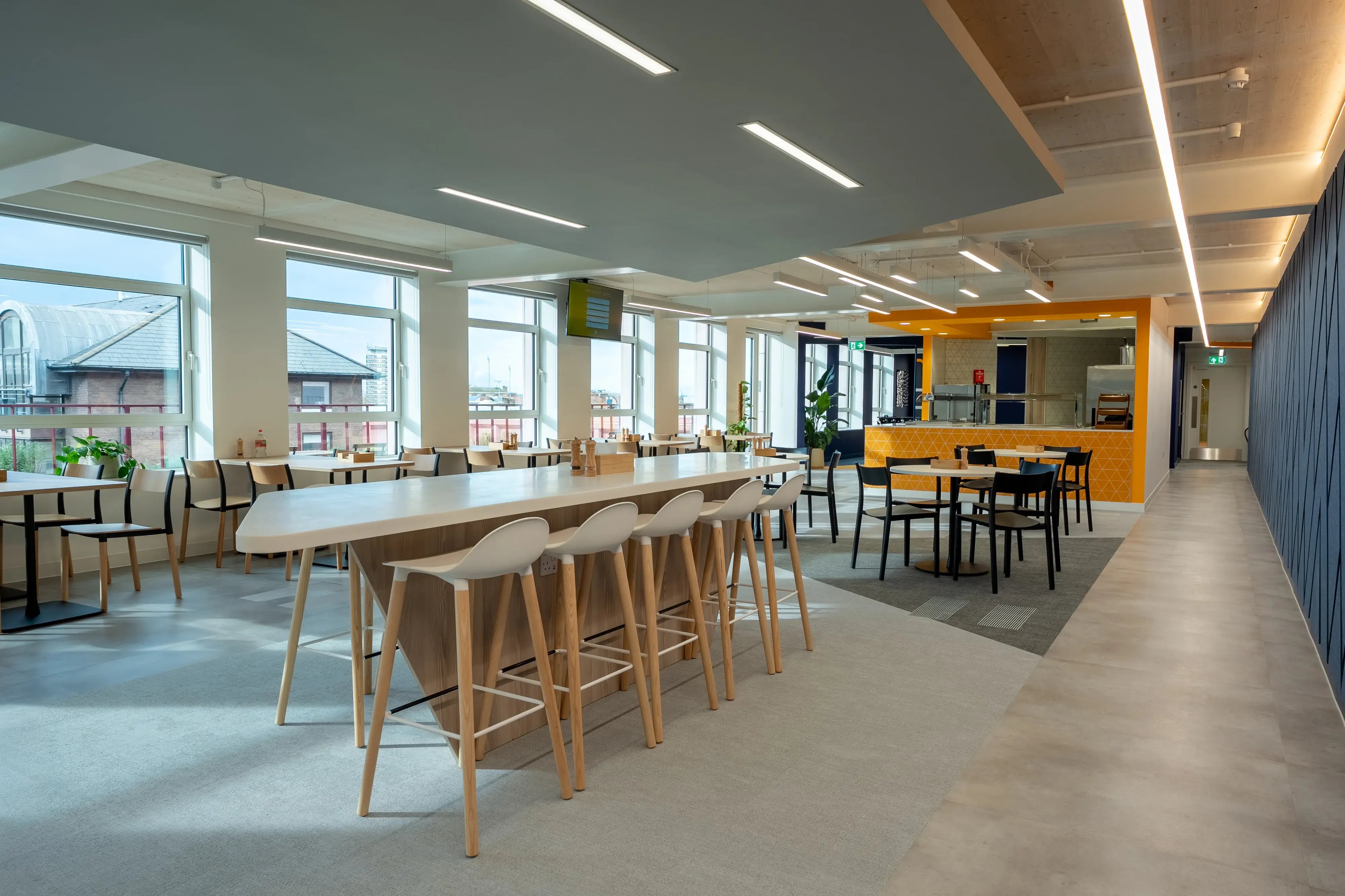
Veeva London provides a useful example of how detailed this can become. Acoustic performance was a major consideration, with staggered stud partitions and specialist acoustic products incorporated to help meeting rooms, collaboration areas and focus spaces perform properly.
That kind of detail is easy to overlook when thinking about consistency as purely a visual exercise. A workplace needs to perform consistently as well as look consistent.
How Can Each Office Fit-Out Improve the Next?
One of the biggest advantages of a multi-location programme is that you don't have to start again every time. The first project creates knowledge.
What worked? What didn't? Which spaces were heavily used? Were there problems with technology? Did employees need more collaboration areas? Were certain materials difficult to maintain?
Those lessons should feed into the next location.
Veeva's projects demonstrate how this relationship can develop over time. Habit Action's London project drew on an established understanding of Veeva's workplace culture and priorities from previous projects, while the Paris project also drew inspiration from earlier Veeva workplaces while creating a distinctly Parisian environment.
That creates something much more valuable than a collection of individual fit-outs. It creates a workplace programme that learns.
How do you manage multiple office fit-outs at the same time?
As the number of locations increases, project management becomes just as important as design.
A central programme needs visibility over the whole portfolio, while individual project teams need enough flexibility to deal with their own buildings and local requirements.
This means keeping control over:
Design:
Are individual projects still aligned with the agreed workplace principles?
Budget:
Are variations genuinely site-specific, or could they have been avoided through better planning?
Procurement:
Are teams using agreed specifications and suppliers where appropriate?
Programme:
Are different locations progressing consistently, and are lessons being transferred between projects?
Quality:
Is the finished workplace meeting the same standards regardless of where it is?
The aim isn't to control every decision centrally. It is to make sure the right decisions are being made consistently.
What should be standardised and what should be flexible?
A useful way to approach a multi-location fit-out is to divide requirements into three groups.
Non-negotiables
These should be consistent across every location.
For example:
- Core brand identity
- Technology standards
- Security requirements
- Quality expectations
- Key workplace principles
Adaptable standards
These should follow the same principle but can change according to the building.
For example:
- Meeting-room layouts
- Collaboration spaces
- Furniture arrangements
- Material applications
- Lighting solutions
Local requirements
These are specific to the individual location.
For example:
- Building constraints
- Local regulations
- Existing architecture
- Workforce requirements
- Landlord requirements
- Site-specific operational needs
This framework stops the programme becoming either too rigid or too fragmented.
So, how do you deliver a consistent office fit-out across multiple locations?
You don't start by trying to make every office look the same. You start by defining what needs to be the same.
A clear workplace strategy establishes how the organisation wants its offices to function. A design language then translates those principles into recognisable visual and practical elements. From there, each location can adapt the framework to its building, people and purpose.
Veeva's offices in London, Paris and Budapest show what this can look like in practice.
The orange might be a subtle detail in one location and a striking architectural feature in another. A historic Parisian building might demand a different material approach from a contemporary London workplace. Budapest might prioritise different spatial requirements.
Yet the offices remain recognisably Veeva.
That's the real measure of consistency: not whether every office looks the same, but whether every office feels like it belongs to the same organisation.
For businesses planning a multi-location fit-out or refurbishment programme, that distinction can make the difference between a collection of disconnected projects and a genuinely joined-up workplace strategy.
Key take aways
Work with leadership and employees to create a clear strategy to start with
Create a design language, rather than a template
Adapt the design to the building
Standardise the things that matter
Keep the quality consistent
Use lessons from one location to improve the next
FAQs
How do you keep office fit-outs consistent across multiple locations?
Create shared workplace, design and quality standards, then adapt them to each building and location.
Should every office have the same design?
No. Offices should share consistent brand and workplace principles while allowing the design to respond to the building, people and local requirements.
What should be standardised across multiple office fit-outs?
Key elements such as furniture, technology, materials, meeting spaces, brand guidelines and quality standards can be standardised where appropriate.
How do you maintain quality across multiple fit-out projects?
Use consistent specifications, approved suppliers, quality benchmarks, design reviews and project management processes across every location.
How can a business reduce costs across multiple office fit-outs?
Standardising specifications and procurement can reduce duplication, improve purchasing power and make future projects more efficient.
How do you adapt a consistent workplace design to different buildings?
Keep the core workplace principles consistent while adapting layouts, materials and services to each building's structure and characteristics.
What are the benefits of using the same fit-out partner across multiple locations?
A single partner can provide greater consistency, share lessons between projects and simplify programme management across different locations.
How can lessons from one office improve the next fit-out?
Post-project reviews, employee feedback and performance data can identify what worked and what needs changing, improving each subsequent location.