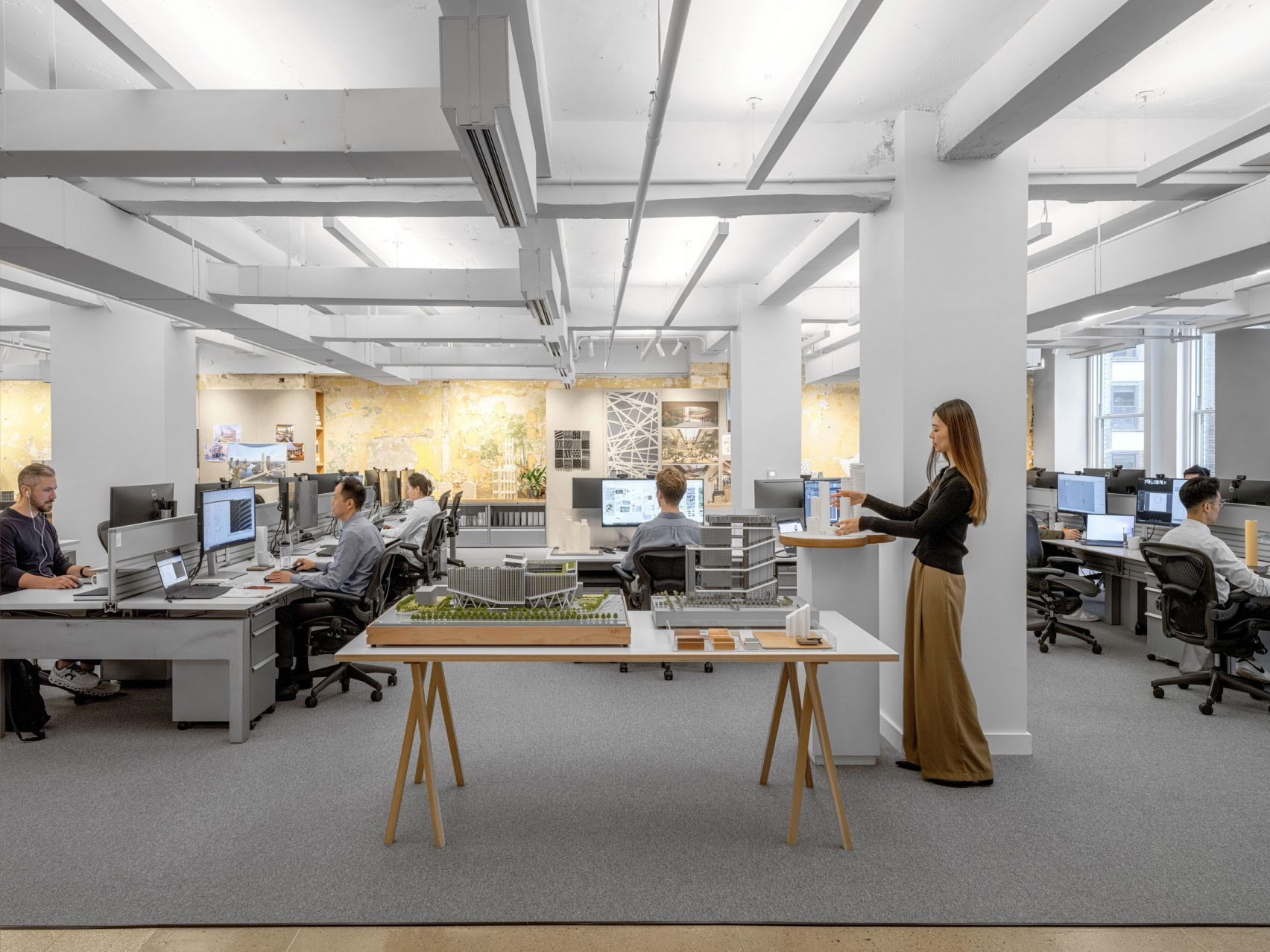
My view: Surveys tell you what people hope for. Utilisation data tells you what they do. I wouldn't plan an office on either alone. Pair employee research with occupancy, booking and sensor data, then weight the space towards what people actually use. More often than not, that means more focus rooms and fewer big collaboration zones.
For much of the past five years, workplace strategy has been shaped by what employees say they want. Surveys, sentiment scores and preference polling have become the dominant inputs into design decisions. And yet, across sectors, a quiet contradiction is emerging: stated preferences increasingly diverge from how workplaces are actually used.
This gap, between intention and behaviour, represents the missing 20% that many organisations fail to address. The result is well-intentioned offices that look progressive on paper, but underperform in practice.
The Rise of the Voice Led Workplace
There is no question that employee voice matters. According to the CIPD, over 80% of UK organisations now consult employees when shaping workplace or hybrid strategies. Flexibility, collaboration and wellbeing consistently top the list of stated priorities.
Global research echoes this. Gensler’s Workplace Survey reports that employees regularly express a desire for more collaborative environments, social interaction and choice over where and how they work. These insights have driven a wave of office transformations centred on open layouts, informal meeting zones and “destination” collaboration spaces.
On the surface, this appears both progressive and inclusive. But preference alone is an incomplete design input.

Attendance is not Engagement
Despite positive sentiment towards collaboration, actual space utilisation data tells a different story.
Workplace analytics consistently show that collaboration spaces are among the least consistently used areas of modern offices. Utilisation studies suggest that, outside of peak meeting windows, large informal collaboration zones often sit empty, while enclosed rooms and quiet areas operate at or near capacity.
In parallel, office attendance has stabilised — but engagement has not risen in line with presence. The UK Office for National Statistics reports that while hybrid attendance has normalised, productivity outcomes remain uneven across sectors. Being in the office does not automatically translate into effective work.
The implication is clear: presence without purpose delivers limited value.
Why "More Collaboration Space" Keeps Missing the Mark
The default response to underused offices has often been to add more collaboration space, on the assumption that it will stimulate interaction. But this misunderstands the problem.
Collaboration is not a spatial constant — it is an episodic behaviour. Most knowledge work oscillates between collaboration and focus. When offices are weighted too heavily towards interaction, they unintentionally undermine the very work that enables collaboration to be productive.
Gensler research has repeatedly shown that the ability to focus is the strongest predictor of workplace performance, yet focus and privacy are consistently underprovided in contemporary office design. Employees may say they want collaboration, but their behaviour shows a strong preference for spaces that support concentration, predictability and control.

The Quiet Return of Focus, Privacy and Predictability
Across Habit Action's workplace discovery work, I keep seeing the same pattern: enclosed rooms fill up first, while the large collaboration zones wait for someone to need them. When given genuine choice, employees gravitate towards:
Enclosed rooms for uninterrupted work
Predictable desk setups rather than constant hot-desking
Acoustically controlled environments
Clear signals about how spaces are intended to be used.
This is not a rejection of collaboration, but a correction. In uncertain economic conditions, employees value environments that reduce cognitive load and enable them to perform consistently.
According to Gensler, employees who can both collaborate and focus effectively are up to 1.4 times more likely to report higher performance. The missing variable is not more space — it is better balance.
Why is there often a difference between what employees say they want and how they actually behave?
What employees say in surveys often reflects ideals or preferences, but their actual behaviour reveals what truly supports their work. People may express a desire for more collaboration, but usage patterns show they gravitate toward focus, predictability, and environments that help them perform consistently - highlighting the need to design around real behaviour, not just sentiment.

Designing for Behaviour, Not Sentiment
The most effective workplaces are not designed around what people say in isolation, but around what they repeatedly do. Behaviour reveals friction points, unmet needs and operational realities that surveys often obscure.
This requires organisations to shift their framing:
From preference-led design to behaviour-led strategy
From asking “What do you want?” to “How do you actually work?”
From measuring satisfaction to observing performance.
Workplace design, at its best, is not a popularity exercise. It is a strategic tool that aligns space with the rhythms, pressures and priorities of real work.
Organisations that rely solely on employee sentiment risk building spaces that reflect aspiration rather than reality. Those that integrate behavioural insight alongside voice data create workplaces that perform under real-world conditions.
In 2026, the question is no longer whether to listen to employees. It is whether organisations are willing to design for what that listening actually reveals.
The most effective workplaces are designed around behaviour, not surveys.
FAQs
What do employees actually want from their office?
Most employees want an office that lets them concentrate properly. Leesman’s research finds that 89% of employees rate individual focused work as an important workplace activity, more than any other. Across its office survey of over 1.3 million people, small meeting rooms matter to 70% of employees, and quiet rooms for working alone or in pairs matter to 59%. Novelty features rarely come close.
Why do people prefer working from home when the office has better facilities?
Home usually wins on control rather than facilities. Leesman’s data shows the average knowledge worker is better supported in the average home than in the average office, and many hybrid workers now head home for tasks that need focus and quiet. An office that gives people a similar sense of control, through bookable quiet rooms or clearly zoned areas, competes far better than one that simply adds amenities.
Do employees still want open-plan offices?
Not on its own. Leesman’s Focus Forward report found 65% of employees are dissatisfied with office noise levels, and 60% are unhappy with their access to quiet rooms for solo or paired work. The complaint is rarely open plan itself; it’s open plan with nowhere else to go. A mix of open areas and enclosed spaces people can retreat to tends to land best.
How can a business find out what its own employees want from the workplace?
Ask them, then check what they actually do. A staff survey gives you stated preferences, while occupancy data shows how space is really used, and the two often disagree. Mölnlycke Health Care is a good example: it ran a Leesman survey in 2020 and used the data to inform decisions from room types to environmental quality, ending up with an HQ that significantly raised employee pride and satisfaction.
Do employees care about wellbeing features in the office?
Yes, though the features that matter most are often the least visible. When Future Workplace asked around 1,600 North American workers to rank their top wellness perks, 58% chose air quality, followed by comfortable light at 50%. In the same study, natural light, daylight and outdoor views all outranked an on-site gym and a pet-friendly policy. Basics affect every hour of the working day; perks affect the odd break.
Which office amenities do employees value most?
Practical ones. A 2026 GPS Air survey of 750 regular office-goers found a clear majority would give up a gourmet coffee bar in exchange for cleaner, more stable air. In the UK, MoreySmith’s poll of 2,000 adults found 58% would be willing to work from the office five days a week if the amenities outweighed the cost of their commute. Amenities work best when they fix a daily frustration.
Does office design affect staff retention?
It can. Gensler’s 2025 Global Workplace Survey of more than 16,000 office workers found employees in great workplaces are nearly three times more likely to stay with their company. Closer to home, 27% of UK workers said they would consider leaving their job because of poor workplace design. The office shapes how people feel about staying, and candidates notice it on interview day.
How do you design an office for different working styles or generations?
Design for activities rather than demographics. Younger staff do weigh the workplace more heavily: half of UK respondents said amenities would affect whether they’d work for a company, rising to 57% among 25 to 34-year-olds. But someone writing a report needs different surroundings from someone running a workshop whatever their age. Offering a range of settings lets everyone choose what suits the task in front of them.
What’s the biggest mistake companies make when acting on employee feedback?
Treating the survey as a shopping list. If staff ask for more meeting rooms, the real issue might be how existing rooms are booked. Workplace software provider YAROOMS reports that 30 to 40% of booked meeting rooms go unused in a typical week, which leads facilities teams to conclude they need more rooms when they actually need better use of the ones they have. Feedback is best read as a description of a problem.