 ·
4 minute read
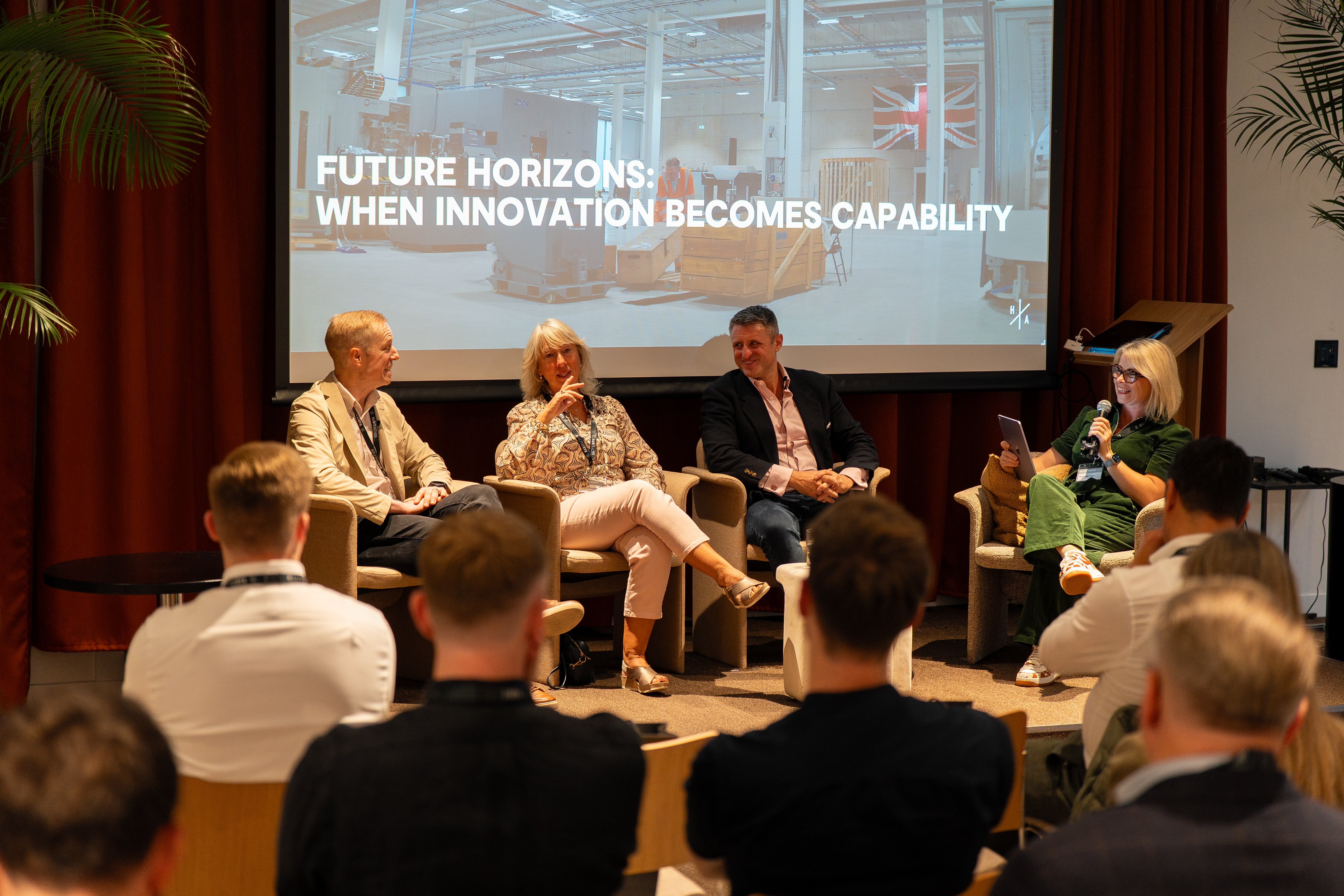
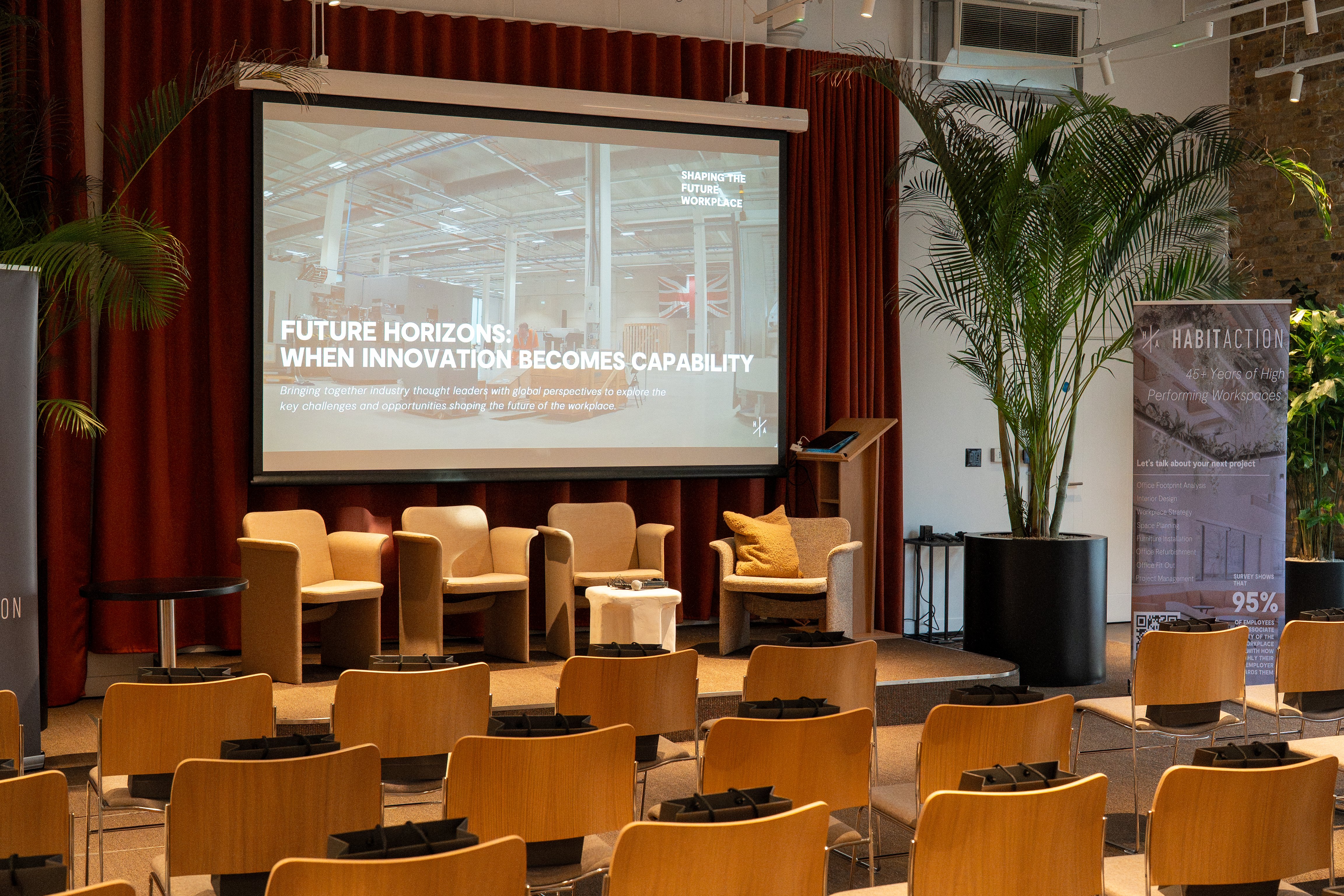
The organisations that move fastest are not the ones with the best predictions. They are the ones that make fewer decisions they later have to undo. That was the thread running through Future Horizons, the panel Habit Action hosted in October 2026 on how defence and industry turn new ideas into real capability.
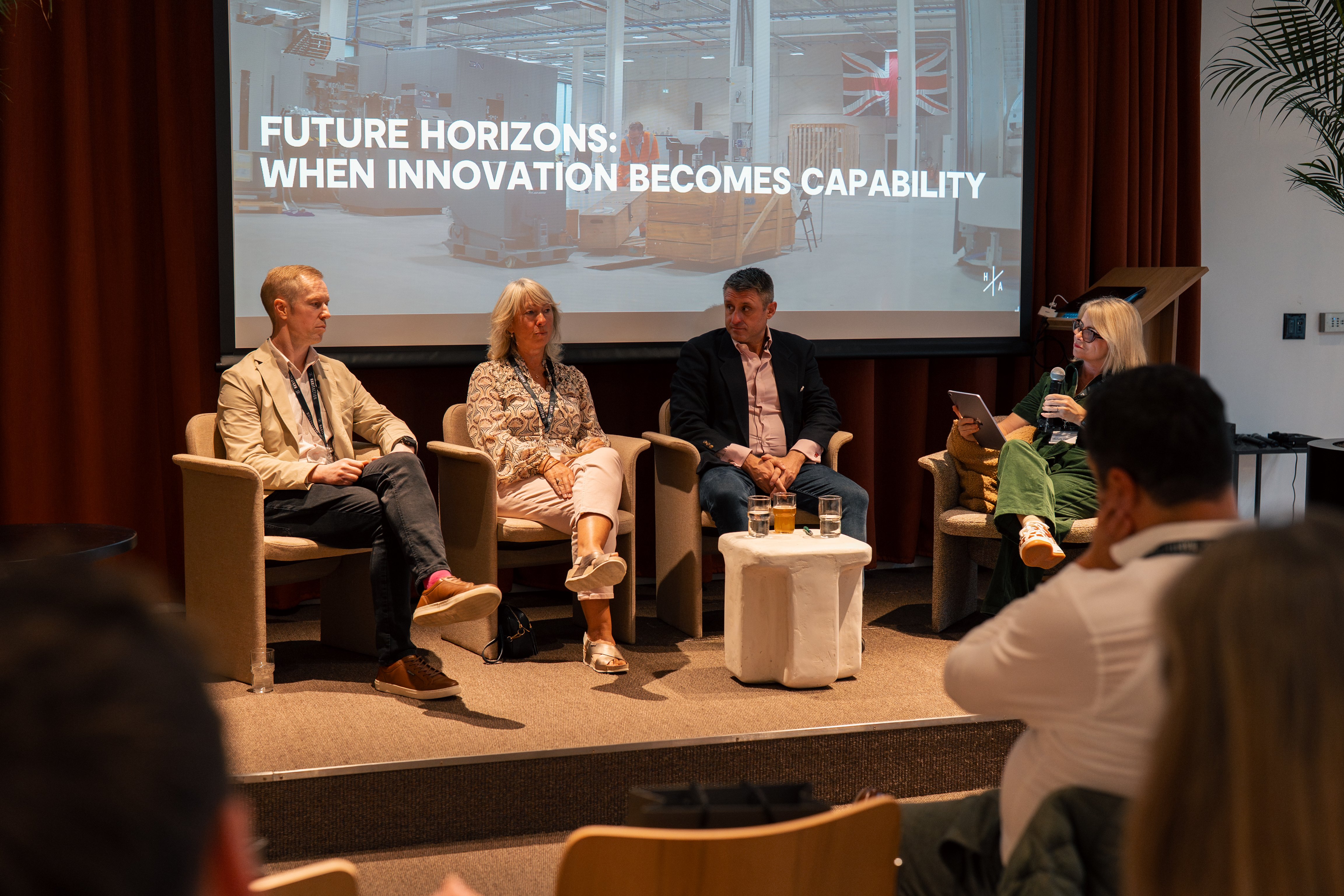
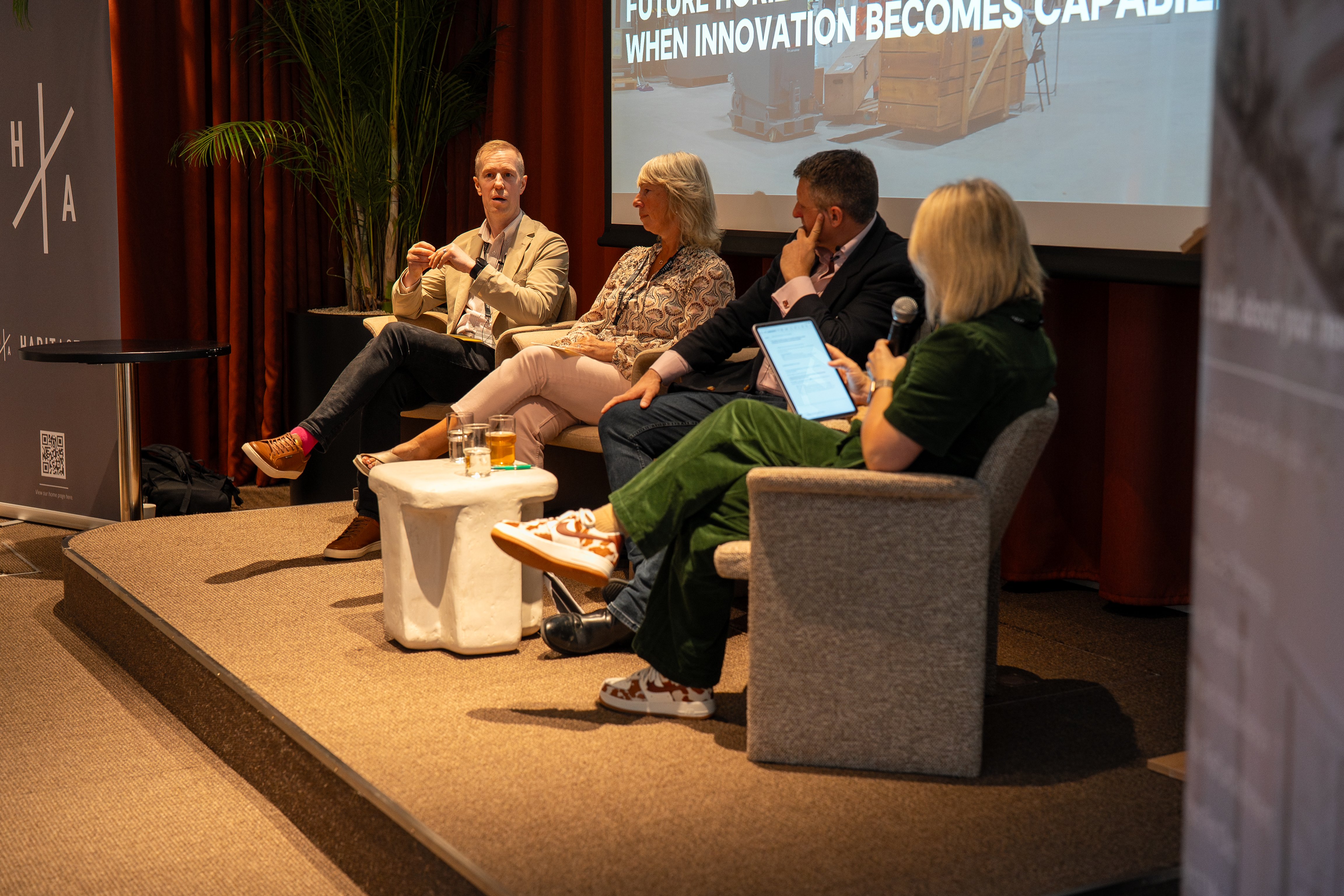
Our creative director Michelle Carr, host of the Design to Work podcast, was joined by a panel that ranged from global corporate real estate to a defence start-up still working off a kitchen table:
- Jill Skidmore, recently retired as senior director of global real estate at The Coca-Cola Company, after 28 years at Diageo before that
- Martin Frohock, global director of workplace experience at AVEVA
- Ben Everitt, co-founder of Stratonex Defence Technologies and former MP for Milton Keynes North
The brief was "when innovation becomes capability". Here is what we took away.
Get the question right before anything else
Jill's warning to every management team she worked with was simple: ask the wrong question and you will get the wrong answer. On major manufacturing projects, she spent 18 months to two years defining a requirement before committing to it.
That sounds slow until you weigh it against a 30-year commitment and a half-billion-dollar investment. Her cautionary example was an office search that starts with a headcount, lands on 10,000 sq ft, and is made pointless by a merger before the ink is dry. Time spent defining the brief is the cheapest time in any project.
Stop predicting the future, and make fewer bad bets
Martin was blunt about forecasting: nobody can do it, so stop trying. His test for any investment is not whether it will serve you tomorrow, but whether it will limit you tomorrow.
Strategy and property now move at very different speeds. Most businesses plan five years ahead at most, and Martin says his own strategy is being recast nearer every three months. Buildings and industrial assets, meanwhile, are 30-year commitments. His answer to that gap is systems thinking, with OT, IT, digital, manufacturing and real estate working as one team rather than in professional silos.
Speed beats polish: lessons from Ukraine
Ben recently visited drone manufacturers in Ukraine, and what struck him was how little the factories looked like factories. Large factories are easy targets, so production has moved into garages and small workshops instead.
Far from slowing innovation down, that stripped-back model has accelerated it. Parts are 3D printed or sourced globally, and small sites turn out hundreds of units a day. Drones costing around $300 arrive at the front in boxes the size of a pizza box and can be airborne within five minutes of leaving a car boot.
The feedback loop is just as striking. On the drive back from a demonstration, Ben watched the factory manager take a call from a battlefield commander setting out what the next iteration needed to do. Innovation cycles are measured in days, and some designs go out of date within weeks.
As Ben put it, capability in military terms means how effectively force is applied, not how sophisticated the kit is. For anyone planning defence facilities, that is a reminder that speed to deploy can matter more than the finish.
Innovation happens in ecosystems, not single buildings
Martin, who spent much of his career in Cambridge, argued that real innovation comes from a whole city of clever people, not one building or a handful of partners. Being inside the ecosystem is what shortens the cycle.
Ben backed this with a story from his first week as an MP in Milton Keynes. A business upstairs from his constituency office turned out to be making optical equipment for spacecraft, technology it later sold into motorsport. The Oxford–Milton Keynes–Cambridge corridor is full of university spin-outs like it, and in his words, unless you are living in that ecosystem, it can pass you by.
It is why Ben's new site sits on a university campus. The partnership gives Stratonex input on product design today and a talent pipeline on its doorstep tomorrow.
A workplace can win business too
Stratonex's prototypes are currently spread across warehouses and garages in Buckinghamshire and Oxfordshire. The new site brings workshop and office together around a test track, with a balcony overlooking it.
For a start-up, that layout is commercial strategy as much as accommodation. Visiting buyers and investors can watch the kit in action, and the team finally works under one roof.
Flexibility is worth paying for
This was the one point the whole panel agreed on. Ben's time in Parliament, which began weeks before the pandemic, taught him that events move at their own pace whatever your plans. His answer is to build flexibility into everything, from leases to partnerships.
Jill put a price on it: "It's better to pay a higher price for flexibility because that's cheaper in the long run."
She also pointed out where flexibility is most often lost. A real estate strategy can be spot on, then fail in the fit-out, when fixed meeting rooms and rigid layouts lock in cost. On industrial sites, the equivalent is building only for today: she favours a little extra roof height and spare land, with key infrastructure put in early while it costs little.
Her portfolio advice follows the same logic. Invest heavily in core locations in the major markets where the business's future lies, and use lighter, more flexible options everywhere else.
Test it digitally before you build it
Martin made the case for digital twins: models of how a production line and the people working on it will behave under different scenarios. Testing those scenarios on screen is far quicker and cheaper than finding a new site to trial something physically, and it happens before anyone commits half a billion dollars.
He pointed to a life sciences example where eight robotic samplers, linked together and directed by AI data models, replaced manual lab work and roughly tripled the hit rate to about one success in every three tests. The tension, he noted, is that innovation thrives on openness and shared data, while margin-driven manufacturers are built to protect both.
What this means for your next facility
From the front line to the office floor, the panel's message was consistent. The future can't be predicted, but the decisions that close it off can be avoided.
For anyone planning a facility, that means defining the requirement properly before choosing a building, and designing space that can change as fast as the strategy does. That is the thinking behind how we approach every project at Habit Action, starting well before the floorplan.
If you are planning a new facility and want to test your brief, talk to our team.
FAQs
What was Future Horizons 2026?
A panel event hosted by Habit Action in October 2026, exploring how innovation becomes capability in defence and industry. Habit Action's creative director, Michelle, hosted Jill Skidmore and Martin Frohock alongside Stratonex co-founder Ben Everitt.
How can businesses future-proof a facility?
The panel's advice was to define the requirement thoroughly, then judge each decision by whether it will limit you later. In practice that often means paying a little more for flexibility, such as spare land or adaptable layouts.
What can UK defence learn from Ukraine's drone manufacturing?
That speed and dispersal can matter more than polish. Ukrainian drone production runs from small distributed sites, with frontline feedback reaching factories within days.
Why does location matter for innovation?
Innovation clusters around ecosystems such as Cambridge and the Oxford–Milton Keynes–Cambridge corridor, where university spin-outs and the talent behind them sit close together.