 ·
6 minute read
·
6 minute read
An advanced manufacturing organisation should plan expansion around its production requirements rather than simply adding floor space. Identify current bottlenecks, understand future demand and determine which changes will increase manufacturing capacity without disrupting critical operations.
How can advanced manufacturing organisations expand production without disrupting operations?
For an advanced manufacturing organisation, expansion is only successful if production can continue while the building changes around it.
A larger facility doesn't automatically mean greater output. If production slows, teams can lose access to essential equipment, logistics can become harder to manage and critical utilities can be disrupted. In some cases, the expansion can even create new operational problems.
The key is to design the expansion around the production requirement, rather than simply designing a bigger building.
For manufacturers operating in defence, aerospace, automotive and elite engineering, this means understanding:
- How the facility works today
- Where the bottlenecks are
- What needs to remain operational throughout the project
- What the operation will need as production grows
Here are five ways to minimise downtime during an advanced manufacturing expansion.
.jpeg?width=1840&height=1228&name=Accent%200763%20(1).jpeg)
1. How should you plan an advanced manufacturing expansion?
Start with the production requirement, not the building. Before deciding what to build, understand what is actually limiting production today, what the organisation needs to achieve and how those requirements are likely to change.
When an organisation needs more production capacity, the natural response is often to look for more space. But square footage is only part of the answer.
Where is the bottleneck?
Is it:
- Available production space?
- Material movement?
- Storage capacity?
- Specialist equipment?
- Power or other utilities?
- Loading and logistics?
- Workforce capacity?
- Testing or inspection space?
- The layout of the existing facility?
This creates a much more useful starting point than simply deciding how many additional square metres are required.
It is also important to look beyond today's requirements. What will production look like in two, five or ten years?
If demand is expected to increase significantly, the facility may need additional electrical capacity, stronger floors, more services, automation infrastructure, improved logistics or space that can be adapted as production changes.
The best expansion strategy therefore starts with a simple question: What does production need the building to do?
Only then should the building be designed around those requirements.
Habit Action in practice: Isembard
At Isembard, the requirement wasn't simply to create a larger workplace. The new 38,000 sq ft headquarters is the new UK headquarters and therefore required increased electrical capacity for CNC machinery, automation infrastructure and improved production processes.
The project was delivered within an accelerated 12-week programme, meaning the design and delivery had to be driven by operational requirements from the outset.
The lesson: manufacturing capacity depends on far more than floor space. Power, equipment, automation, logistics and future flexibility all need to be considered as part of the expansion strategy.
2. What should remain operational during a manufacturing expansion?
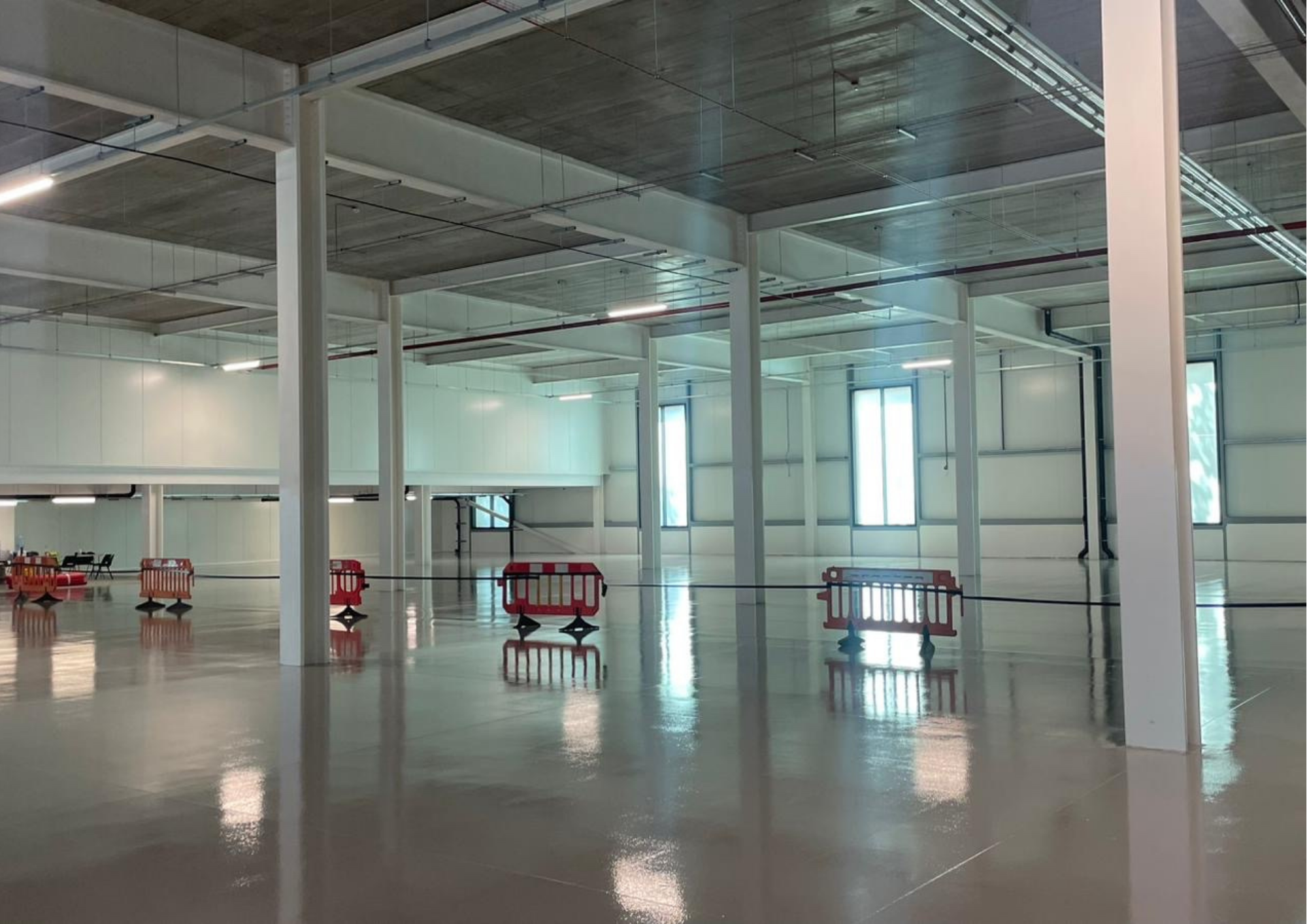
Before construction begins, identify everything that cannot simply be switched off. This includes production equipment, utilities, logistics routes, testing areas, secure spaces and the systems that allow people and products to move safely through the facility.
An advanced manufacturing facility can contain a complex network of activities and infrastructure, including:
- Production lines
- Specialist machinery
- Loading and logistics routes
- Testing areas
- Secure areas
- Staff access
- Electrical infrastructure
- Data and communications
- Compressed air and extraction
- Fire and life-safety systems
- Specialist water, drainage or gases
These requirements need to be mapped before construction begins.
This is one of the biggest differences between an ordinary refurbishment and a mission-critical manufacturing project.
You aren't simply asking: “Where can we build?”
You're asking: “Where can we build without affecting production?”
For defence manufacturers, this can be particularly important where secure areas, controlled access, specialist equipment and critical production infrastructure need to remain operational throughout the works.
That distinction should influence the entire project strategy.
3. How can phased construction minimise manufacturing downtime?
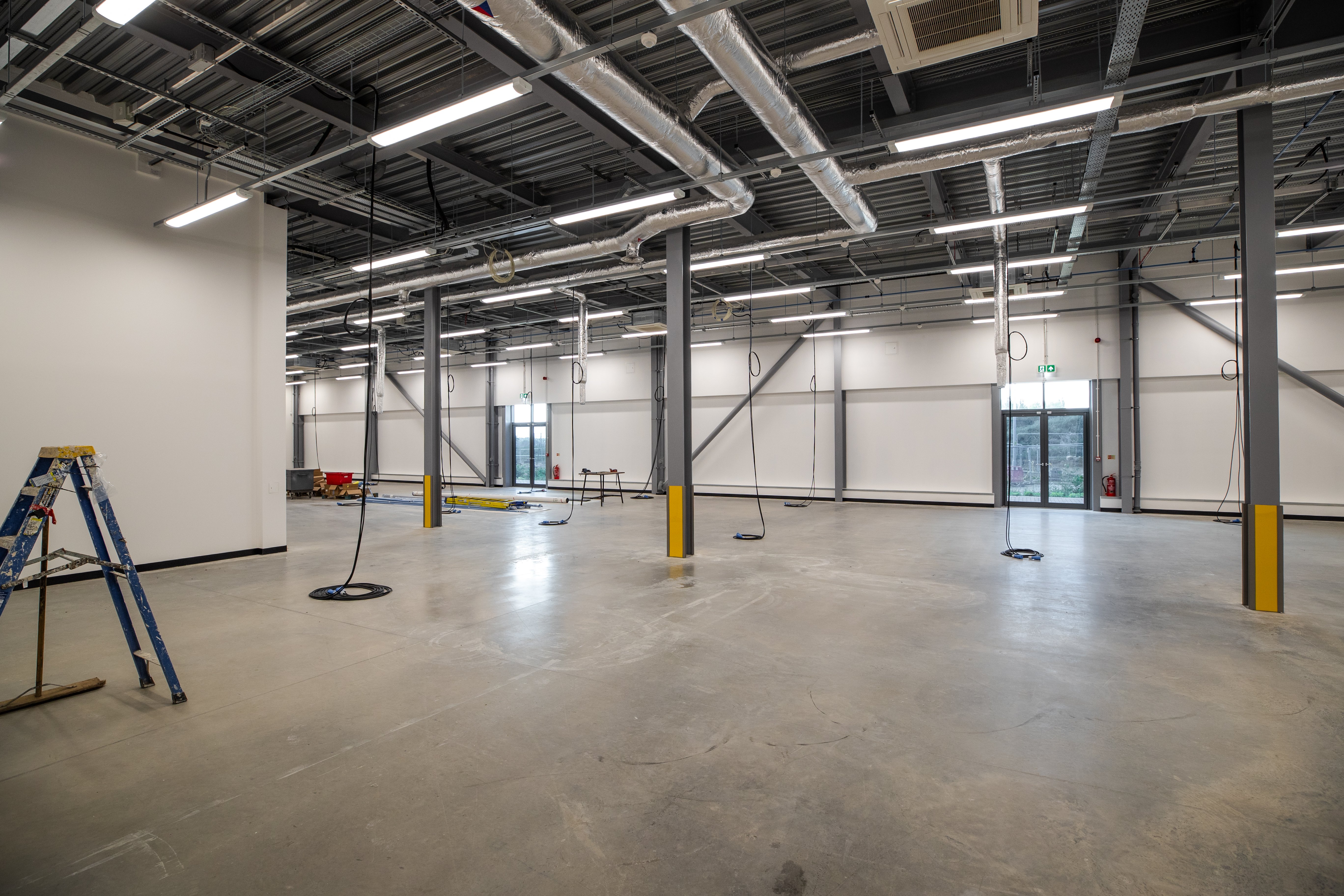
Phased construction divides an expansion into manageable stages, allowing work to take place around an operating facility. Instead of attempting to complete everything at once, new capacity can be brought online progressively while unaffected areas continue to operate.
For example, an expansion might begin with additional warehouse or storage capacity. Once that area is operational, it can provide temporary capacity while work moves into another part of the facility.
Expansion doesn't always need to start with the production floor.
Habit Action in practice: Sigma Pharmaceuticals
At Sigma Pharmaceuticals, the challenge included an inefficient goods-out facility alongside growing demand. The solution included a new picking system and a mezzanine that doubled the existing warehouse floor area.
Sometimes the quickest way to release production capacity is to improve the space around production.
Production areas can then be expanded in smaller stages, allowing teams and equipment to move between completed and temporary spaces as required.
This creates a rolling programme:
Build → relocate → release space → build again → bring new capacity online.
The principle is simple: don't stop the entire operation when you only need to stop one part of it.
Speed matters when expansion is linked to production

Habit Action's work with Global Aerospace demonstrates the importance of aligning programme, infrastructure and manufacturing requirements.
The 38,000 sq ft HQ was delivered in 12 weeks, with the project incorporating increased electrical infrastructure for CNC machinery and infrastructure for automation.
For advanced manufacturers, a faster programme isn't simply about finishing construction sooner. It can mean getting additional manufacturing capability operational sooner.
The right phasing strategy will depend on the operation, but the objective remains the same: keep as much of the production environment operational as possible, for as long as possible.
4. How do you build around a live manufacturing operation?
The construction methodology needs to work around the way the facility actually operates. Phasing alone isn't enough. The project team needs to understand how people, products, equipment, materials and services move through the building and plan construction around those requirements.
That means considering practical questions early:
- Where will contractors access the building?
- How will materials enter the site?
- Can deliveries continue?
- Will construction routes cross production routes?
- What happens if a critical utility needs to be isolated?
- Where can equipment or staff temporarily relocate?
- What areas require additional security or segregation?
These decisions can have a significant impact on downtime.
Advanced manufacturing facilities often have highly specialised workflows and complex requirements, so a construction plan that looks efficient on paper can create serious disruption once it interacts with the live operation.
Habit Action in practice: Origin Pharmaceuticals
At Origin Pharmaceuticals, Habit Action had to deliver a 16,000 sq ft project while COVID restrictions limited the number of tradespeople able to work on site.
Rather than allowing those constraints to disrupt the client's production spaces, processes were adapted to keep the project moving around the live operation.
It is a useful reminder that minimising disruption isn't only about the construction programme. It is about adapting the delivery strategy to the operational reality of the client.
This is why early coordination between the client, design team, contractor, facilities team and production teams is so important.
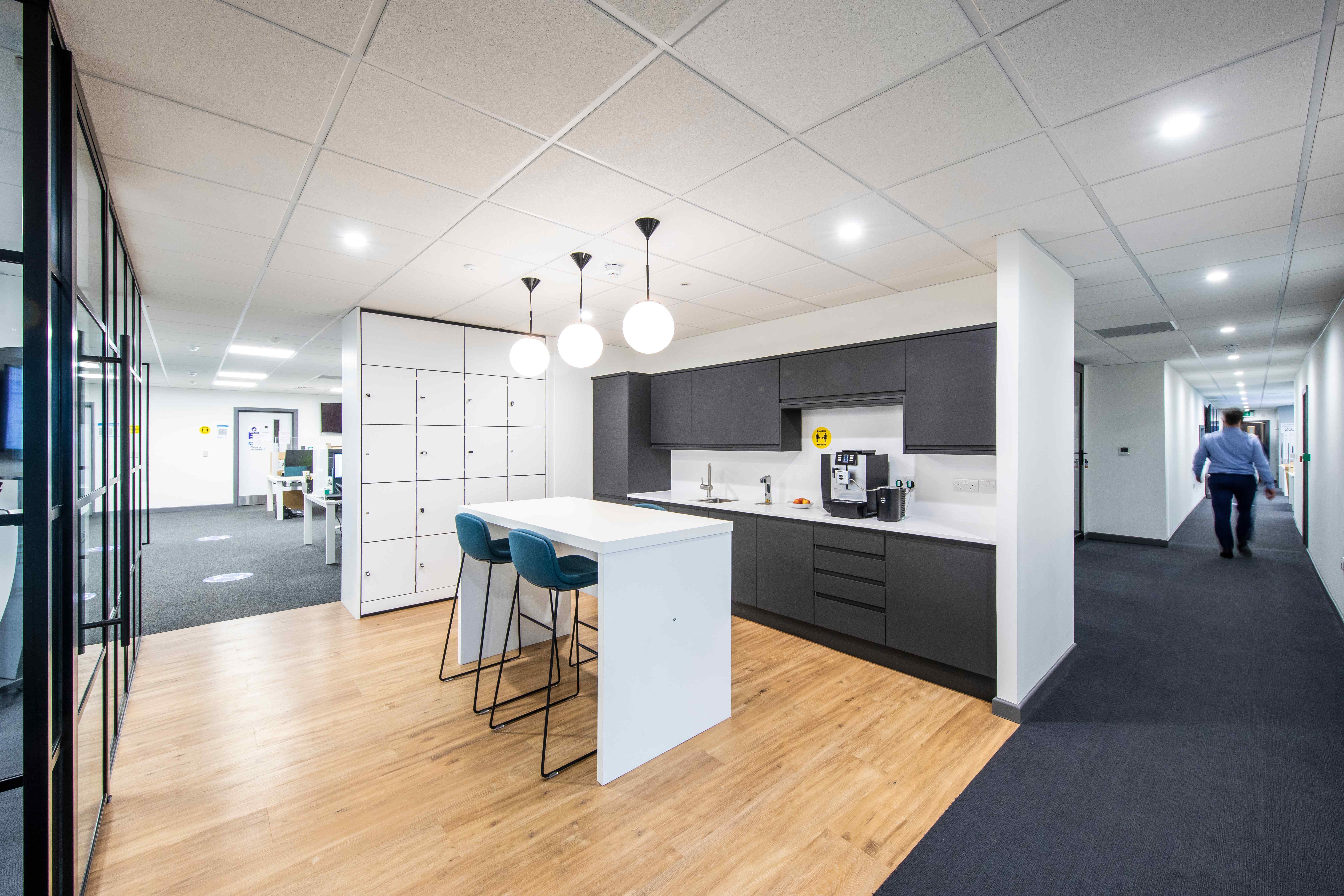
Habit Action in practice: Essex X-Ray
Essex X-Ray's existing facilities were limiting its potential for expansion, including restricted workspace and inefficient operational flow. Its new 59,000 sq ft headquarters was therefore designed around much more than simply providing additional floor space.
A high-capacity warehouse was integrated to improve logistics and inventory management, while specialist X-ray rooms were designed around the controlled conditions required for testing and manufacturing. The facility was also designed with future scalability in mind.
The lesson: when a manufacturing facility is designed around how production actually moves through the building, the result can be greater operational capacity rather than simply more space.
The earlier these constraints are understood, the more options there are for working around them.
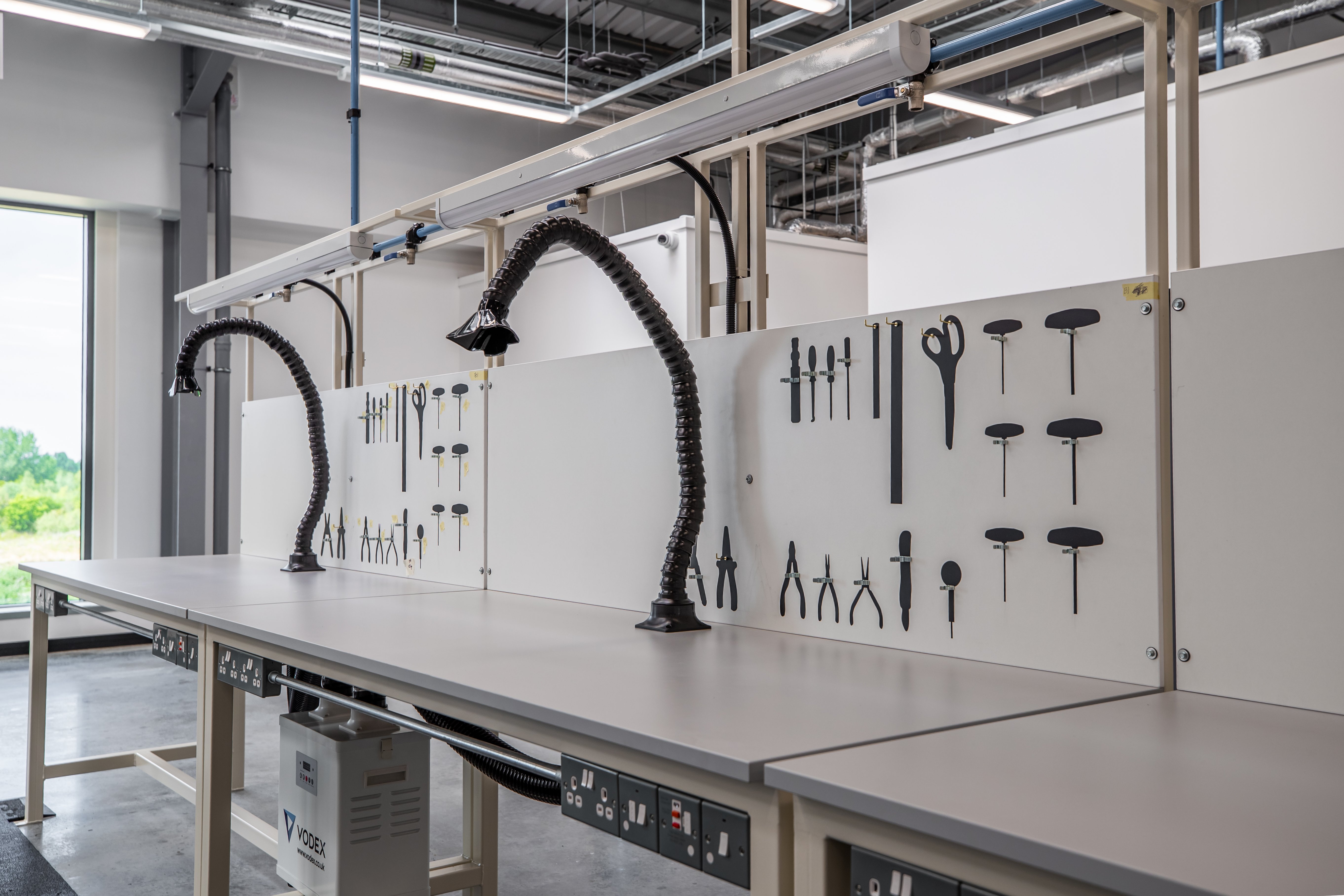
5. How should manufacturers plan the return to production?
Manufacturers should plan the return to production before construction begins. Completing the physical works doesn't necessarily mean production can restart immediately. Equipment, utilities, IT, access control, safety systems and production trials may all need to be tested and commissioned first.
A return-to-production plan might include:
- Equipment installation and testing
- Utility commissioning
- Safety checks
- Environmental controls
- IT and data connections
- Access control
- Equipment validation
- Staff movement
- Cleaning and handover
- Production trials
The goal is to avoid finishing the physical works only to discover that production cannot yet resume.
A well-planned project therefore considers three stages:
Before: prepare the operation and identify constraints.
During: protect production while construction takes place.
After: bring the new or upgraded facility into operation as quickly and safely as possible.
What is the best way to minimise downtime during a manufacturing expansion?
The most effective approach is to treat production continuity as a design requirement, not a construction afterthought.
That means understanding how the facility operates before work begins, identifying what cannot be interrupted, and developing the construction programme around those requirements.
For defence manufacturers, this can be particularly important. Growth may be driven by new contracts and increased demand, meaning additional manufacturing capacity needs to come online without compromising the production already supporting existing programmes.
.jpeg?width=1840&height=1228&name=Accent%200770%20(1).jpeg)
A production interruption can affect delivery schedules, customer commitments, workforce productivity and the ability to manufacture critical products.
The facility therefore needs to support today's manufacturing requirements while creating the infrastructure to respond to future demand.
At Habit Action, we approach advanced manufacturing projects from that operational perspective — considering production, utilities, logistics, security, specialist requirements and future growth alongside the physical space.
Because the best expansion isn't necessarily the biggest one.
It's the one that increases capability without putting today's production at risk.
FAQs
How can manufacturers expand without stopping production?
Manufacturers can expand without stopping production by using phased construction, temporary relocation and controlled shutdowns. Work can be completed in one area while unaffected parts of the facility continue operating, allowing new capacity to come online progressively.
What is phased construction in manufacturing?
Phased construction divides a manufacturing expansion into smaller stages so that construction can take place around an operating facility. Areas can be completed, commissioned and brought into use before work moves to the next phase, reducing the need for a single large shutdown.
How do you minimise downtime during a factory refurbishment?
Start by identifying which production activities, equipment and utilities cannot be interrupted. The refurbishment programme can then be designed around these requirements, using phased works, temporary arrangements and planned shutdown windows to protect production.
What should be considered when expanding an advanced manufacturing facility?
Consider production flow, available space, power capacity, equipment, floor loading, logistics, specialist utilities, security, testing requirements and future growth. The facility should be designed around how the manufacturing operation works rather than simply how much additional floor space is required.
How long should a manufacturing shutdown last?
There is no standard shutdown period for an advanced manufacturing facility. The objective should be to make shutdowns as short and controlled as possible by planning isolations, equipment moves, installation, commissioning and production restart in advance.