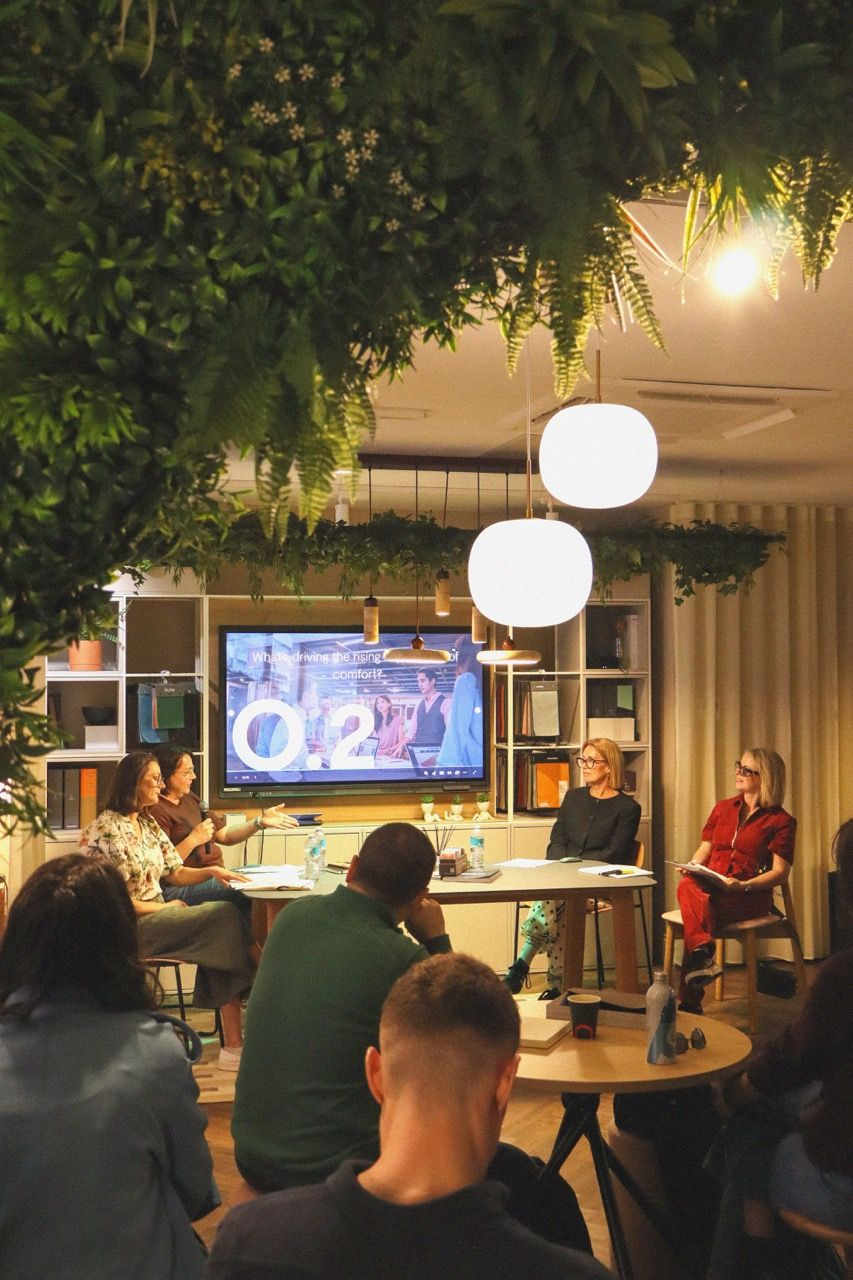
At Clerkenwell Design Week, our creative director, Michelle Carr, hosted a panel with Gail Gillings from Areen, Natasha Christian from Made Architects and Deborah Simmons from Camino Insight. With over 100 combined years’ of experience in workplace design, it made for an engaging panel discussion exploring The Rise of Comfort-led Workspaces - and how evolving expectations around wellbeing, flexibility and hospitality are reshaping the modern office.
What does comfort mean?
Comfort means different things to different people. To some, comfort means movement, exercise and fresh air, and to others, it means lying on a beach and relaxing. The range of answers from the audience underpins exactly what comfort means in modern workplaces; variety.
What does comfort mean in the context of the workplace?
Comfort in the workplace is a conscious and sub-conscious thought from our first experience as soon as we arrive. Is there unnamed friction? What can you feel, hear and touch? But comfort is deeper than your physical senses. Comfort is also your sub-conscious thoughts that don’t appear on a specification sheet such as how safe do you feel, how easy is it to find the toilets, where can you confidently sit and work, how familiar are your surroundings?
What is driving the importance of comfort?
A comfort-led workplace is important as it plays a significant role in why people will visit, especially in the modern workplace. It is the reason some companies have been able to entice employees back to the office, as their employees are able to balance the benefits of face-to-face interactions with the comfort of their working from home set up.
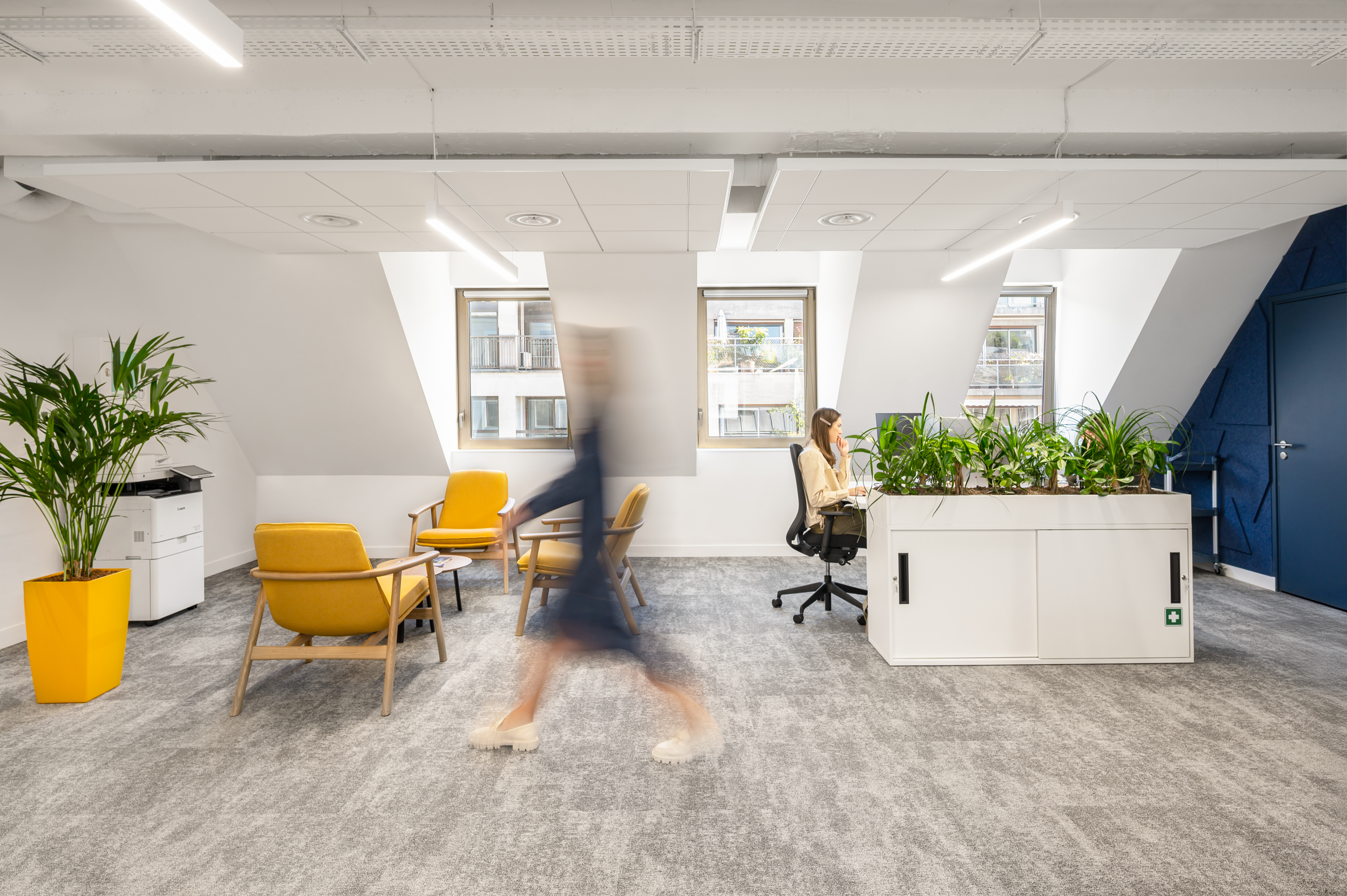
Workspaces have evolved to give employees a variety of workplace options to enable them to feel comfortable, such as break out zones, pods, sofas and tradition desk set ups.
The workplace prior to Covid
Prior to covid, workplace design was about creating a ‘fun’ environment, with businesses opting for gimmicks such as slides, swings and ball-pits. However, these trends have become less common in modern workplaces as they didn’t add value, not everyone felt included and ultimately, they didn’t make employees comfortable.
Post covid workplaces
Modern workplaces are focused on providing workspace that enables employees to perform. Workplace design post Covid was about creating a space that entices employees back to the office, so the focus was about bringing their home comforts into their workplace to remove friction. Some trends we saw post Covid were:
- Better kitchens
- Collaboration areas
- Consideration for mental health and neurodiversity (zen dens)
- Break out areas with sofas
Modern workplaces are not a one size fits all approach
Through our data-led approach to office design, we have discovered that employees have a range of different needs in order to feel comfortable in the workplace. For example, a focus space for one is not a focus space for another. Some thrive in high-energy, loud environments and others need quiet, peaceful workplaces.
One of the challenges in creating workplaces where employees don’t necessarily work at a desk is ergonomics and DSE. We want to promote autonomy in finding comfort but we also want the employees to be properly supported.
Covid gave users control of their environment, which may have changed for different tasks. Our research tells us that employees working at home may do one task at their desk set up and do another, such as emails, on the sofa. When encouraging users back to the office, it was important to be able to give employees these comforts to remove friction and boost performance.
Gen Z in the workplace
Gen Z faced disruption to their school, college and university time because of lockdown. Workplaces provide a place to rebuild social connection but Gen Z need an environment which will also fit in with their lifestyle.
What Gen Z value in the workplace:
- Flexibility
- Variety
- Useful perks such as gyms
- Wellness and mental health considerations
How do we design comfort-led workplaces?
- Different lighting levels.
- Soft and comfortable spaces.
- Variety of places to work within the office (break out spaces, sofas, traditional desk set up).
- Branding can remind employees of core values and everyone works for the same team.
- Different acoustic levels in different areas to facilitate different teams and personalities.
- Subtle branding and psychological colour choices.
Data you can use to measure comfort in your workplace
- Surveys
- Observations
- Workshops
The key is to set a cadence for regular analysis, for example every quarter, as issues are not always visible at first and improvements should be continuous.
Key takeaways
Through evidence-based insights developed over the past five years post covid, designers a better equipped to propose trusted solutions - such as focus pods or acoustic installations.
Recognising the importance of collaboration and capturing requirements across multiple business departments for diverse requirements.
This informed approach supports the development of tailored design solutions, acknowledging that no single solution suits every organisation.
Designing and creating more comfortable inclusive workplaces for all.