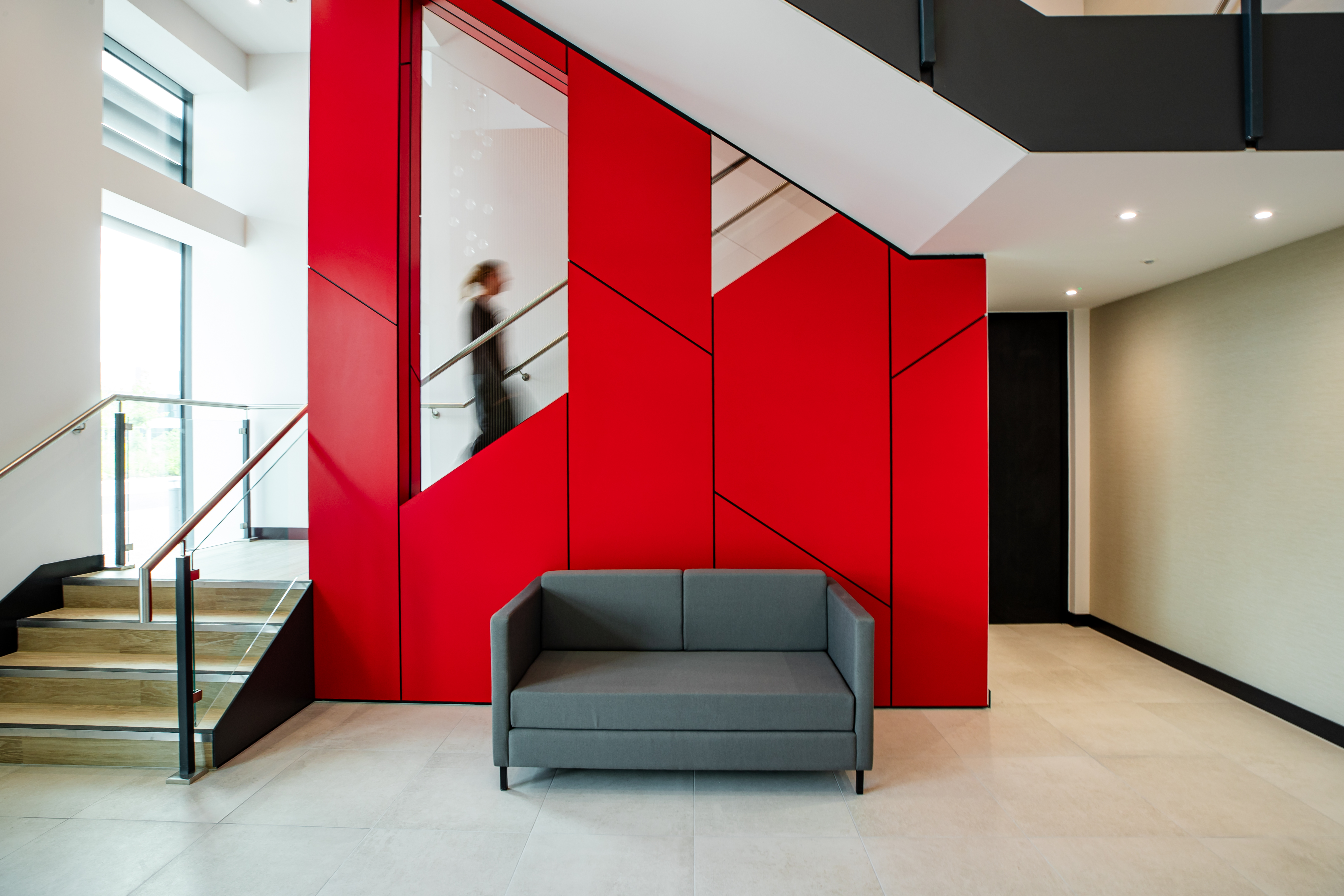
UKREiiF (The UK's Real Estate Investment & Infrastructure Forum) is the largest annual property event in the UK. Our Relationship Director, Joe Burnham and Client Relations Manager, Cayden Hibbert, attended to keep at the forefront of industry changes.
The feedback from the commercial property sector was consistent, with conversations moving away from post-Covid and attracting employees back to the workplace. There is a growing demand for workplaces that deliver measurable value for business and employees alike.
For commercial fit-out and workplace delivery, many of the themes emerging from UKREiiF reinforce what we're already seeing on projects across the UK. The quality of workplace environments is a key factor in driving productivity, retaining talent, and future-proofing commercial assets.
In this article, we explore some of the key commercial property takeaways from UKREiiF 2026 and what they mean for landlords, agents, developers, and occupiers looking to maximise the value of their office space.
The Golden Triangle – Oxford, Cambridge, London
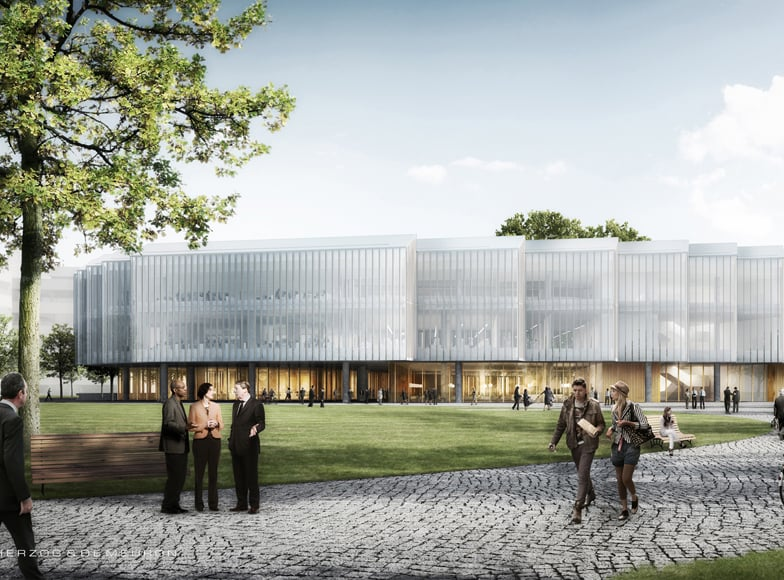
A consistent theme at UKREiiF for the commercial sector was the Golden Triangle, Arc remains a major strategic priority across the commercial, government, and education sectors.
There is a significant opportunity within the region to create a UK equivalent of Silicon Valley, building on the concentration of talent, research and innovation that already exists.
East West Rail was repeatedly highlighted as a critical milestone in bringing these locations closer together and unlocking greater collaboration, investment, and mobility across the corridor.
Both private and public sector investment remain strong, which is encouraging. However, there was also a clear message that UK businesses must continue to invest domestically and create the conditions that encourage science and technology companies to scale here, rather than looking overseas.
One comment that particularly resonated came from AstraZeneca, who described the region as a "hub and spoke" model. The major institutions, universities and corporate anchors create centres of excellence that act as the hubs, while the surrounding businesses, supply chains and innovators form the spokes. Together, they create a diverse, highly skilled and commercially successful ecosystem capable of competing on a global stage.
Experience-led Workspaces
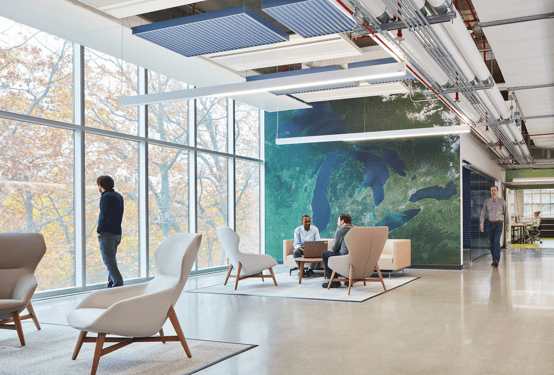
Our Creative Director, Michelle Carr, spoke at Clerkenwell Design Week about the importance of creating a workplace that employees want to attend and those thoughts were echoed at UKREiiF 2026. Experience-led workplaces continue to grow in importance as employees now expect hybrid-working, home comforts and work-life balance. The office is no longer viewed simply as a place to work, but as a destination that must provide a compelling reason for people to be there. Successful workplaces are increasingly being designed to support a wide range of user needs, foster company culture and provide the comforts from homeworking, moving away from the post-Covid gimmicks that popularised UK offices.
Alongside this shift, wellbeing has become a key commercial consideration. Discussions throughout the event highlighted the impact that healthy, comfortable and user-focused environments can have on employee satisfaction, retention and productivity. Factors such as lighting, acoustics, air quality and overall workplace experience are now seen as integral to the value of a commercial space rather than optional enhancements.
The role of workplace amenities was also a recurring topic. High-quality breakout areas, hospitality-inspired spaces, wellness facilities and flexible meeting environments are becoming essential features for attracting and retaining talent. Increasingly, these amenities are helping landlords and occupiers differentiate their spaces in a competitive market.
There was also a clear link made between sustainability and user experience. Occupiers are seeking buildings that not only perform well from an environmental perspective but are also enjoyable and efficient places to spend time in. As a result, building performance, energy efficiency and workplace experience are being considered together rather than as separate objectives.
Finally, flexibility remains a critical requirement. Businesses need spaces that can adapt to varying daily usage, working patterns change and differing department needs. Fit-outs that support a variety of working styles and can be easily reconfigured are becoming a significant factor in future-proofing commercial assets and maintaining long-term occupier appeal.
ESG Integration
Unsurprisingly, ESG remained a major focus at UKREiiF 2026. Office fit-out and architects are expected to deliver both environmental performance and long-term social value for commercial spaces.
ESG is no longer just a compliance exercise and is now shaping workplace design decisions, from sustainable materials and energy-efficient fit-outs to creating healthier, more inclusive environments for occupiers.
Buildings that successfully balance sustainability, wellbeing and operational efficiency will be best placed to attract tenants, meet evolving regulations and maintain asset value in the years ahead.
Summary
UKREiiF 2026 reinforced three themes that are set to shape the future of commercial real estate: the continued strength of the Golden Triangle, the growing importance of ESG-led decision making, and the increasing demand for experience-led workplaces.
For agents, these trends present both opportunities and challenges. Occupiers are becoming more selective, seeking spaces that not only meet operational requirements but also support sustainability targets, employee wellbeing, and productivity. As competition for tenants intensifies, the quality and adaptability of workplace environments will play an increasingly important role in asset performance and leasing success.
Buildings that combine strong ESG credentials with engaging, high-quality workplace experiences will be best positioned to attract and retain occupiers. For landlords and agents alike, investing in thoughtful workplace design is becoming a key differentiator in an evolving market.
As these priorities continue to shape the UK's commercial property landscape, fit-out and refurbishment strategies will be central to unlocking value, futureproofing assets, and creating workplaces that meet the expectations of tomorrow's occupiers.
.png)