 ·
10 minute read
The construction industry has a sequencing problem. And clients are paying for it. Why Early Contractor Involvement needs to become the starting point for complex capital projects, not an afterthought.
We've become remarkably comfortable with finding out whether a construction project is affordable after we've spent months designing it.
An organisation can spend months developing plans for a new headquarters or specialist facility, only to reach tender and discover that the project isn't as commercially or technically viable as everyone had assumed. Until that point, everything seemed to be moving in the right direction.
Then the project goes to tender.
Suddenly, the budget doesn't stack up. Critical technical requirements need revisiting. The programme looks increasingly ambitious, and elements of the design that were considered settled are back on the table.
Months of work can be thrown into question because the commercial and practical realities of delivering the project weren't properly understood early enough.
It's a situation the construction industry has become far too familiar with. And we think it's one that should be challenged.
The issue isn't necessarily the quality of the design or the competence of the people involved. It's how the process is structured. When design, procurement and construction are treated as separate stages, important decisions can be made without fully understanding how they'll affect the cost or delivery of the project.
For organisations making significant capital investments, that disconnect can become extremely expensive.
Key Takeaways
- Tender is the most expensive place to find out a design doesn't work: months of design fees are already spent and the options have narrowed.
- For manufacturers, electrical capacity, floor loading and phasing around live production are design decisions, not construction details. Isembard's 38,000 sq ft London headquarters needed a CNC power upgrade planned in from the start.
- Early Contractor Involvement doesn't replace competitive tendering. It moves the market test earlier, pricing key trade packages while the design can still change.
- The UK Government's Construction Playbook (2022) states that early supply chain involvement "is key to reducing end-to-end programme timescales."
- Early Contractor Involvement adds least on simple, repeat or fully specified projects, where a traditional single-stage tender still works well.
A completed design doesn't mean a deliverable design
There's a fundamental difference between designing something that meets a client's ambitions and creating a solution that can realistically be delivered.
The two should go hand in hand. Too often, they're treated as separate challenges.
Take a manufacturer planning a new headquarters with integrated production facilities. The business is looking to expand its production capabilities while creating a better environment for its people. The design needs to accommodate all of this while allowing the business to continue operating.
On paper, the solution might work beautifully.
But what happens when the business discovers that the building's electrical infrastructure can't support the machinery it plans to install? Suddenly, what looked like a workable design requires expensive upgrades, potentially delaying the project before the facility has even opened.
These aren't minor construction details to resolve later. They're fundamental considerations that should influence the design itself.
And the later they're discovered, the fewer realistic options an organisation has available.
The same applies to life sciences facilities, where the technical demands of laboratory environments can shape the entire building design and how the project is delivered.
In these environments, technical knowledge cannot simply be added at the end of a design process. It needs to shape the decisions being made throughout it.
A design that hasn't been properly tested against the realities of construction and operation is still a design carrying significant assumptions.
Why are we still waiting until tender to test the numbers?
Traditional procurement has an obvious attraction. It allows organisations to develop their design before going to market to secure a competitive price.
On the surface, it appears to offer a straightforward way to achieve value.
But there's a problem with relying on a final tender to establish commercial certainty. By that point, the organisation may have already committed to decisions that are difficult, expensive or simply impractical to change.
And if the market responds with prices considerably higher than anticipated, what happens next?
The team returns to the design. Specifications are reconsidered, alternatives are explored and savings are sought. Sometimes these changes are sensible improvements. Other times, they compromise elements that were important to the original business case.
Either way, the organisation is now spending additional time addressing challenges that could potentially have been identified months earlier.
That's not a particularly effective way to manage investment.
This isn't an argument against competitive tendering. Far from it. Competition remains an important part of achieving value and commercial transparency.
We're questioning when that competition takes place, what information it tests and how effectively its findings influence the project. Competition should help develop a commercially viable design, not simply tell a client that their completed design costs too much.
The industry already knows early engagement matters
Interestingly, this isn't a particularly radical idea.
The case for earlier involvement isn't new. The UK Government's Construction Playbook identifies early supply chain engagement as an important part of improving project delivery.
In its section on Early Engagement and Clear Specifications, it states:
“Early supply chain involvement is key to reducing end-to-end programme timescales.”
UK Government, The Construction Playbook, September 2022, page 26.
The message is clear. The earlier we involve the people responsible for delivering a project, the better equipped we are to make informed decisions. Yet across the industry, we're still seeing projects progress through design before some of their biggest commercial and technical assumptions are properly challenged.
If we already recognise the value of early involvement, why are we still treating it as an exception rather than the standard?
The RIBA Plan of Work reinforces this thinking, recognising that decisions about procurement can fundamentally influence how a project is delivered.
In its guidance on Procurement Strategy, RIBA states:
“The Procurement Strategy needs to be considered from an early stage in a project.”
RIBA Plan of Work 2020 Overview, Chapter Eight: Procurement Strategy, page 90.
RIBA specifically identifies the timing of contractor and specialist subcontractor involvement as decisions that influence the wider project.
So the industry already understands that when we involve delivery expertise matters. Yet we continue to see projects progress through design before that expertise is properly brought into the conversation.
The question isn't whether early involvement has value. It's why we're still allowing critical decisions to be made without it.
Part of the problem, we believe, is that design progress is often mistaken for project progress.
As a design becomes more developed, it's easy to feel that the project is making real progress. But how much does that progress actually mean if nobody has properly tested whether the design can be delivered within the agreed budget? ECI brings delivery expertise into the conversation while the design is still developing.
And that's precisely where organisations need to be more demanding about what constitutes genuine progress.

Early Contractor Involvement should be the expectation, not the exception
At Habit Action, we've refined our methodology alongside major corporate occupiers to bring design, procurement and delivery thinking together much earlier in the process.
The principle is straightforward: involve the people who understand how a project will be built while there's still time to influence what is being designed.
That's the value of Early Contractor Involvement, or ECI.
As a design becomes more developed, it's easy to feel that the project is making real progress. But how much does that progress actually mean if nobody has properly tested whether the design can be delivered within the agreed budget?
This creates opportunities to challenge assumptions before they become commitments.
For example, if an engineering solution is proving unnecessarily expensive, alternatives can be explored before the wider design becomes dependent on it. If a proposed building system presents installation or maintenance challenges, those can be considered alongside the architectural design. If a specialist trade package carries significant procurement risk, the programme can be developed around realistic lead times rather than optimistic assumptions.
The important distinction is that this happens progressively, not as one major reality check at the end.
Key trade packages can be tested against real market costs while the design is still evolving, rather than waiting until tender. This gives the project team a clearer understanding of the budget and more opportunity to refine the design before major decisions are finalised.
ECI vs traditional tender at a glance
|
Early Contractor Involvement |
Traditional single-stage tender |
|
|---|---|---|
|
When the contractor joins |
During design, while options are open |
After design is complete |
|
When cost is tested |
Progressively, trade package by trade package |
Once, at tender return |
|
Who checks buildability |
Contractor works alongside the design team |
Design team alone, contractor reviews at tender |
|
Programme and lead times |
Built around real lead times for specialist packages |
Based on assumptions until a contractor is appointed |
|
Competition |
Kept, but focused on the packages and decisions that matter |
Whole design priced in one go |
|
If the price comes in high |
Design is adjusted early, before it's locked |
Redesign and value engineering after the fact |
|
Best suited to |
Complex, technical or live-operation projects |
Simple, repeat or fully specified projects |
It also changes the nature of the conversations taking place.
Instead of asking how to make an already agreed solution cheaper, the project team can ask whether there's a better way to achieve the intended outcome in the first place.
That's where we believe the greatest opportunity lies.
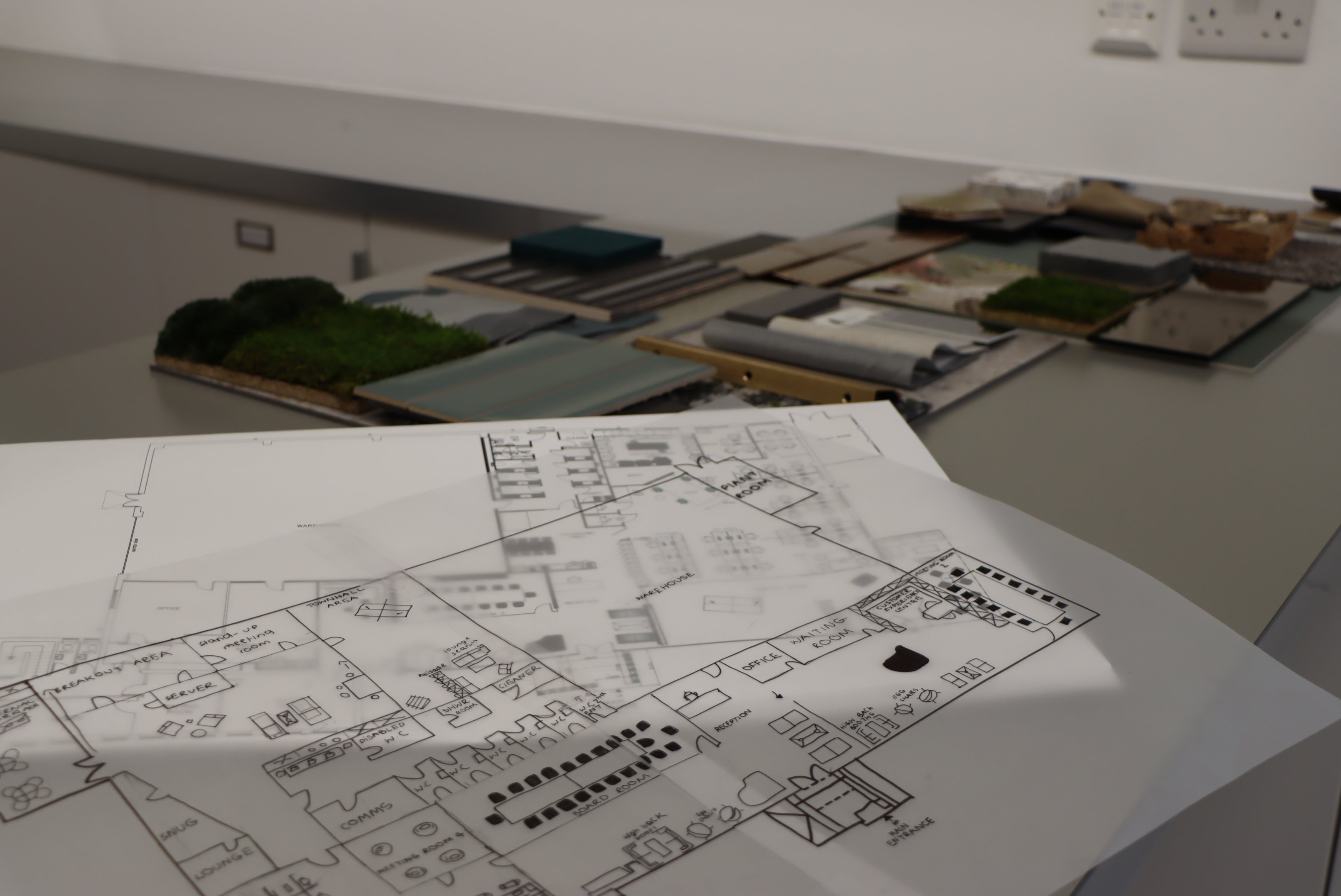
For complex facilities, this is about more than construction cost
The argument becomes even stronger when we consider what organisations are actually investing in.
A manufacturing facility is far more than just a building. Its design has a direct impact on how efficiently the business operates. If the electrical infrastructure can't support increased production capacity, for example, the business could find itself unable to install new machinery without costly upgrades and disruption to existing operations. These are decisions that need to be considered long before construction begins.
The same applies to laboratories. A beautifully designed space means very little if the ventilation system can't maintain the conditions needed for scientific research. Getting this wrong could mean expensive alterations before the facility can even become operational, delaying critical research and the organisation's ability to put its investment to work.
For corporate headquarters, the consequences are just as real. Imagine investing millions in a new workplace only to discover that the layout makes it harder for teams to work effectively. What should have been an investment in business performance becomes an expensive problem to solve, and one that could have been avoided with a better understanding of how the organisation actually operates.
We've seen how closely these considerations are connected through our work across advanced manufacturing, life sciences and corporate environments.
At Isembard's London headquarters, for example, the workplace requirements extended beyond conventional office design. The facility needed the electrical capacity to support CNC machinery and the infrastructure to enable greater automation. Without getting these requirements right from the outset, the business risked limiting its production capabilities before the new headquarters was even operational.
Projects with requirements like these demonstrate why technical considerations must be understood as part of the design challenge, rather than something to resolve once construction begins.
Because if the building cannot properly support the activity it was designed for, does it really matter whether the original drawings were delivered on time?
We would argue that it doesn't.
Organisations don't invest millions in facilities simply to complete a construction project. They invest because they want the facility to achieve something for their business.
The delivery methodology should reflect that.
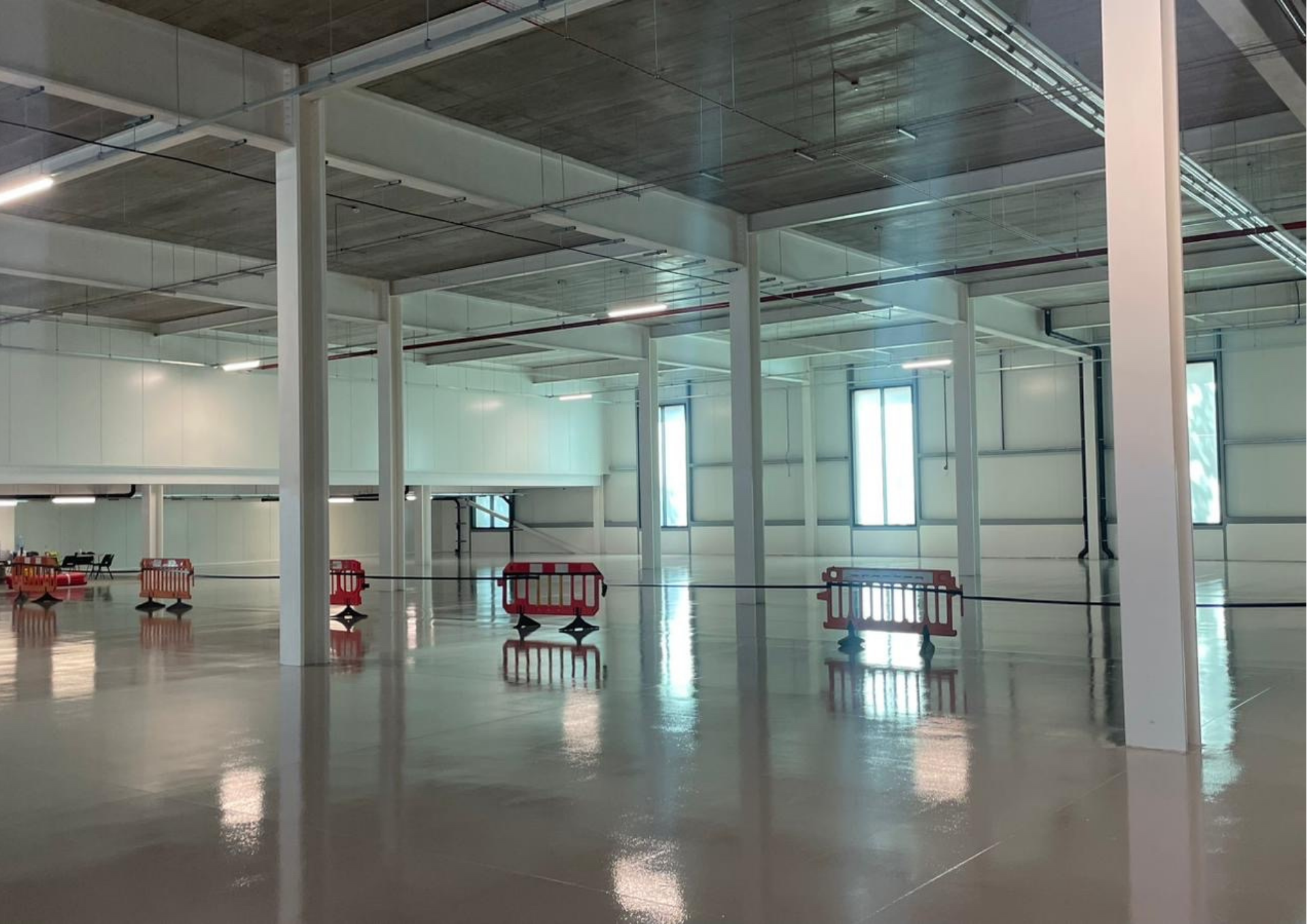
We need to change how we measure project certainty
Perhaps the biggest change required is in how organisations judge whether a project is ready to progress.
A completed design package is a milestone. It isn't proof that the project is commercially or technically ready to be built.
Real certainty comes from knowing that what you're designing can actually be built for the money you've got. There's little value in signing off a design only to discover months later that the budget was based on assumptions the market can't deliver. By then, the business has already invested heavily in a solution it may need to rethink.
That doesn't mean every risk can be eliminated. Construction is complex, and unexpected challenges will always exist.
But there's a considerable difference between an unforeseen issue and a predictable risk that nobody properly investigated until it was too late.
We believe clients should be asking tougher questions throughout design development. Rather than simply reviewing how far the design has progressed, they should be challenging how much of it has actually been tested against the realities of construction. It's one thing to have an agreed budget on paper, but quite another to know that the market can deliver what you're expecting for that figure.
If that confidence isn't there, the project may not be as advanced as everyone thinks.
This requires a different mindset from everyone involved. Designers, contractors, specialist suppliers and client teams need to work towards a shared understanding of what success looks like, rather than focusing solely on completing their individual stages.
It also requires an honest willingness to challenge decisions early, even when doing so makes the design process feel less straightforward.
That discomfort is preferable to discovering a fundamental problem six months later.

It's time to stop designing first and asking questions later
For too long, the construction industry has allowed projects to progress on the assumption that delivery challenges can be worked out later. But when those assumptions prove wrong, it's the client who ultimately pays the price.
We don't believe that approach is good enough for the complexity of the facilities organisations are now asking us to create.
At Habit Action, we believe in a simple principle: design for delivery, not just approval. A project shouldn't reach tender before anyone can confidently say whether it can be built within the agreed budget. That's why we bring construction expertise into the design process early, challenging assumptions while there's still time to make better decisions. We call this our Design for Delivery approach, because a project that works on paper and fails on site hasn't succeeded.
Design and delivery shouldn't be treated as separate stages. They should inform each other from the outset.
Early Contractor Involvement makes this possible by bringing delivery expertise into the conversation while the design is still taking shape, giving project teams the opportunity to identify potential problems and make better decisions before they become costly to change.
Not to restrict creativity or compromise ambition, but to develop solutions that are better informed, more coordinated and grounded in what can actually be delivered.
Because the success of a capital project shouldn't be measured by how confidently a design is presented at tender.
It should be measured by how confidently that design can be delivered, and how effectively the completed facility supports the business it was built for.
And that confidence needs to be established long before construction starts.
Drawings don't run CNC machines. Electricity does, and it's a great deal cheaper to find that out in month one of design than in week one on site.
Planning a new or refurbished manufacturing facility? Take our Manufacturing Fit-Out Readiness Assessment to see what needs testing before design goes too far, or talk to our team about bringing delivery expertise in early.
FAQs
What is Early Contractor Involvement (ECI)?
Early Contractor Involvement is a procurement approach where the contractor joins the project during design, before the scope is fixed and priced. Instead of pricing a finished set of drawings, the contractor helps shape them, bringing buildability, cost and programme knowledge in while changes are still cheap to make.
How is ECI different from a traditional tender?
In a traditional single-stage tender, the client completes the design first and then invites contractors to price it, so the contractor has no input until the decisions are already made. With ECI, the contractor is appointed early, usually under a pre-construction services agreement, and works alongside the client and designers before agreeing a final price. The trade-off is less price competition at the very start in exchange for far fewer surprises later.
When should a contractor be brought in under ECI?
Ideally as soon as you know you need the space and have a rough budget, well before detailed design starts. For a fit-out, that often means before you’ve signed the lease, because a contractor can flag issues with the building itself (services capacity, floor loading, access for deliveries) that change whether the space works at all.
Is ECI more expensive?
Not usually, once the whole project is counted. You may pay a fee for pre-construction services, but early input tends to cut redesign, variations and delays, which are where fit-out budgets typically overrun. The bigger saving is certainty: you know the real cost before committing, rather than discovering it on site.
Can I still get competitive pricing with ECI?
Yes. Many clients use a two-stage tender, where contractors compete on fees, overheads and approach in the first stage, and the chosen contractor then works up the detailed price with you in the second. Open-book pricing in that second stage lets you see exactly where the money goes.
Is ECI the same as design and build?
They’re closely related but not identical. ECI describes when the contractor gets involved, while design and build describes who is responsible for the design. A design-and-build contractor naturally works this way, because design and delivery sit under one roof from day one.
What types of projects benefit most from ECI?
Projects with technical complexity or tight constraints gain the most, such as laboratories, manufacturing spaces and secure or defence environments, where specialist services and compliance requirements drive the design. But office fit-outs on a fixed move-in date benefit too, since programme certainty is often worth more than a marginally lower tender price.