 ·
8 minute read
·
8 minute read
A secure defence workplace should protect sensitive information, people and equipment without making collaboration harder than it needs to be. The best approach is to build security into the workplace strategy from the beginning, using different levels of access, privacy and collaboration rather than treating the whole building as one restricted environment.
Walk into a typical corporate office and you might see people gathered around a screen, moving between meeting rooms, grabbing a coffee or finding somewhere quiet to concentrate.
In a defence environment, those everyday interactions can be more complicated.
An engineer might need to discuss a project with a colleague. A leadership team might need a confidential meeting. A manufacturing team might need to collaborate with technical specialists.
The work still needs to happen. But the information being discussed, the equipment being used and even who can enter a particular area may need careful control.
That creates the real workplace design challenge: How do you create an environment that supports collaboration while protecting the things that need to stay secure?
The answer isn't to make everything more restricted. It's to understand what needs protecting, who needs access to it and how the organisation actually works — then design the workplace around those requirements.
What makes a defence workplace secure?
A secure defence workplace starts with understanding that different activities need different levels of protection.
Not every person needs access to every area. Not every conversation needs a secure meeting room. And not every part of the building needs the same physical controls.
A well-planned workplace can therefore create different security zones. That could mean:
- Public-facing areas for visitors and non-sensitive activity
- General employee areas with controlled access
- Restricted project spaces for specific teams
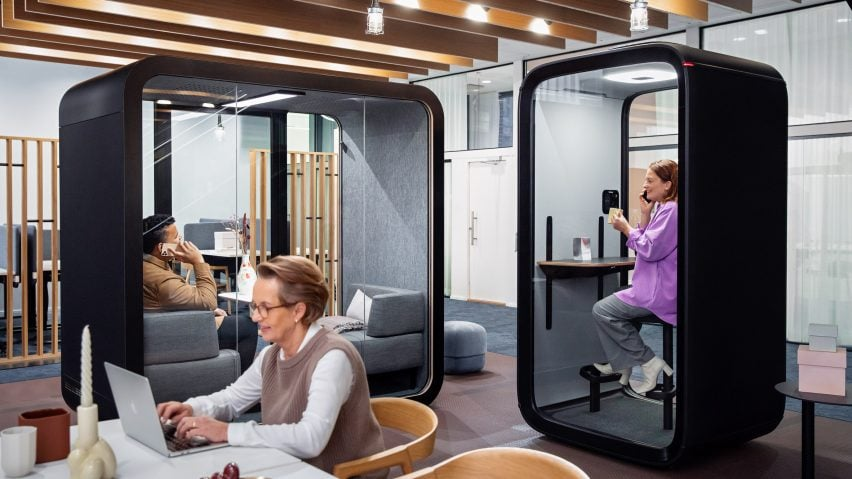
- Secure meeting rooms for sensitive conversations
- Specialist areas for manufacturing, engineering or testing
- Controlled routes between different parts of the facility
Access control can help manage who enters each area, while visitor management can provide another layer of control.
But security isn't just about doors and fobs. The workplace itself can either support or undermine the security strategy.
Consider a meeting room positioned beside a busy circulation route. People walking past might be able to see screens, documents or who is attending the meeting.
A glass-walled room might create useful visual connection in one part of the workplace, but be completely inappropriate somewhere else.
Likewise, a conversation in an open breakout area has very different privacy requirements from one taking place in a controlled meeting room.
Acoustics, sightlines, circulation routes, room positioning and access all become part of the security conversation.
This is why security needs to be considered during workplace planning rather than bolted on once the fit-out is already underway.
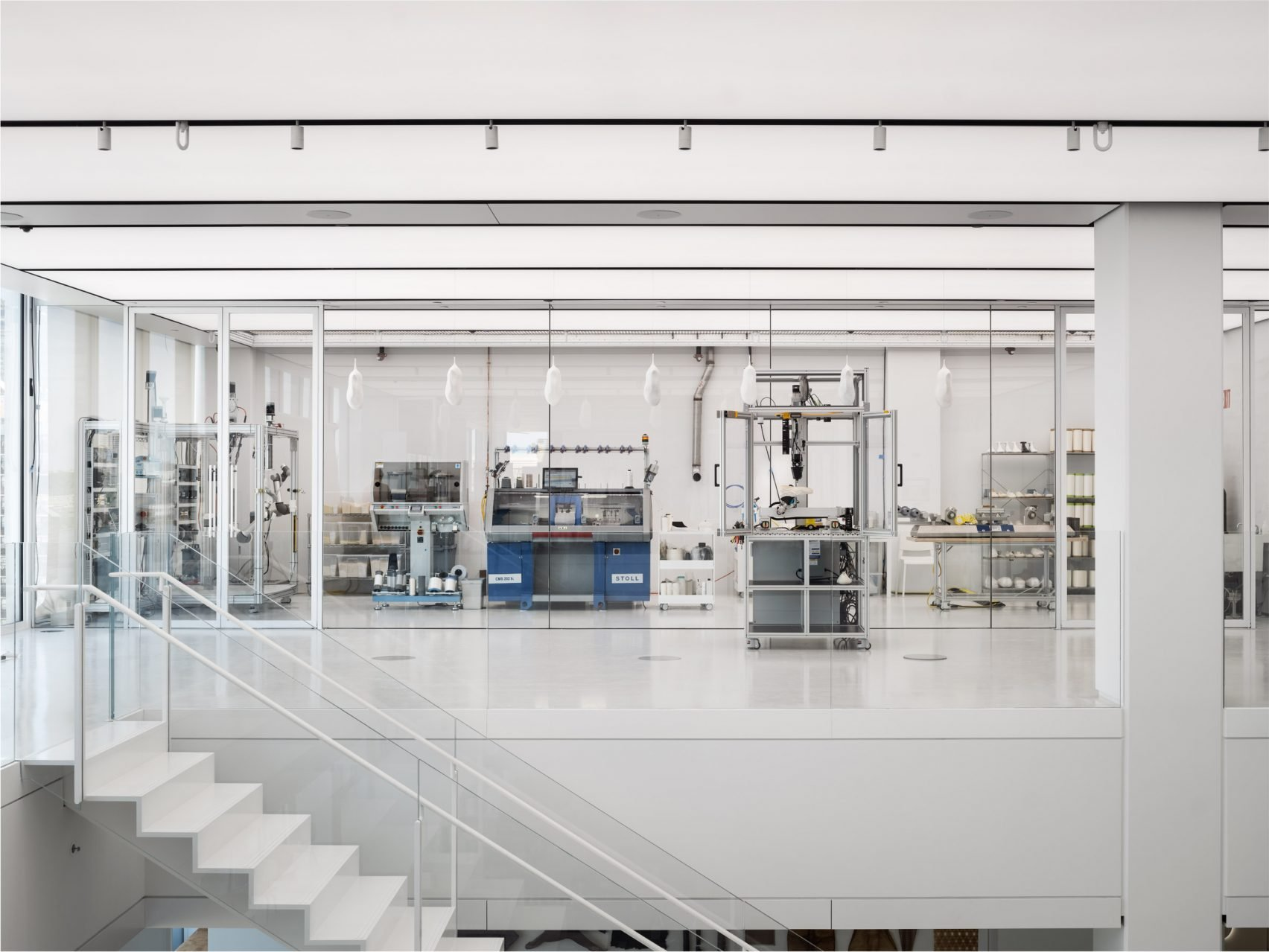
How can defence organisations encourage collaboration without compromising security?
The trick is not to choose between security and collaboration. It's to give different types of collaboration the right environment.
Think of it as a spectrum.
Open collaboration
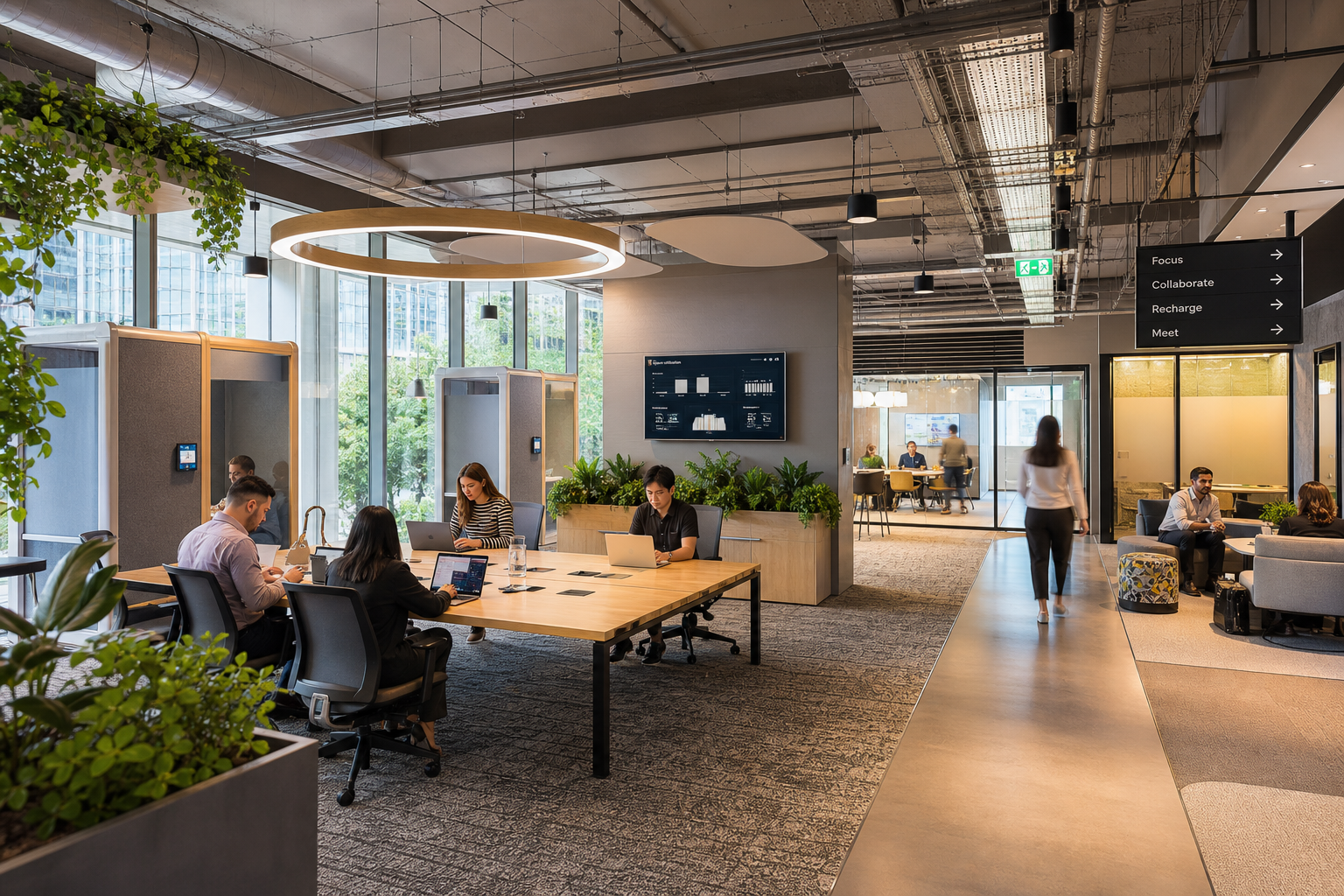
Informal breakout areas and shared social spaces can support everyday conversations, idea sharing and team interaction where sensitive information isn't being discussed.
Controlled collaboration
Project rooms can provide dedicated space for teams working on particular programmes, with access limited to the people who need it.
Confidential collaboration
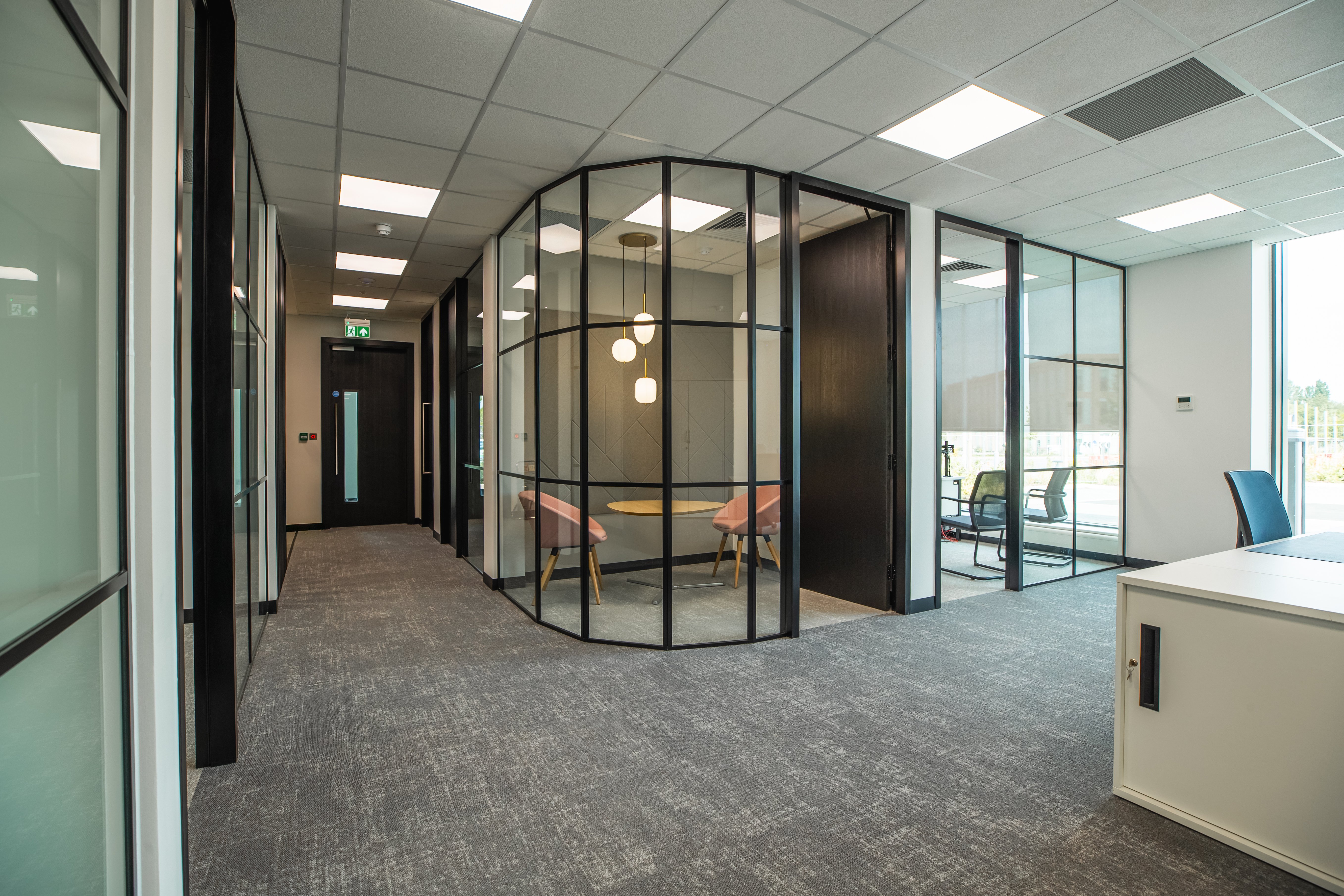
Secure meeting rooms can provide additional levels of acoustic, visual, access and technology control where conversations involve sensitive information.
This approach creates something much more useful than a workplace where everything is either completely open or completely locked down.
|
Space |
Purpose |
Security consideration |
|
Informal breakout |
Everyday interaction and conversations |
Suitable for non-sensitive discussions |
|
Project space |
Collaborative team working |
Controlled access where required |
|
Meeting room |
Formal meetings and presentations |
Acoustic and visual privacy |
|
Secure meeting room |
Sensitive discussions |
Restricted access and appropriate technology |
|
Focus space |
Individual concentration |
Privacy and reduced distraction |
The important point is that security doesn't have to mean isolation.
People still need to exchange ideas, solve problems and work across teams. The workplace simply needs to make the boundaries around sensitive activity deliberate. And those boundaries should be easy for people to understand.
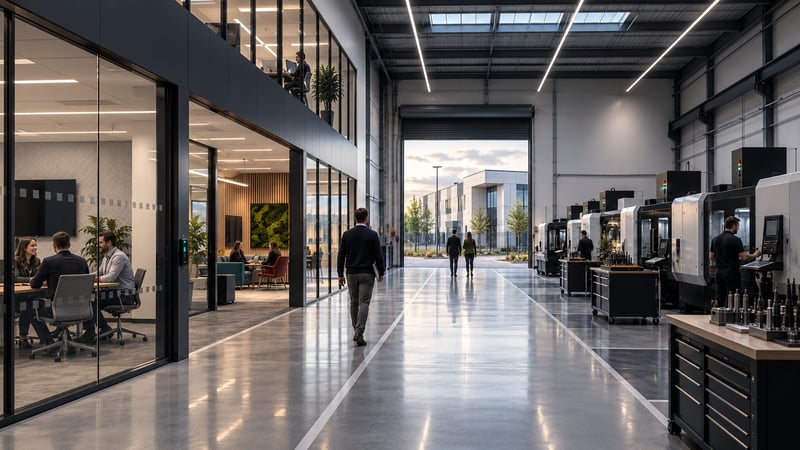
What should be considered when designing a secure defence workplace?
Security is only one part of the workplace strategy. The physical environment also needs to support the way the organisation operates.
That means looking at five things together.
1. Security requirements
Start by identifying what needs protecting.
Consider information, equipment, people, processes and activities — and understand the organisation's relevant security requirements before developing the layout.
For organisations handling classified information, this may include specific physical security arrangements and requirements associated with Facility Security Clearance (FSC).
The important thing is not to assume every defence organisation needs the same solution.
The security strategy should reflect the actual risk and operational requirements of the organisation.
2. People and movement
Map how people move through the workplace. For example:
- Who needs access to which areas?
- Where do visitors go?
- Which teams need to work closely together?
- Where could sensitive conversations be overheard or sensitive information be seen?
These questions can influence everything from room locations to circulation routes and access control.
3. Technology and infrastructure
Technology needs to be considered early because it can have a surprisingly large impact on the workplace.
Meeting rooms might require AV and video conferencing. Secure areas may need specialist systems. Access control needs to integrate with the building. Future technology may require additional power, data or service routes.
For defence manufacturers and technically demanding organisations, the conversation can go considerably further.
Power capacity, floor loading, data infrastructure, environmental conditions, specialist utilities, extraction and equipment access can all influence the building.
A workplace shouldn't be designed around what the existing infrastructure happens to allow. The infrastructure should support what the organisation needs the building to do.
4. Employee experience
Security shouldn't automatically result in a workplace that feels clinical or restrictive. People still need somewhere to concentrate, collaborate, meet and take a break.
Natural light, acoustics, ventilation, temperature and ergonomic furniture all contribute to how effectively people can work.
The point isn't to create a fashionable office. It's to create an environment where people can perform demanding work without unnecessary friction.
5. Operational continuity
This is particularly important when the workplace sits alongside manufacturing, engineering or other mission-critical activity.
A refurbishment isn't successful if the finished workplace looks great but the project has caused unnecessary disruption to production.
The design and delivery strategy therefore need to consider how the organisation will keep operating while work takes place.
That might mean phased works, temporary arrangements, careful sequencing or separating construction activity from critical operations.
For defence organisations, protecting operational continuity is part of the workplace strategy — not a separate construction issue.
A recent article goes over in detail about how to phase an operational office fit-out with minimal disruption. How to Minimise Downtime as an Advanced Manufacturing Organisation
.webp?width=1840&height=1228&name=Accent%200763%20(1).webp)
How should technology and infrastructure be planned for future change?
Defence organisations don't stand still.
Contracts change. Teams grow. Technology develops. Manufacturing requirements evolve.
A workplace designed entirely around today's requirements can become restrictive surprisingly quickly. And that's why flexibility needs to be considered alongside security.
Accessible service routes, adaptable layouts, sufficient power and data capacity, and spaces that can accommodate different activities can make future changes considerably easier.
This is especially relevant to defence manufacturers.
A new contract might require additional production capacity. New equipment might increase electrical demand. Automation might change how teams use a space. A growing project team might need more secure collaboration areas.
The workplace needs enough flexibility to respond without requiring a major rebuild every time something changes.
This is where workplace strategy becomes particularly valuable. Instead of asking: "Where can we fit everything today?"
ask: "What might this organisation need the building to support next?"
That can make a significant difference to the long-term value of the fit-out.
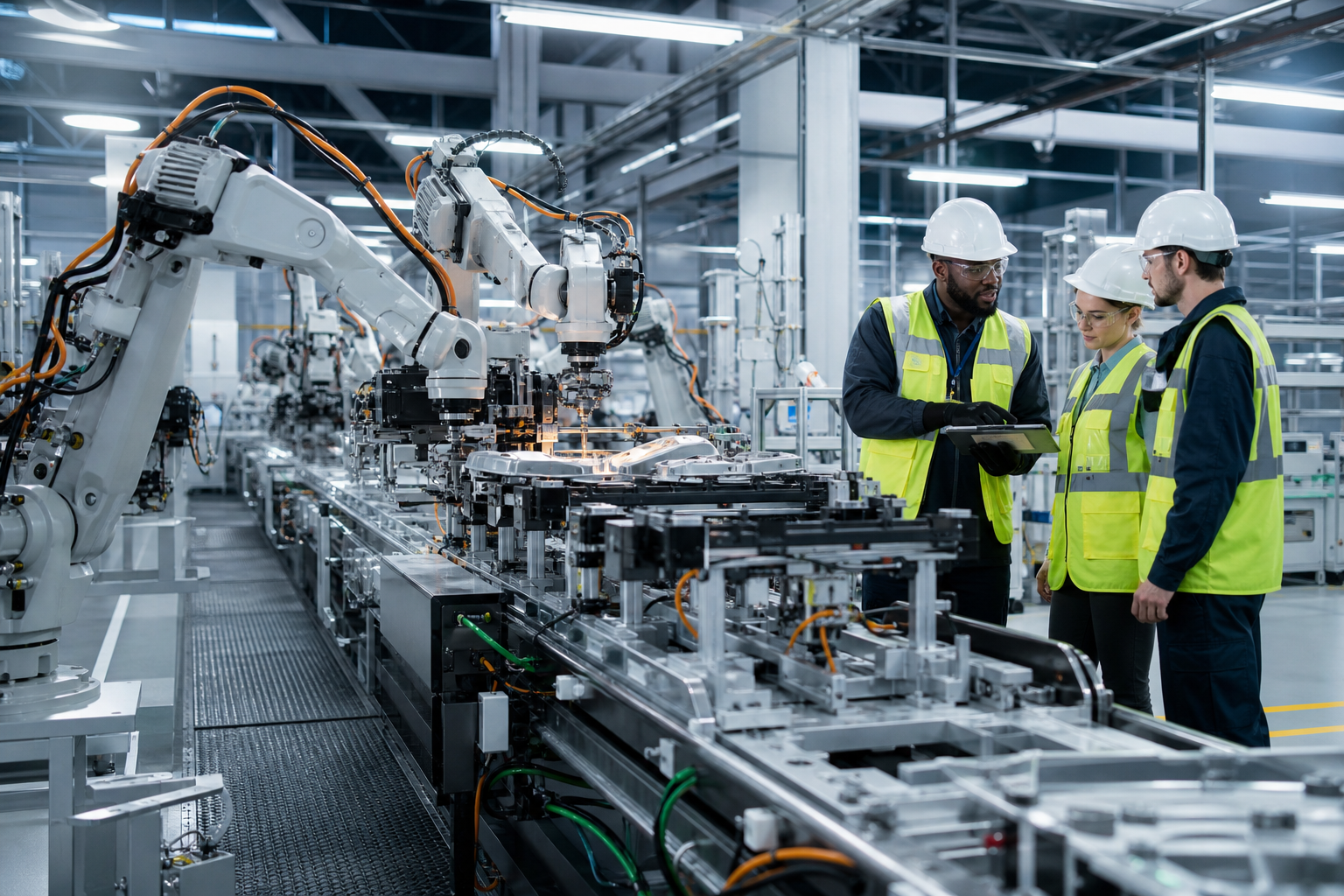
What does a secure defence workplace look like in practice?
The balance between security, collaboration and operational capability becomes much clearer when you look at a real project.
Take Isembard.
The organisation needed to scale its advanced manufacturing operation within an accelerated programme. Its work spans rockets, drones, nuclear energy and Formula 1, so the challenge wasn't simply about creating a larger office. The building needed to support the manufacturing operation itself.
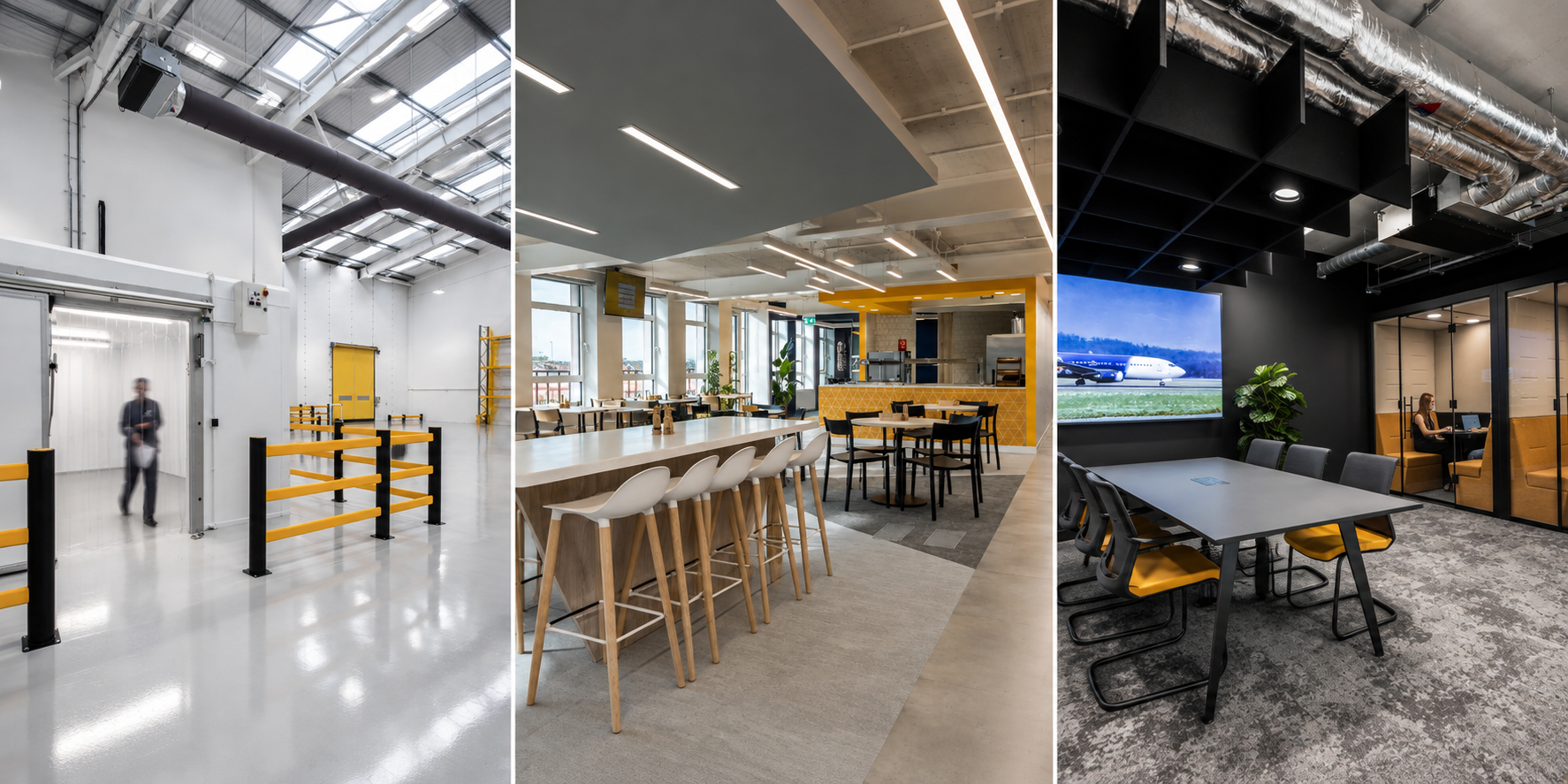
Habit Action delivered a 38,000 sq ft headquarters in 12 weeks, increasing electrical capacity to support CNC machinery, providing infrastructure for automation, improving production processes and strengthening access control.
The workplace and manufacturing environment were considered together. That matters because a defence or advanced manufacturing facility isn't really an office with a production area attached.
The building is part of the operation. People, machinery, technology, power, security and production processes all need to work together.
The same principle applies to the workplace itself. If secure areas are positioned without considering how teams actually collaborate, security can become a barrier to productivity.
If collaboration spaces are created without considering confidentiality, the workplace can introduce unnecessary risk.
If specialist equipment is added without considering infrastructure capacity, the building can limit the organisation's ability to grow.
Good workplace design connects all three: security, people and operational capability.
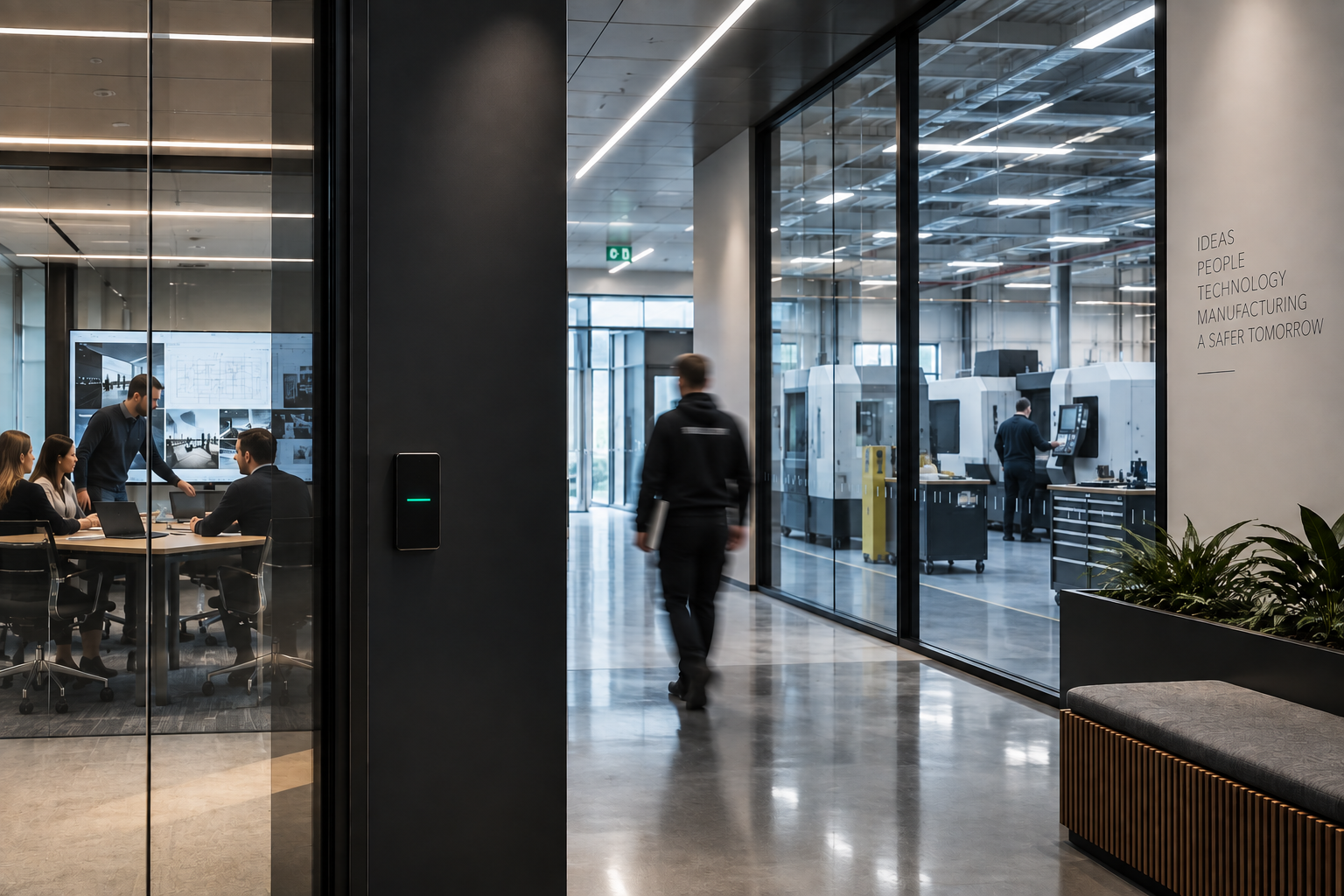
What are the key principles for a secure and collaborative defence workplace?
The strongest approach can be reduced to five practical principles:
01 — Understand what needs protecting
Don't start with locks, doors and access systems. Start with the information, people, equipment and activities that need protection.
02 — Create different levels of access
Not every person needs access to every space. Use appropriate zoning and access controls so security is targeted rather than unnecessarily restrictive.
03 — Design collaboration around sensitivity
Give people somewhere to collaborate, but make sure the environment reflects the sensitivity of the work. Open, controlled and confidential collaboration can all have a place.
04 — Build security into the workplace infrastructure
Consider access control, acoustics, visual privacy, technology, power, data and specialist services during design.
Trying to solve these requirements after construction usually gives the project fewer options.
05 — Design for the operation, not just the building
The workplace needs to support what the organisation actually does.
For defence manufacturers, that can mean considering manufacturing capacity, specialist equipment, utilities, logistics, security and operational continuity alongside traditional workplace requirements.
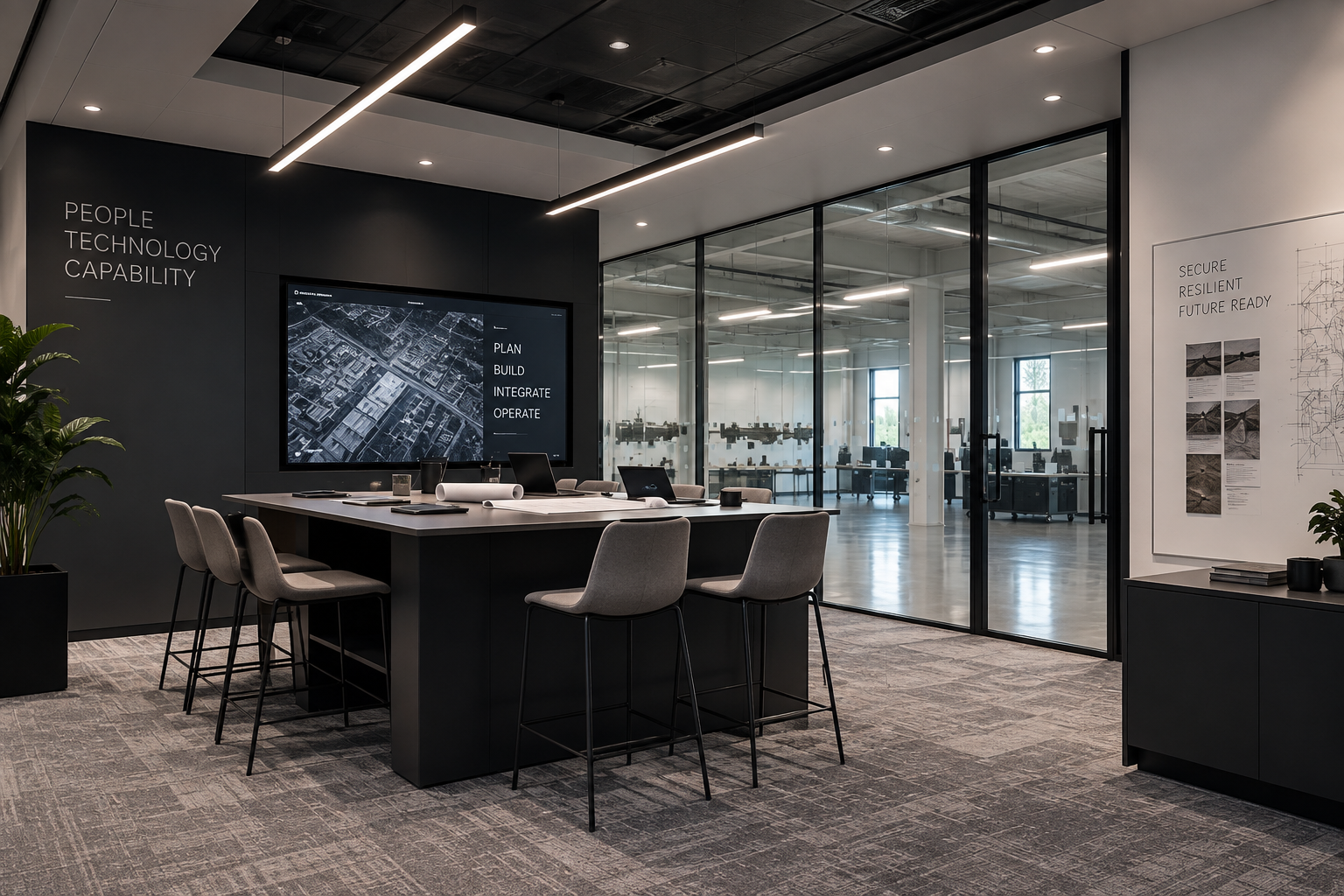
So, can a defence workplace really be secure, collaborative and comfortable?
Yes — but it requires a different way of thinking about workplace design.
The objective isn't to create the most secure-looking building possible. It's to create an environment where the right people can access the right spaces, sensitive work can happen with appropriate protection, and teams can still collaborate effectively.
That means bringing security, workplace strategy and operational requirements into the same conversation from the beginning.
For a defence organisation, that might mean controlled access and secure meeting rooms.
For a defence manufacturer, it might also mean increased electrical capacity, specialist utilities, production requirements and carefully phased construction.
And for an organisation expecting to grow, it means designing enough flexibility into the workplace to respond to new contracts, new technology and changing teams.
The best secure workplace doesn't make security everyone's problem. It makes security part of how the workplace works.
At Habit Action, that's the approach we take across defence, advanced manufacturing and other technically demanding environments. Because a successful fit-out isn't simply about creating a secure building.
It's about creating a building that allows the organisation inside it to keep working, keep collaborating and keep moving forward.
FAQs
What is a secure defence workplace?
A secure defence workplace protects sensitive information, people, equipment and activities while supporting day-to-day work. It can include controlled access, security zoning, private meeting spaces, appropriate technology, acoustic privacy and secure areas, depending on the organisation's requirements.
How can defence workplaces support collaboration securely?
Defence workplaces can create different environments for different levels of sensitivity. Open spaces can support everyday interaction, controlled project rooms can support team working, and secure meeting rooms can accommodate confidential discussions.
What security measures should a defence workplace have?
The appropriate measures depend on the organisation, information being handled and relevant security requirements. They can include controlled access, visitor management, security zoning, restricted areas, acoustic and visual privacy, secure storage and appropriate technology infrastructure.
Can a secure defence workplace still feel comfortable?
Yes. Security and employee experience don't have to compete. Natural light, good acoustics, ventilation, temperature control, ergonomic furniture and a variety of working environments can all be incorporated alongside appropriate security controls.
Why is workplace design important for defence organisations?
Workplace design affects how people move, collaborate and access information and equipment. A well-planned environment can support security while also improving productivity, privacy, collaboration and operational efficiency.
How should a defence organisation approach a secure workplace refurbishment?
Start with the organisation's security and operational requirements. Then map how people, information and equipment move through the workplace. From there, the design can establish appropriate access zones, collaboration spaces, technology infrastructure and working environments while planning construction around operational continuity.
Should security requirements be considered before a defence fit-out begins?
Yes. Security requirements should be established as early as possible because they can affect the layout, access arrangements, technology, building services and construction process. Early consideration gives the project more options and reduces the risk of expensive changes later.
How can a defence workplace be designed for future change?
Flexible layouts, adaptable infrastructure, accessible services and sufficient power and data capacity can make a defence workplace easier to change. Designing with future teams, technology, contracts and operational requirements in mind can also reduce the need for disruptive alterations later.