 ·
4 minute read
·
4 minute read
The Defence Workplace of 2035
What if we've been looking at one of the UK's fastest-changing sectors through the lens of the past?
Having delivered advanced manufacturing workplaces for many years, we've seen the sector evolve long before today's renewed investment. The UK's Strategic Defence Review doesn't introduce a new direction—it accelerates one that was already underway.
Its emphasis on artificial intelligence, cyber capability, digital engineering, advanced manufacturing and closer collaboration confirms what we've been seeing across the projects we deliver. Defence is becoming one of the UK's fastest-evolving knowledge industries.
For decades, defence estates have been designed around security, resilience and operational effectiveness. Those priorities remain fundamental and always will. But today's defence organisations also need to accelerate research and development, increase manufacturing capability and attract highly specialised technical talent, all while responding to new programmes at greater speed than ever before.
That changes the role of the workplace.
The conversation is no longer just about creating secure environments. It's about creating secure environments that actively enable capability.
Are we still designing defence workplaces as secure facilities, when we should be designing them as secure innovation environments?
We believe that distinction matters because the workplace is no longer simply somewhere work happens. It has become part of an organisation's ability to innovate, manufacture, collaborate and adapt.
And as defence continues to evolve, that capability will become a competitive advantage in its own right.
A Different Kind of Defence
The headlines surrounding the Strategic Defence Review have understandably focused on rising defence budgets and renewed investment. But the bigger story isn't simply how much is being invested. It's what the sector is becoming.
Today's defence organisations are building capabilities in artificial intelligence, cyber security, digital engineering and advanced manufacturing. Success depends not only on military expertise, but on bringing together engineers, software developers, researchers and operational specialists to solve increasingly complex problems.
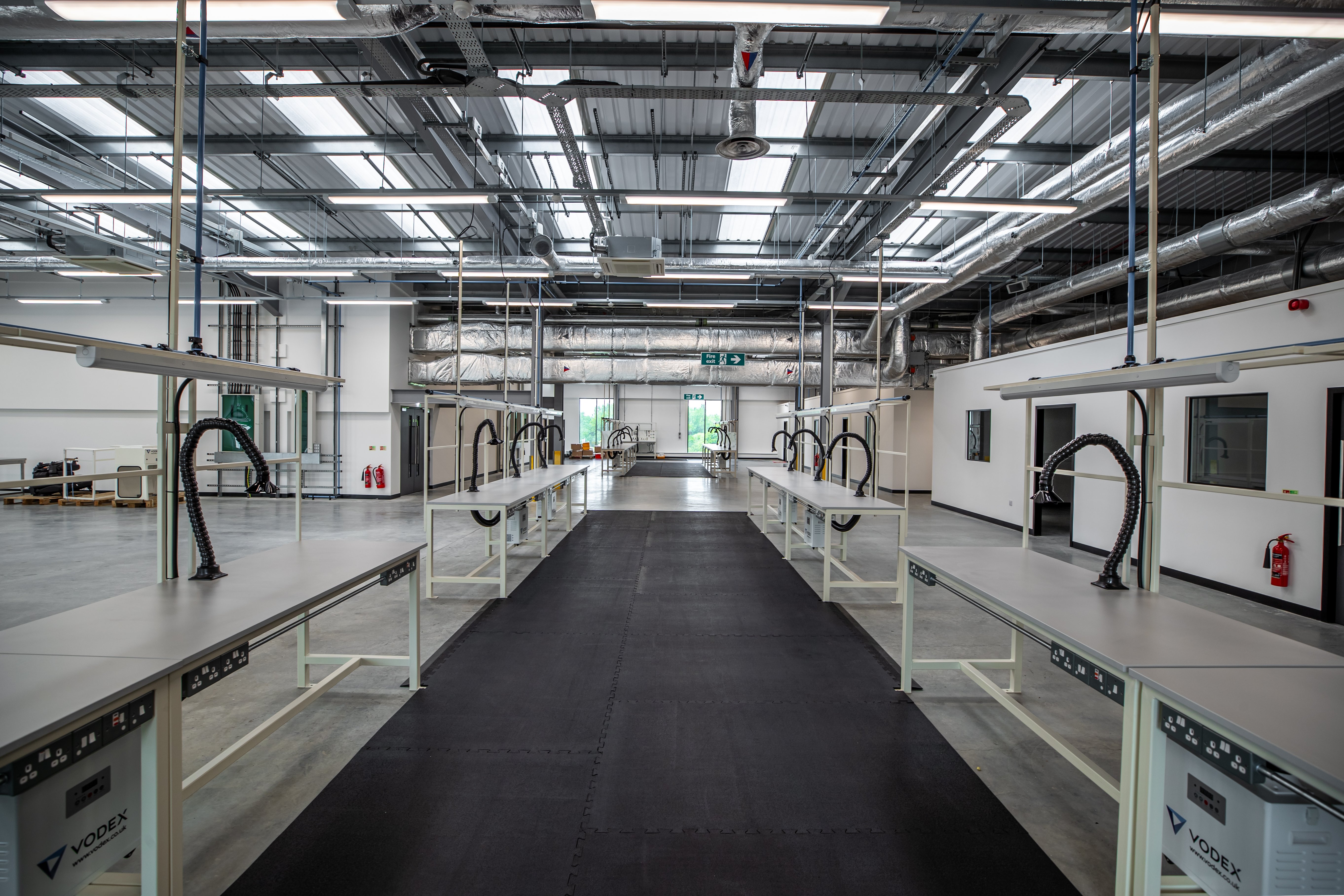
At the same time, organisations are under pressure to increase manufacturing capability, accelerate research and development, and respond quickly to changing operational requirements. Unlike many industries, growth is often driven by contract awards rather than long-term capital investment. New programmes can require additional manufacturing space, specialist environments or expanded facilities with very little notice.
We're seeing that reflected across the projects we deliver. Defence organisations aren't simply looking for more space. They're looking for environments that can increase production capacity, support innovation and adapt quickly, all while manufacturing, engineering and secure operations continue uninterrupted.
That changes the workplace conversation entirely.
It's no longer just about designing a better building. It's about creating environments that help organisations respond faster, scale with confidence and minimise operational downtime without compromising security or resilience.
The conflict in Ukraine has accelerated this shift further. Equipment and technologies proven in operational environments are increasingly shaping procurement decisions, creating additional pressure on manufacturers to bring new capability online at pace. Speed is no longer just a project objective. It's becoming a competitive advantage.
At the same time, defence organisations are competing for the same engineers, AI specialists, cyber experts and digital talent as some of the UK's leading technology and manufacturing businesses. Research from Leesman and Gensler consistently shows that workplace design influences collaboration, innovation and employee experience. While defence has unique security requirements, the relationship between workplace and organisational performance remains the same.
The organisations that recognise that shift earliest won't simply create better workplaces. They'll create stronger capability.
From Security to Capability
Security has always been the foundation of defence workplaces, and it always will be.
Every project must meet stringent operational and security requirements, whether that's working with SC-cleared personnel, operating within secure environments or delivering facilities in line with National Protective Security Authority (NPSA) guidance. These aren't additional considerations; they're fundamental to how defence environments are designed and delivered.
But security alone is no longer enough.
As defence organisations become more reliant on digital capability, advanced manufacturing and multidisciplinary collaboration, the role of the workplace is expanding beyond protection alone.
Leaders are no longer asking whether their environments are secure. They're asking whether those environments can also support faster research and development, increase manufacturing capacity, attract specialist talent and adapt as operational priorities evolve.
Security is no longer the destination. It's the foundation.
That shift fundamentally changes the role of the workplace.
It's no longer simply a secure container for important work. It's part of an organisation's operational capability.
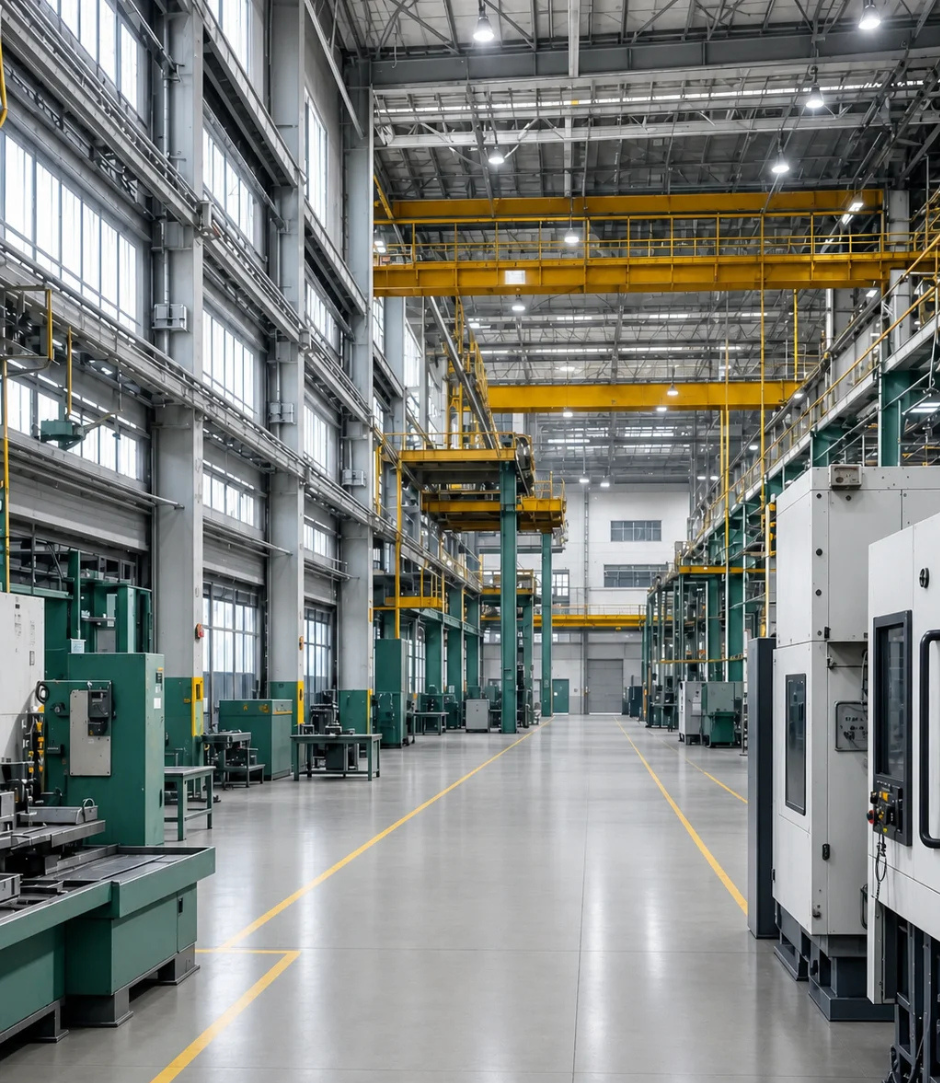
We've seen first-hand that the biggest challenge often isn't designing a secure environment. It's delivering one while manufacturing, engineering and critical operations continue around it. Defence organisations rarely have the luxury of stopping production while facilities are upgraded. Projects need to be carefully phased, disruption kept to a minimum and every decision planned around business continuity.
In operational environments, every day of downtime has a cost.
That's why flexibility has become just as important as resilience. As new programmes are secured, production increases and technologies evolve, facilities need to adapt without requiring extensive redevelopment or disrupting ongoing operations.
The question is no longer how we design secure defence workplaces.
It's how we design secure environments that enable innovation, increase capability and allow organisations to respond quickly to whatever comes next.
.png?width=2000&height=1116&name=Copy%20of%20Habit%20Action%20-%20Defence%20Capabilities%20.pdf%20(1).png)
The Workplace as a Strategic Asset
The defence workplace is no longer just a place where work happens. It's becoming part of how organisations deliver capability.
Success is no longer measured solely by occupancy, efficiency or even employee experience. Increasingly, it's measured by how effectively an environment supports the people, technologies and processes behind modern defence.
Can it help multidisciplinary teams solve complex problems more quickly?
Can it bring together engineers, software developers, researchers and operational specialists while maintaining the highest levels of security?
Can it support advanced manufacturing, accelerate research and development, and adapt as programmes evolve?
Those are no longer workplace questions alone. They're business questions.
The organisations that succeed over the next decade won't simply be those investing in the most advanced technologies. They'll be the ones creating environments where those technologies—and the people behind them—can perform at their best.
That means designing workplaces and specialist environments that can scale with demand, respond to new contracts and evolve without disrupting critical operations. It means creating places that support collaboration without compromising security, and innovation without sacrificing resilience.
For us, that's where workplace strategy delivers its greatest value. It's no longer about designing better offices. It's about creating environments that help defence organisations respond faster, operate more effectively and build long-term capability.
Speed has become a strategic capability in its own right. Bringing new manufacturing facilities, laboratories or specialist environments online months earlier doesn't simply shorten a construction programme. It allows organisations to begin delivering against contracts sooner, respond faster to operational demand and strengthen long-term resilience.
.png?width=2000&height=1414&name=Copy%20of%20Habit%20Action%20-%20Defence%20Capabilities%20.pdf%20(2).png)
Looking Ahead
The defence sector has always demanded secure, resilient and highly specialised environments. That hasn't changed.
What has changed is the pace of transformation.
As organisations respond to new technologies, evolving geopolitical pressures and increasing demand, the environments supporting them have a bigger role to play than ever before. They need to accelerate research and development, increase manufacturing capability, support collaboration and adapt quickly to new programmes, all while maintaining the highest levels of security and minimising operational downtime.
That's the shift we've been seeing across the defence projects we deliver.
The conversation is no longer just about creating secure workplaces. It's about creating secure environments that actively enable capability. Whether that's bringing manufacturing facilities online faster, adapting occupied estates around live operations or designing spaces that help specialist teams collaborate, the workplace has become an integral part of organisational performance.
For decades, defence workplaces were designed to protect capability.
The next generation will be designed to create it.
.png)