 ·
5 minute read
Good office lighting lets people see what they're doing without having to think about it. It makes the most of daylight, then fills the gaps with artificial light designed around the work people actually do.
Done well, nobody notices it. Done badly, everyone does, usually by about 3pm.
It's also one of the easiest things to get wrong in a refurbishment, because lighting is often treated as a ceiling detail rather than part of how the workplace works. Here's how we'd approach it.
Why does office lighting matter so much?
Because people spend most of their working day looking at something, whether that's a screen or the colleague across the table. If the light is wrong, they feel it long before they can say why.
Poor lighting tends to show up as tired eyes and people squinting at their screens. It also changes how a space feels. A dim, flat office reads as tired however good the furniture is, while a well-lit one feels more welcoming before anyone has sat down.
And lighting does more than help people see. It helps define zones and gives a space its character, drawing people towards the areas you want them to use. That makes it a design decision as much as a technical one.
How do you make the most of natural light in an office?
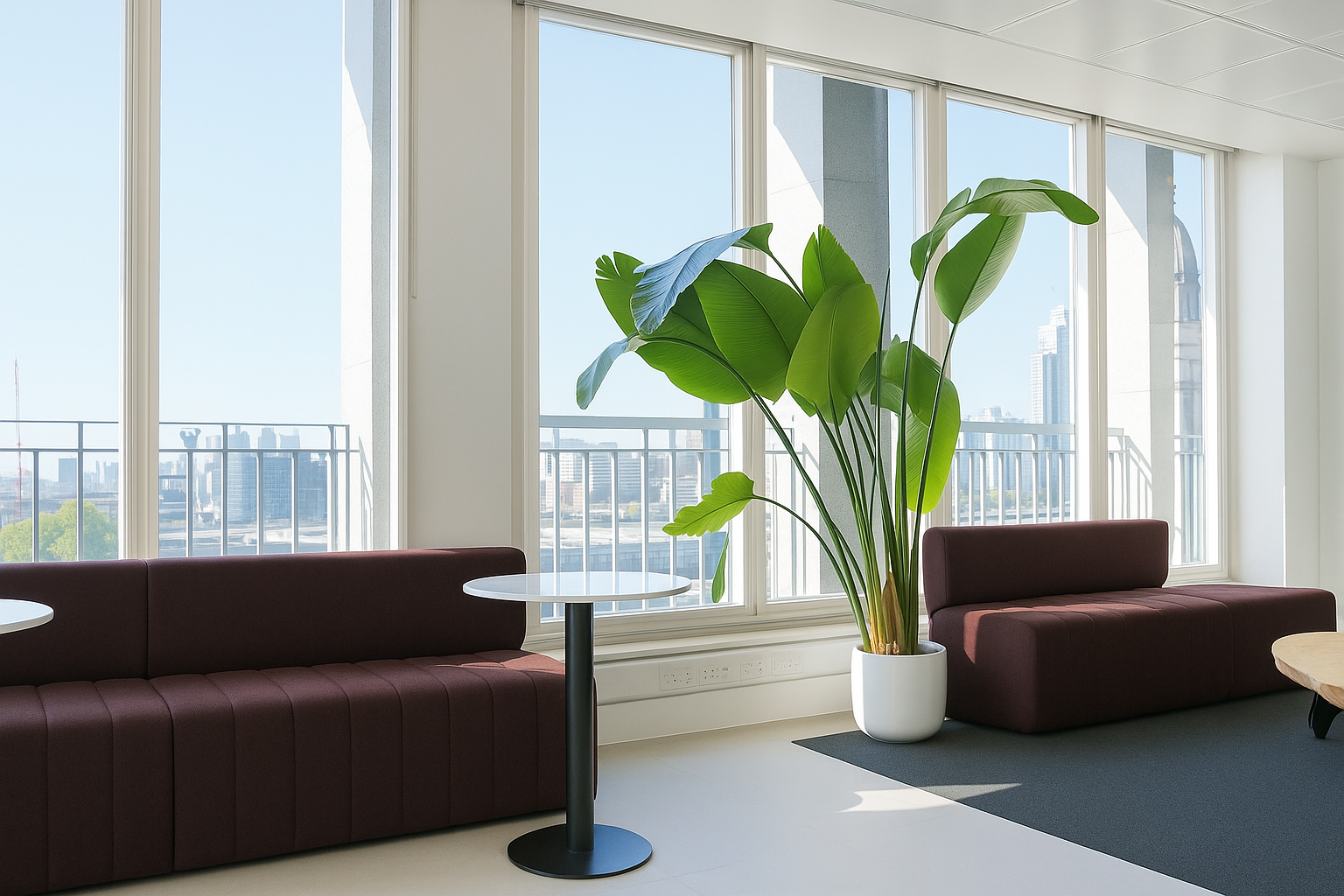
Start with the layout. The spaces people use for long stretches, such as desks and focus areas, usually benefit most from being near the windows. Storage and spaces people only pass through can sit further back.
It's tempting to line the windows with meeting rooms or private offices. That can be the right call for a client-facing boardroom with a view, but it also blocks daylight from everyone behind them. Glass partitions and lower furniture both help light travel further into the floor.
More daylight isn't automatically better, though. A desk in direct sun can be just as uncomfortable as one in a gloomy corner, so blinds and sensible screen positioning matter as much as the windows themselves.
On our Institute of Cancer Research project, maximising natural light within the existing structure was one of the key considerations in the space plan. At Gresham Tech, the boardroom was positioned to make the most of the light and the views across London.
What types of lighting does an office need?
Most offices need layers rather than a single grid of ceiling panels doing everything.
Ambient lighting provides the general light level across the floor. It should be even and comfortable, without dark patches or harsh hotspots. As a benchmark, BS EN 12464-1, the European standard for workplace lighting, recommends around 500 lux for desk-based work such as reading and typing.
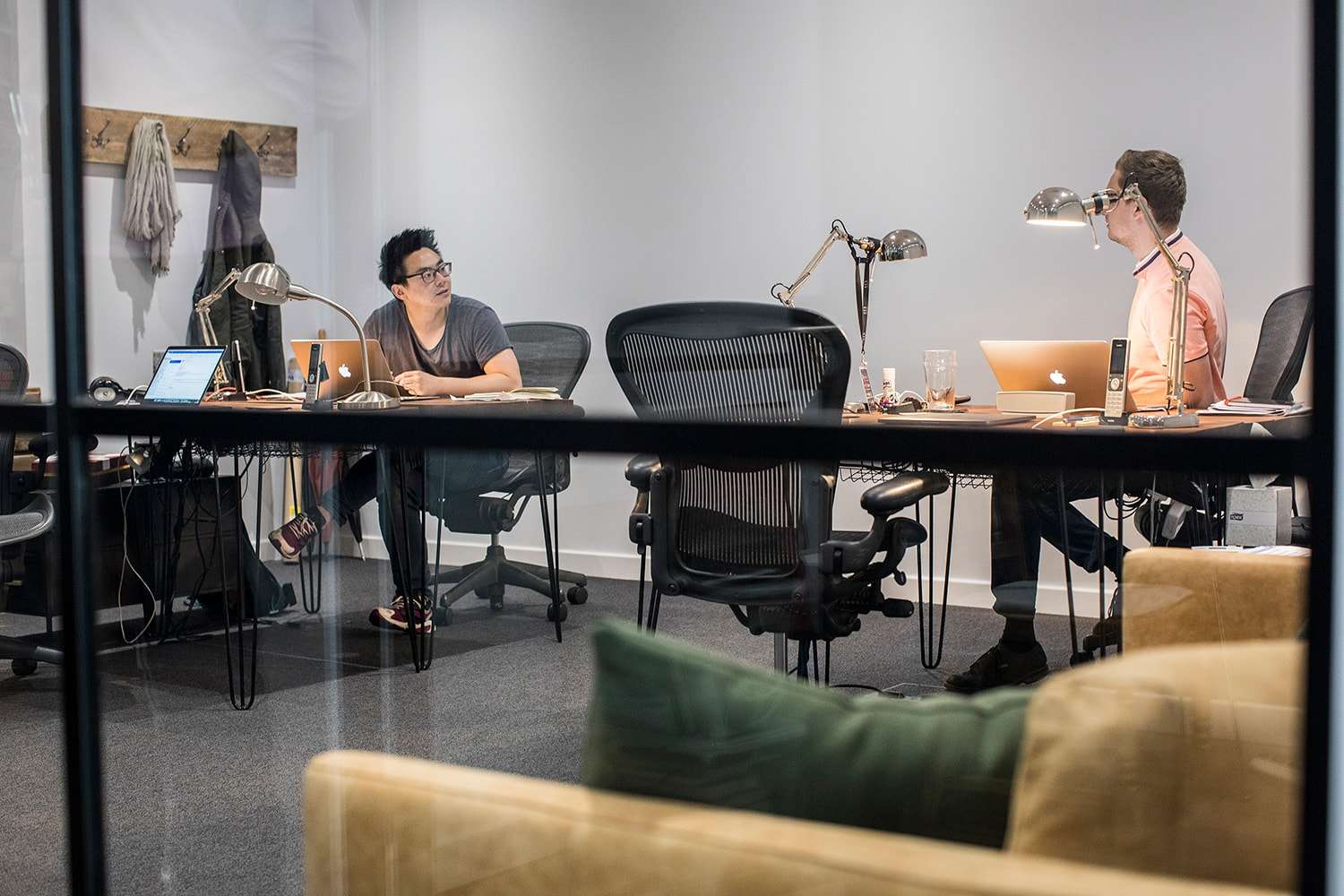
Task lighting adds focused light where people need it, such as a desk lamp for someone reviewing drawings. It also gives people some control, which matters more than it might seem, because one person's comfortable is another person's far too bright.
Some areas also benefit from accent lighting, which highlights a feature wall or the reception desk. Used sparingly, it gives a space depth and helps guide people through the building.
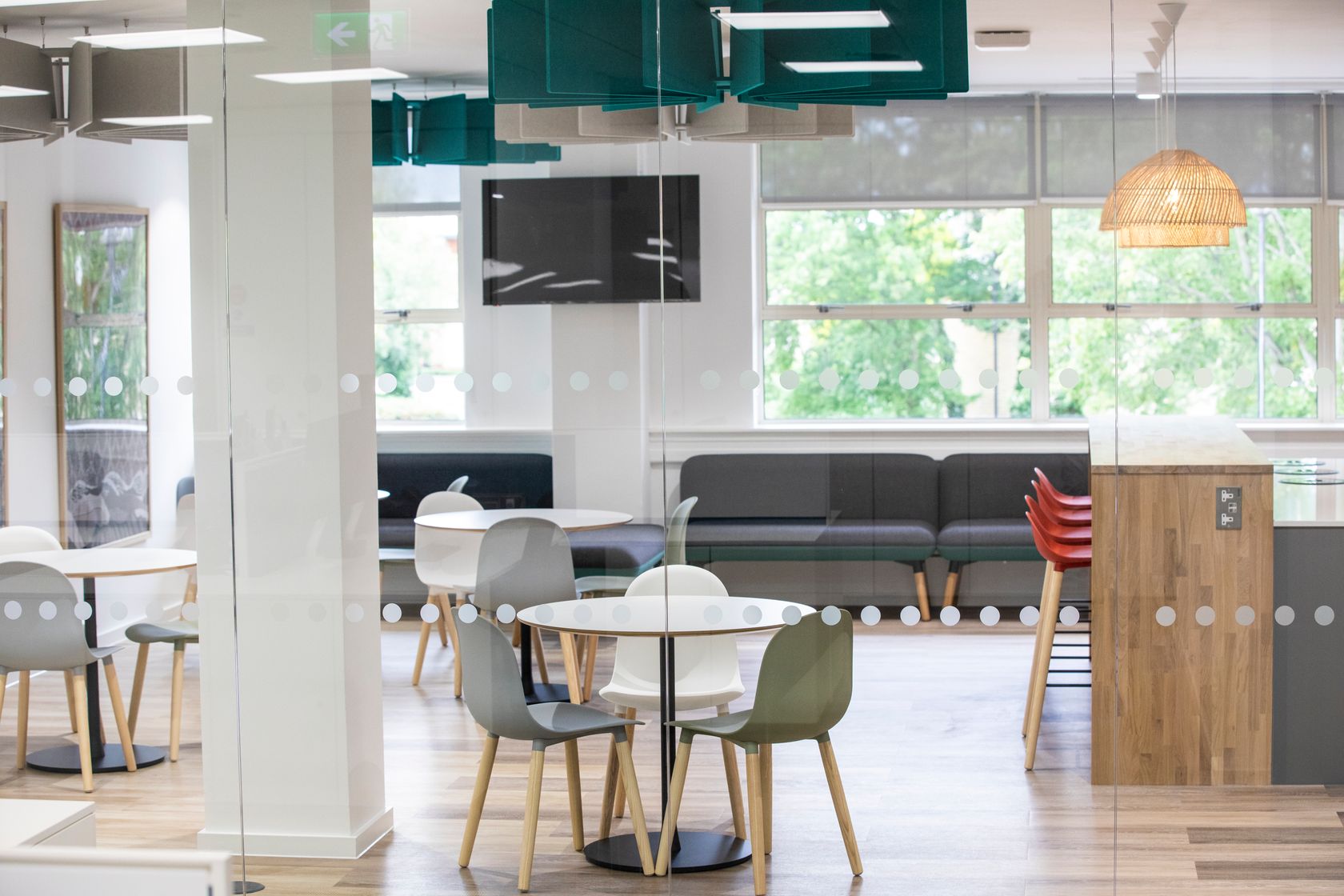
The point is that different parts of the office need different light. A focus zone and a breakout area shouldn't be lit in exactly the same way.
Does the colour of the light matter?
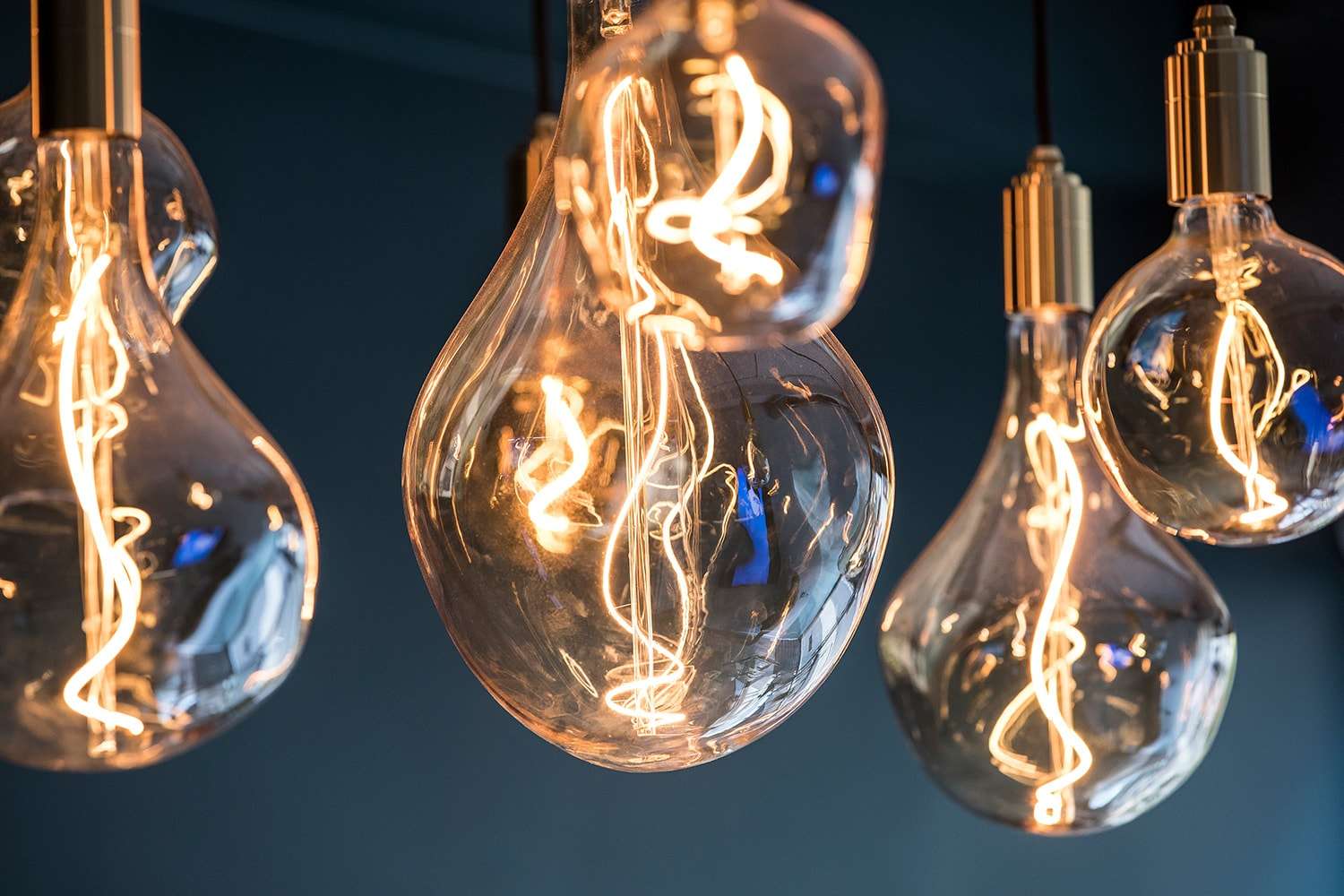
Yes. Colour temperature, measured in kelvin, changes how a space feels. Warmer light, around 2,700 to 3,000K, has the slightly golden tone you'd expect in a café or a living room. Cooler light, from around 4,000K upwards, feels crisper and brighter, and 4,000K is a common choice for general office areas.
That makes colour temperature a useful zoning tool. Warmer light in breakout and social areas signals a pause from desk work, while neutral light suits the places people come to concentrate. It's a subtle change, but people pick up on it.
Colour rendering matters too. Cheaper fittings can make skin tones and finishes look slightly off, which is the last thing you want in a client meeting room. Ask about the colour rendering index (CRI) of the fittings being specified: 80 is the usual minimum for offices, and 90 or above is worth it where appearance really counts.
How should you light an office for screens and video calls?
Glare is the main enemy. A bright window or an exposed light fitting reflected in a monitor forces people to squint or tilt their screen to an awkward angle. Positioning screens side-on to windows, rather than facing them or with the window behind, avoids most of the problem.
Fittings matter here as well. Modern office luminaires are designed to control glare, so the light reaches the desk without bouncing straight off the screen. It's worth checking this before a cheaper alternative gets value-engineered into the specification.
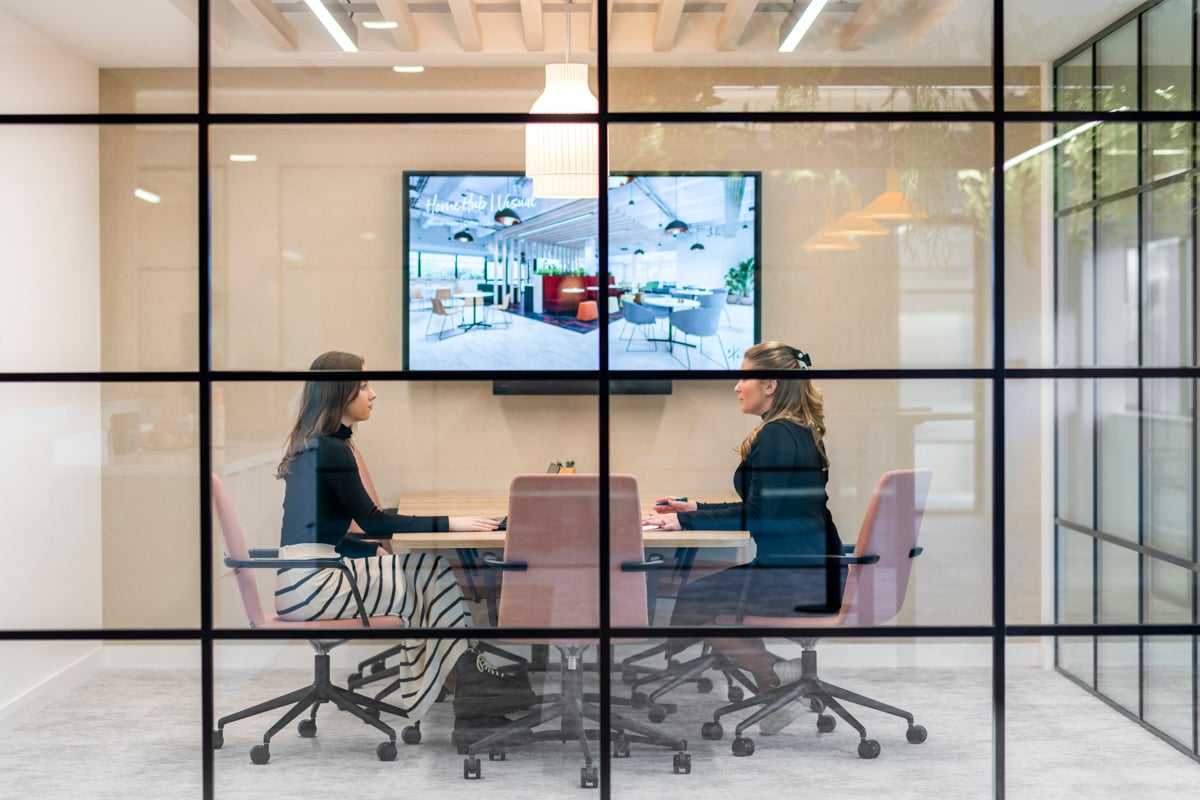
Video calls add another layer. Meeting rooms and call booths need light on people's faces, not just on the table, otherwise everyone joins looking like they're in witness protection. Soft, even light from the front works far better than a single downlight overhead.
Good lighting is also part of a good workstation setup. Our guide to what a good ergonomic workstation should include covers screen positioning and glare in more detail.
How can lighting reduce an office's energy use?
LED fittings are now the standard for good reason. They use far less energy than the fluorescent tubes many older offices still have, and they're much easier to dim and control.
Controls are where a lot of the real savings come from. Occupancy sensors switch lights off in rooms nobody is using, and daylight sensors dim fittings near the windows when there's enough natural light. Neither is especially glamorous, but both stop the building lighting empty meeting rooms at 9pm.
The catch is that controls need setting up properly. Sensors that switch lights off on someone sitting quietly at their desk get disabled within a week, so it's worth commissioning them carefully and reviewing them once people have moved in.
Lighting also feeds into a building's EPC rating. With larger rented offices in England and Wales expected to need an EPC of B from 2031, a lighting upgrade during a refurbishment can help, so it's worth coordinating with the landlord's own plans. Our guide to designing a more sustainable office covers the MEES changes in more detail.
What should you plan early when refurbishing office lighting?
Lighting is much easier to get right when it's designed alongside the layout, rather than added once the desks are already in place. A few things are worth settling early:
- The layout and zones. Light should follow how each area will be used, so the space plan needs to come first.
- What you can keep. Existing fittings and ceilings may have useful life left, or may just need upgrading to LED and new controls rather than replacing outright.
- The ceiling. Lighting, acoustics, ventilation and sprinklers all compete for the same space overhead, and decisions about one affect the others.
- Controls and switching. Decide how people will adjust the light in each zone before the electrical design is fixed.
- Emergency lighting. Any change to the layout can affect emergency lighting and escape routes, which have to meet the relevant standards throughout.
It's also worth testing the lighting in the finished space before people move in, not just ticking it off on a drawing. A fitting that looks fine on a plan can still throw glare across a screen in real life.
If lighting is part of a wider project, our guide to planning a large corporate office fit-out covers how it fits into the overall programme.
Good lighting is the part nobody notices
The best-lit offices rarely get compliments for their lighting. People just find it easier to concentrate, and nobody spends the afternoon squinting.
That's the aim: make the most of the daylight you have, then light the rest around the work people actually do.
Planning an office refurbishment? Take our Office Fit-Out Readiness Assessment to see which parts of the project are ready to progress.
FAQs
How much light does an office need?
For desk-based work such as reading and typing, BS EN 12464-1 recommends around 500 lux. Corridors and breakout areas can be lit to a lower level, but the light should still be even and comfortable.
What is the best colour temperature for office lighting?
Around 4,000K is a common choice for general office areas, as it feels bright and neutral. Warmer light, around 2,700 to 3,000K, suits breakout and social spaces where you want a more relaxed feel.
How do you reduce glare in an office?
Position screens side-on to windows, and use blinds to control direct sunlight. Choosing light fittings designed to control glare also stops light reflecting straight off monitors.
Is it worth upgrading to LED lighting during a refurbishment?
Usually, yes. LEDs use far less energy than older fluorescent fittings and work well with occupancy and daylight sensors. It's still worth checking whether existing fittings can be converted rather than replaced.
Does office lighting affect productivity?
It affects how comfortable people are, which affects how well they can work. Poor lighting causes eye strain and makes it harder to concentrate, while good lighting tends to go unnoticed because it simply does its job.