
 ·
3 minute read
Wellbeing at work is shaped by far more than wellness programmes. The office plays a part every day, through the air people breathe and the light they work in, how much noise they have to tune out and whether there’s somewhere to step away when they need to. Design can’t fix a heavy workload or a difficult manager, but it can stop the building from adding to the strain.
It’s a bigger issue than many organisations realise. HSE estimates that 22.1 million working days were lost to work-related stress, depression or anxiety in Great Britain in 2024/25, out of 40.1 million days lost to work-related ill health and injury overall.
How does office design affect mental health and wellbeing?
Most of it comes down to how much a space asks of the people in it. An office where it’s hard to concentrate or find a quiet room, or where the air feels stale by mid-afternoon, makes every day slightly harder. Over time, that friction adds up.
A space that works the other way gives people some control over their surroundings and somewhere to recover between demanding tasks.
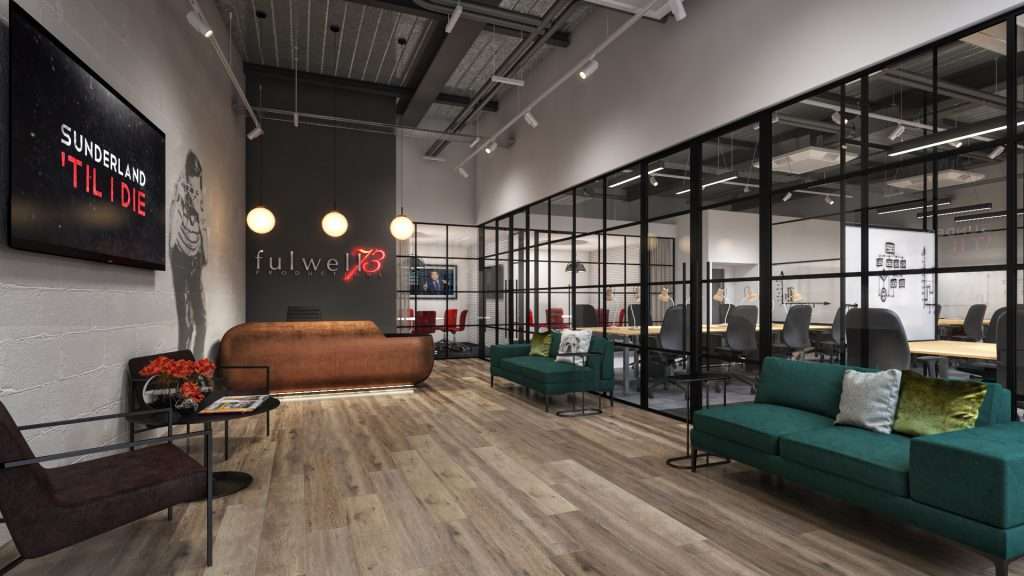
Give people a choice of where to work
Being able to choose a setting that suits the task is one of the simplest ways design supports wellbeing. Someone who needs to concentrate shouldn’t have to do it next to a team stand-up, and someone who needs a private conversation shouldn’t have to take it in a stairwell.
That means a mix of open areas, quiet rooms, booths and meeting spaces, planned around how people actually use the office. Good storage matters here too, because a cluttered space is harder to settle into. Our guide to office zoning for hybrid work explains how to get the balance right.
Get the light and air right
Daylight is one of the things people value most in a workplace, so keep desks and shared areas close to the windows where you can. Support it with good artificial lighting that avoids glare, and use task lighting where people need it.
Air quality is just as important, even though it’s far less visible. Stuffy, poorly ventilated rooms leave people tired and less able to focus. Ventilation needs to be designed around how many people will actually use each space, particularly meeting rooms, which fill up quickly. We explored indoor air quality with AirRated CEO Francesca Brady on our Designed to Work podcast.
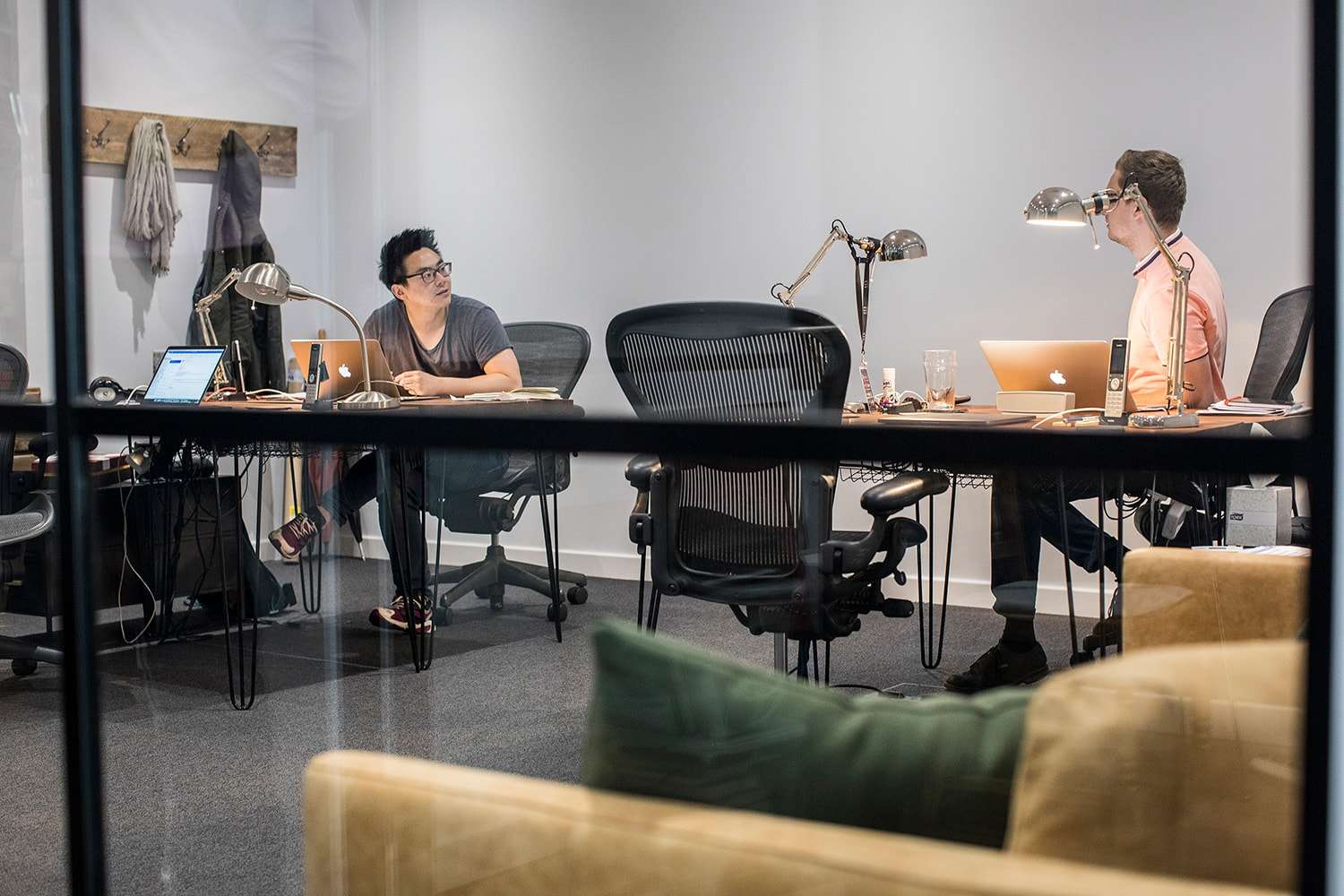
Keep noise under control
Constant background noise is tiring, even when people stop consciously noticing it. Acoustic panels and soft finishes help, along with sensible zoning and enough enclosed space for calls and video meetings, so they don’t spill across the open floor.
Make room to step away
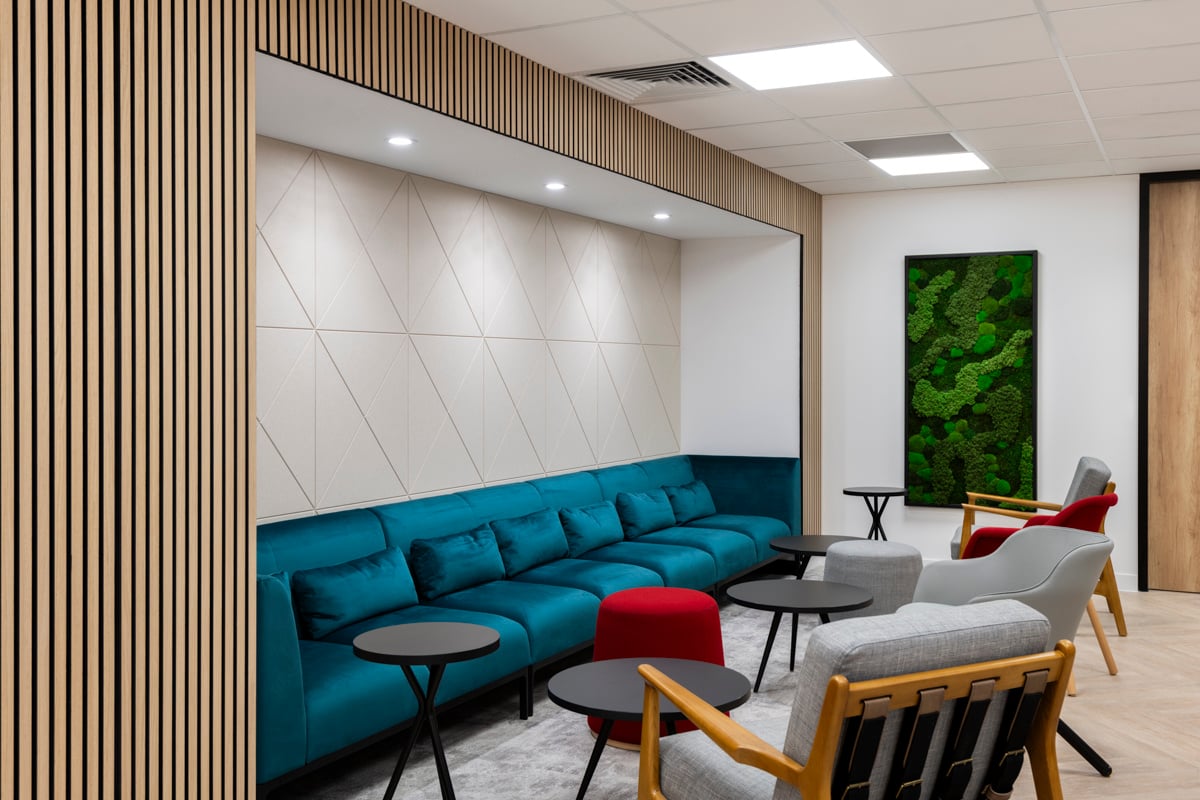
A proper break is easier to take when there’s somewhere to take it. A kitchen people actually want to use, or a breakout area away from the desks, gives people a genuine pause in the day rather than lunch at the keyboard. Planting and natural materials help these spaces feel calmer, and our guide to biophilic design goes into that in more detail.
Support the body as well as the mind
Physical comfort matters to wellbeing too. Adjustable desks and supportive chairs let people set up their workstation properly and change position through the day. Showers and bike storage make it easier for people to build activity into their commute.
Ask people what they need
The most reliable way to find out what affects wellbeing in your office is to ask. Surveys and conversations with staff, alongside data on how spaces are used, show where the building is helping and where it’s getting in the way. Repeat the exercise after any changes, so you know whether they’ve worked.
Where design stops
Design can support wellbeing, but it can’t replace good management or proper support for people who are struggling. The office works best as one part of a wider approach, alongside the policies and culture that sit with HR and leadership.
FAQs
How does office design affect mental health?
Design affects how much effort the working day takes. Noise, poor air, a lack of daylight and nowhere quiet to go all add strain, while a choice of settings and places to take a proper break help people manage their day.
What makes a healthy office?
Good daylight and ventilation, effective acoustics and comfortable, adjustable furniture, along with a choice of places to work and somewhere to take a break away from the desk.
Can office design reduce stress at work?
It can reduce the everyday stress the building itself causes, such as noise or the struggle to find a quiet room. It can’t remove stress caused by workload or management, so it works best alongside wider wellbeing support.