 ·
7 minute read
·
7 minute read
Office flooring rarely gets top billing.
People get excited about the meeting rooms, the furniture, the lighting and the coffee machine that apparently needs its own induction process.
The floor tends to come later.
Until it is noisy. Or difficult to clean. Or already looking tired six months after handover.
The best office flooring depends on where it is being used, how much traffic it will take, how easy it is to maintain, what acoustic performance is needed and how it fits with the wider workplace design.
There is no single “best” floor for an entire office. And that is probably the most useful place to start.
What should you consider when choosing office flooring?
Before choosing a material, think about what the space actually needs to do.
A reception has very different demands from a quiet working area. A café has different risks from a boardroom. A busy circulation route needs to survive a lot more than the corner of a client lounge.
The main things to consider are:
- Footfall: how many people will use the area and how often?
- Acoustics: will a hard surface make an already noisy environment worse?
- Cleaning and maintenance: what happens when coffee, mud or lunch inevitably hits it?
- Durability: can damaged areas be repaired or replaced without changing the whole floor?
- Safety: is the surface appropriate for the activity and likely contaminants?
- Design: does the material support the look and feel of the wider workplace?
- Sustainability: what is it made from, how long will it last and what happens at the end of its life?
- Building constraints: what is underneath it, and do you need access to services?
The Health and Safety Executive is clear that workplace flooring should be suitable for the activity taking place, maintained in good condition and selected with slip risks in mind, particularly where contamination or spillages are likely. HSE
In other words, choosing flooring because it looked nice in a showroom is probably not quite enough.
What is the best flooring for an open-plan office?
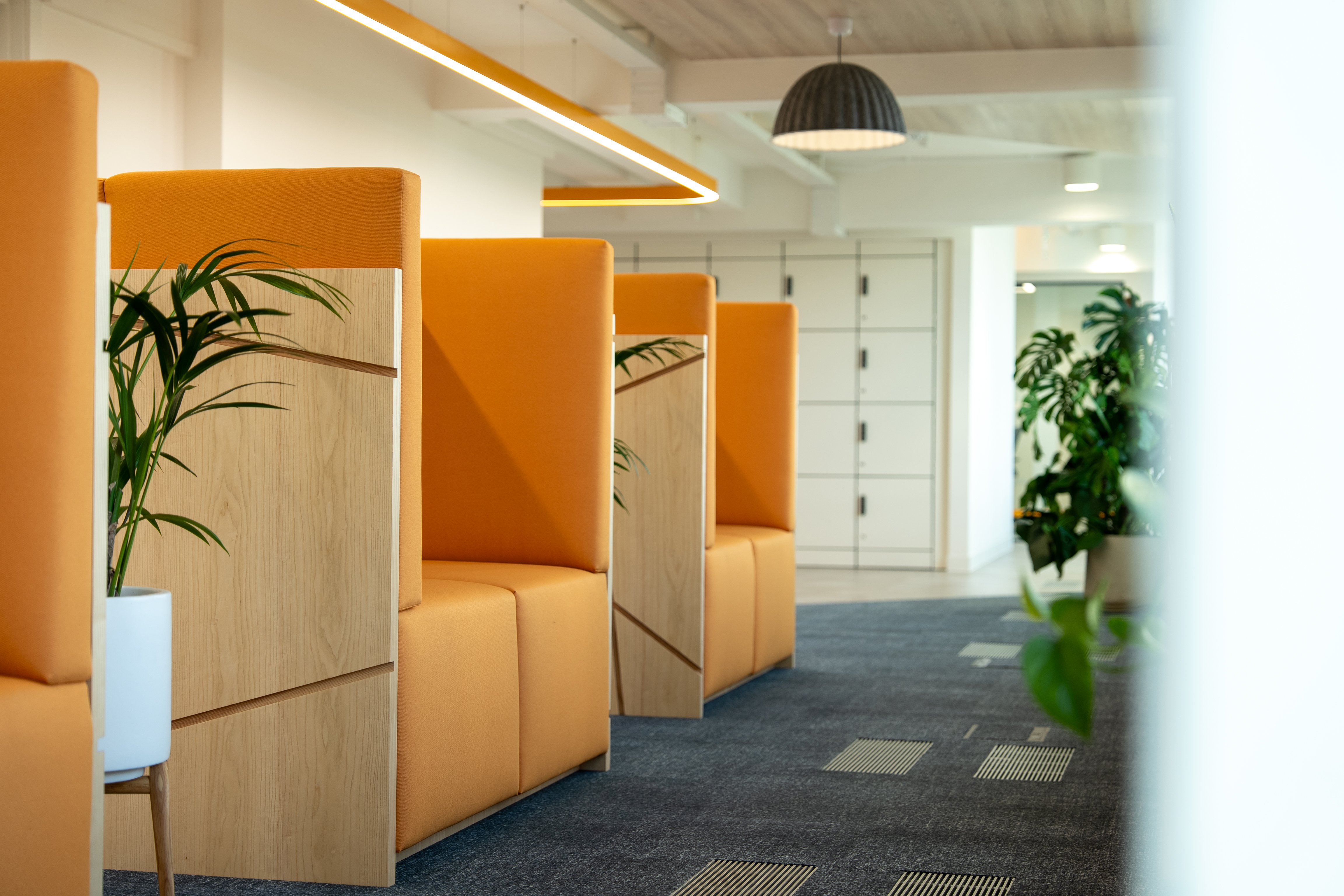
For many open-plan working areas, carpet tiles are still one of the most practical options.
They are softer underfoot than hard flooring, can help reduce reflected sound and are relatively straightforward to replace locally if an area gets damaged.
That last point matters in a busy workplace. Replacing one tile is much less painful than explaining why half the office needs a new floor because somebody dropped something industrially permanent next to Desk 42.
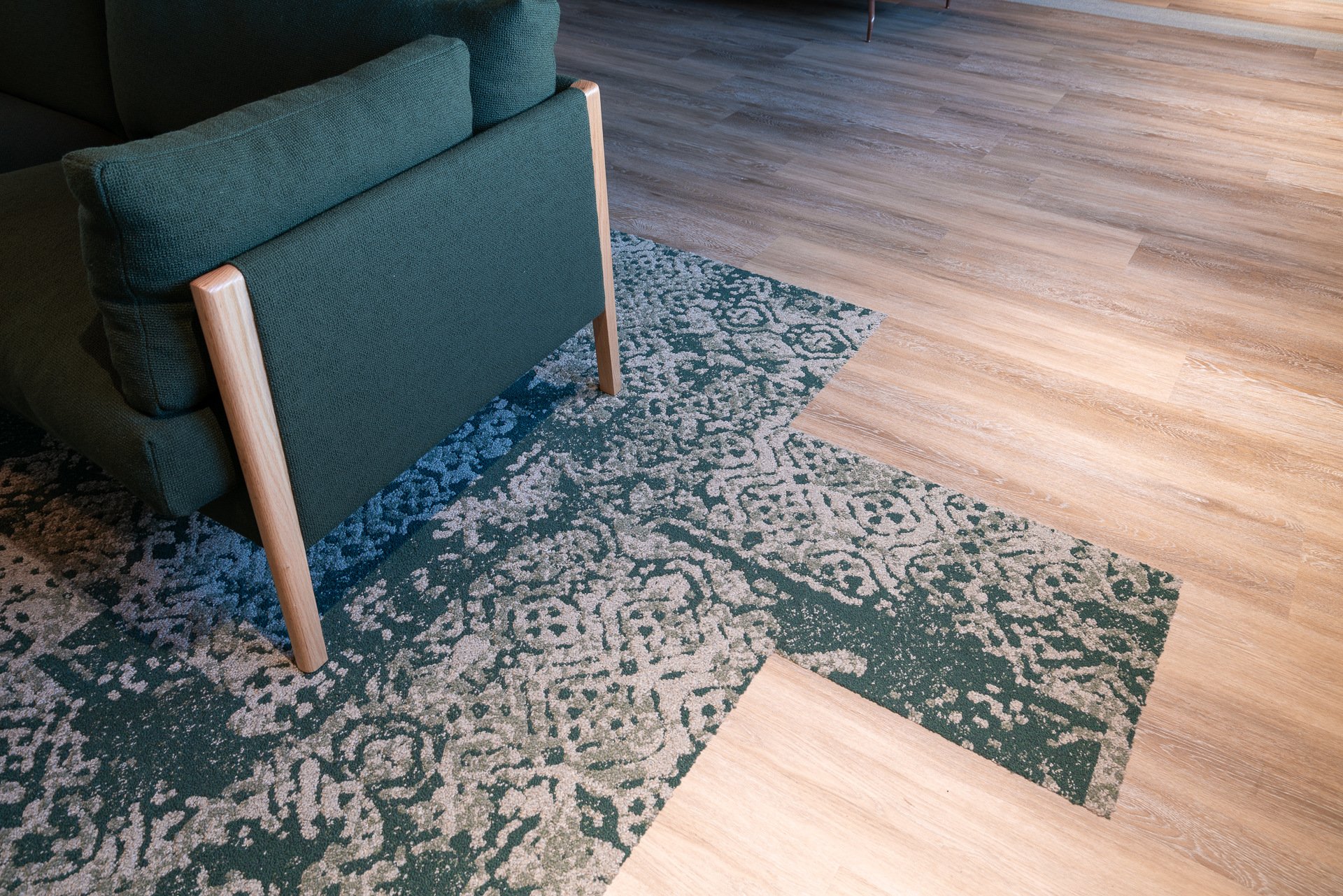
Carpet tiles can also help with workplace zoning. Different textures, patterns or tones can define neighbourhoods, circulation routes and collaboration areas without putting another wall in the way.
That links directly to the principles in our guide to office zoning for hybrid work, where different areas of the workplace are planned around different activities rather than treating the entire floorplate in exactly the same way.
Best suited to:
Open-plan workspaces, focus areas, meeting rooms and quieter office zones.
Think about:
Wear ratings, stain resistance, acoustic performance and whether heavily trafficked routes need a different treatment.
Is LVT or vinyl flooring good for offices?
Yes. Luxury vinyl tile (LVT) and other resilient floor finishes can work particularly well in areas that need to be durable and easy to maintain.
Think cafés, tea points, circulation routes and informal breakout spaces.
They are available in a wide range of finishes and can give you the appearance of timber, stone or other materials without some of the maintenance demands of the real thing.
The trade-off is usually acoustics.
Use a hard finish across a large, open workplace and you may create a beautiful space in which everyone can also hear Dave open his lunch from 25 metres away.
That doesn't mean hard flooring is wrong. It means it needs to be considered alongside ceilings, wall treatments, furniture and the rest of the acoustic strategy.
Best suited to:
Kitchens, cafés, breakout areas, circulation routes and high-use social spaces.
Think about:
Slip resistance, cleaning, acoustic impact and transitions between different floor types.
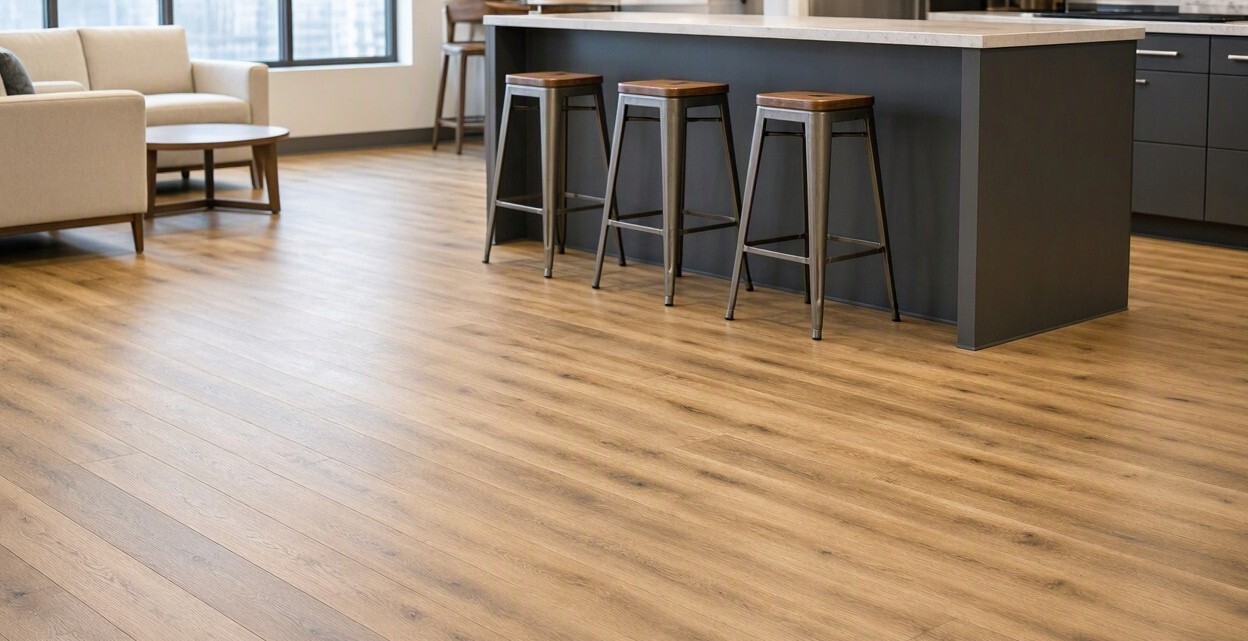
Is timber flooring suitable for an office?
It can be.
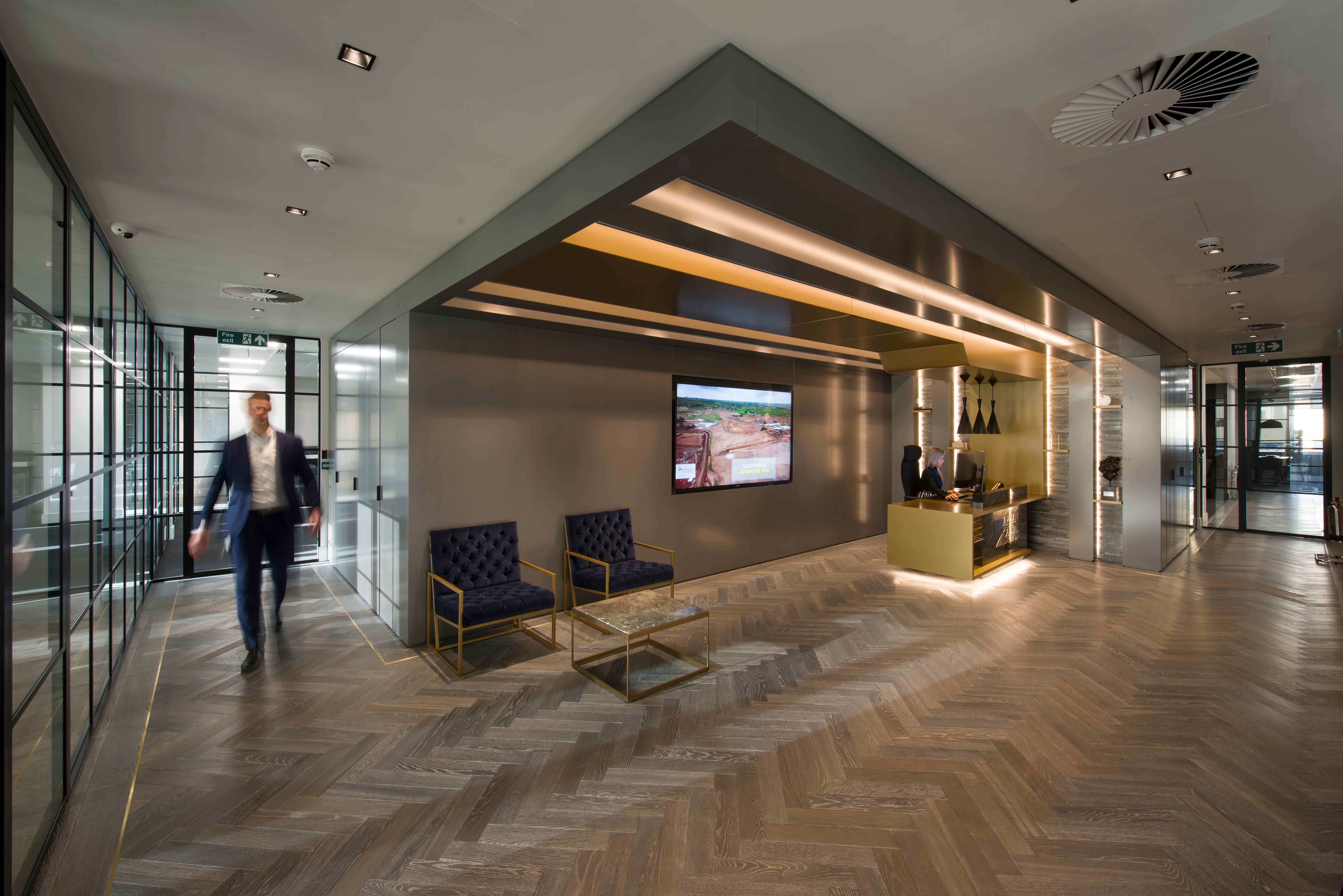
Timber and engineered timber can work extremely well in receptions, client suites, boardrooms and feature areas where material quality and first impressions matter.
It can bring warmth to a space and create a more premium feel than some synthetic alternatives.
But timber needs careful specification.
The finish, expected footfall, cleaning regime, moisture conditions and acoustic implications all matter.
So while timber can look excellent in the right place, it is not necessarily the answer for every square metre of a large workplace.
Best suited to:
Reception spaces, client-facing areas, executive spaces and selected feature zones.
Think about:
Maintenance, wear, acoustics, budget and how the material will age.
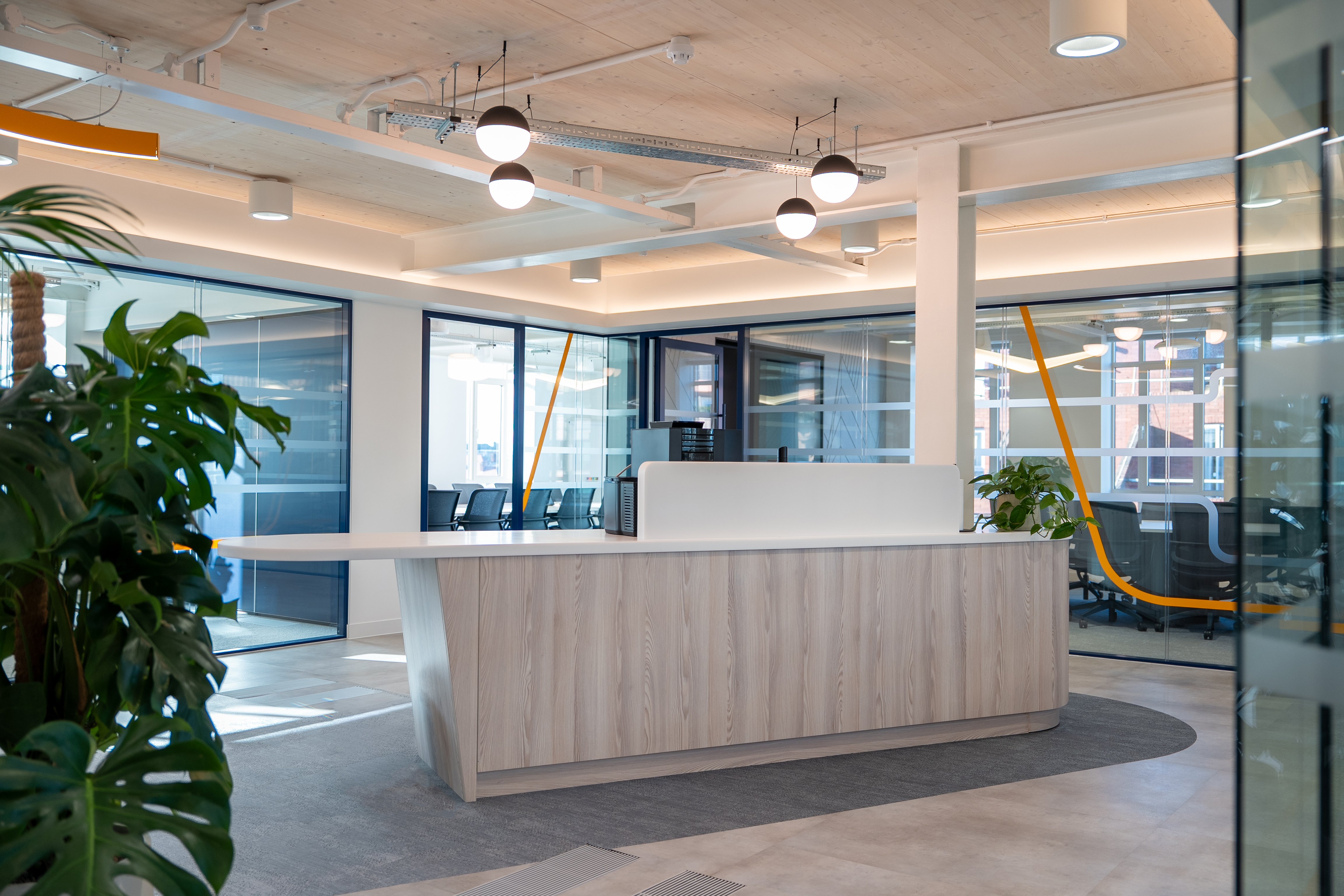
What about polished concrete?
Polished or exposed concrete can be a strong option where a workplace is deliberately aiming for a more industrial or stripped-back aesthetic.
It can be durable and visually distinctive, particularly in creative, engineering or advanced manufacturing environments where the building itself is part of the design language.
But there is an important caveat.
An existing concrete slab is not automatically a finished concrete floor. It may need repairs, levelling, grinding, polishing, sealing or other preparation before it is suitable to remain exposed.
And again, acoustics matter. A room full of hard floors, hard ceilings and hard furniture can become pretty hard work.
Best suited to:
Industrial-style workplaces, reception spaces, social areas and selected circulation zones.
Think about:
Existing slab quality, preparation, acoustics, comfort and maintenance.
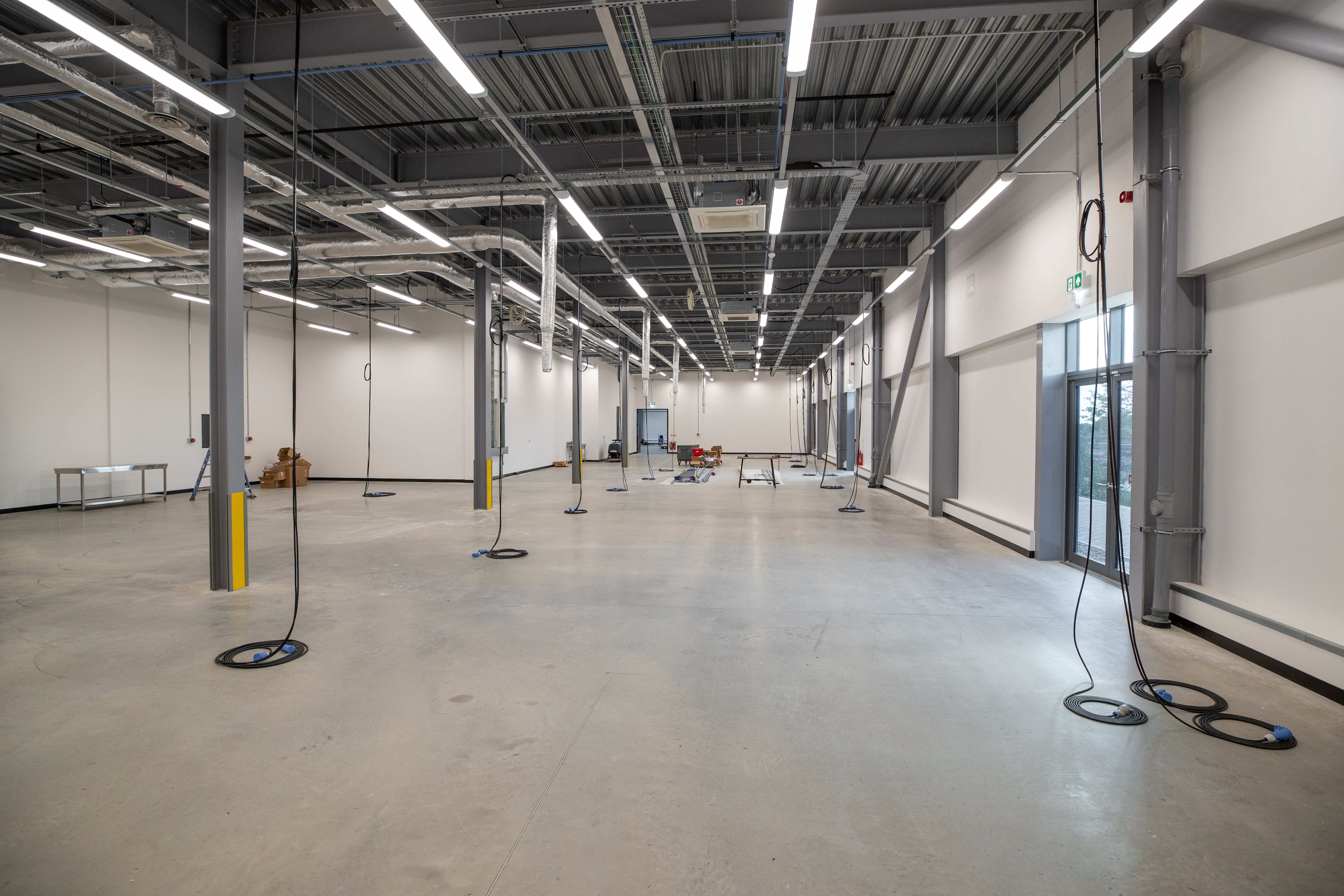
Is cork flooring suitable for offices?
Cork can be useful where comfort and acoustic absorption are priorities.
It has a softer feel than many hard floor finishes and can help create warmer, quieter environments. It is also a material worth considering where natural finishes form part of the design approach.
That said, it is less commonly the default choice for a large corporate workplace than carpet tiles or resilient flooring, so its suitability should be assessed against the expected traffic, cleaning requirements and overall design.
Best suited to:
Selected quiet spaces, informal areas and environments where a softer natural finish is appropriate.
Think about:
Durability, maintenance and the precise product specification.
What about rubber and other resilient flooring?
Rubber and specialist resilient floors are useful where performance takes priority over looking like a conventional office.
You may find them in:
- gyms;
- wellbeing areas;
- technical spaces;
- back-of-house areas;
- specialist workplace environments.
They can provide durability, grip and easy cleaning where those things matter more than creating a residential-style finish.
The key point is that not every area in an office needs to use an “office” material.
Sometimes the right answer is simply the material best suited to the activity happening there.
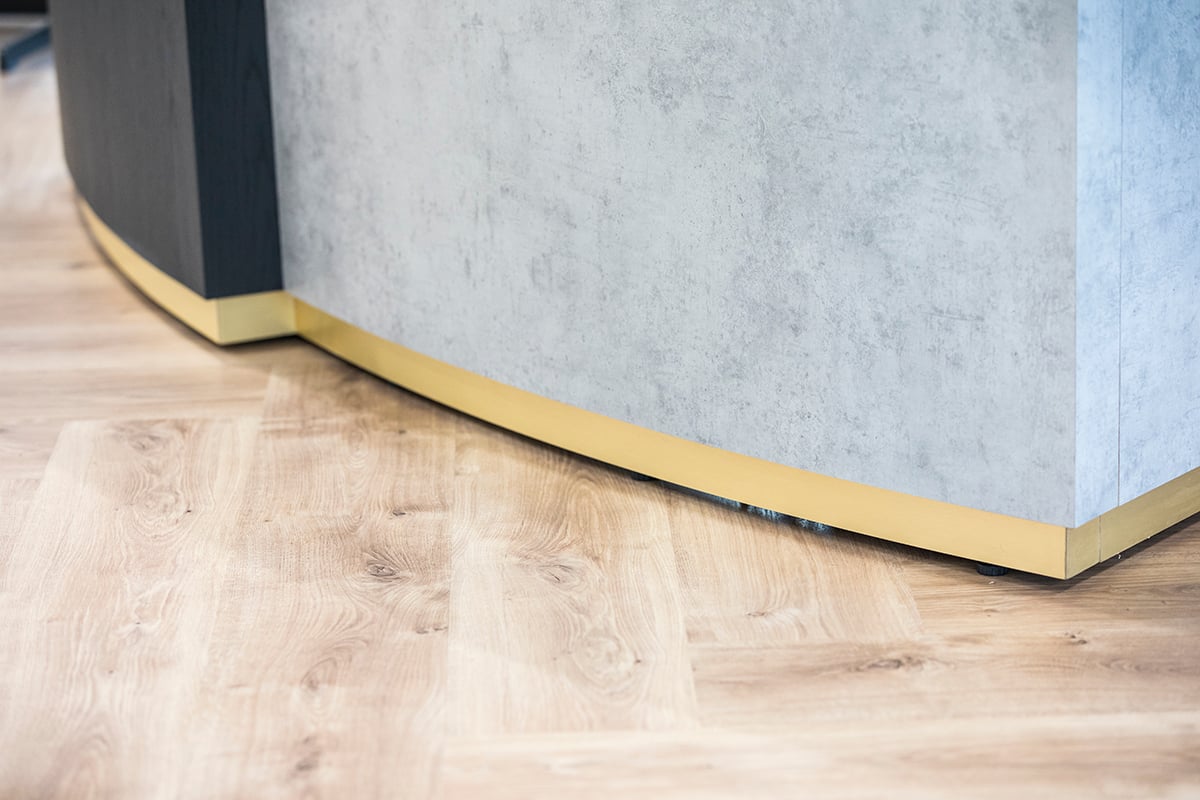
Which flooring is best for each area of an office?
A useful way to think about flooring is by zone rather than material.
| Workplace area | What should the flooring prioritise? |
|---|---|
| Open-plan workspace | Acoustics, comfort and easy local replacement |
| Focus areas | Acoustic control and comfort |
| Meeting rooms | Acoustics, appearance and durability |
| Reception | First impression and heavy footfall |
| Corridors | Wear resistance and easy maintenance |
| Kitchen / café | Spill resistance, cleaning and slip performance |
| Breakout spaces | Comfort, acoustics and visual zoning |
| Client suite | Finish quality and durability |
| Gym / wellbeing | Grip, resilience and cleanability |
| Technical areas | Performance and operational requirements |
This is why choosing one floor finish for an entire workplace is often the wrong starting point.
The better question is: What does this part of the workplace need to do? Then specify accordingly.
How does flooring affect office acoustics?
Quite a lot.
Hard surfaces reflect sound. Softer finishes generally absorb more of it.
That does not mean every office should be carpeted from wall to wall, but flooring needs to form part of the overall acoustic strategy.
Open-plan workplaces in particular need to balance:
- floors;
- ceilings;
- partitions;
- furniture;
- acoustic panels;
- soft furnishings;
- spatial planning.
A noisy workplace is rarely caused by one thing.
Likewise, changing the floor alone will not magically fix poor acoustics.
Our guide to 15 things that make a great office environment looks at acoustics as part of the wider workplace experience, alongside comfort, lighting, technology and the balance between collaborative and quiet spaces.
.jpg?width=2000&height=1333&name=HAB001_01_HabitAction_O_ConnorUtilities_02-1%20(1).jpg)
Can flooring help zone an office?
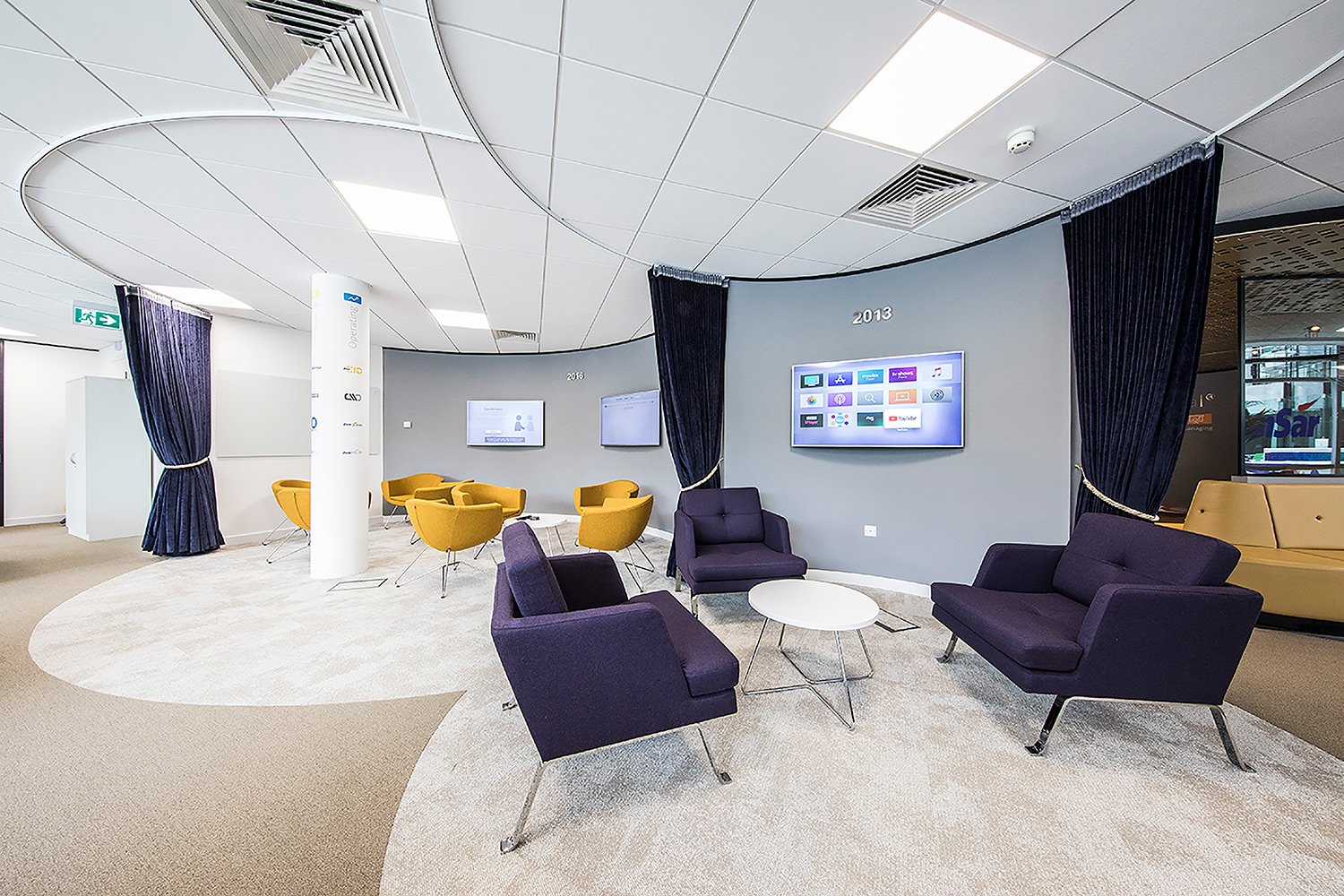
Absolutely. Flooring can be one of the simplest ways to show that the purpose of a space has changed.
Moving from carpet into a timber-effect or resilient finish can subtly signal: you've left the desk area and entered a social space.
Different textures, patterns and laying directions can also help define circulation routes or individual workplace neighbourhoods.
Done well, people understand how to use the space without needing a sign every three metres. That is exactly what good workplace design should do.
What should you consider about maintenance?
Ask the boring questions early. They are usually the useful ones.
How is this floor cleaned?
How often?
What happens if one section is damaged?
Can individual tiles or planks be replaced?
How quickly will heavy footfall become visible?
What happens near entrances on a wet November morning?
The HSE specifically highlights contamination, cleaning regimes and appropriate floor specification as important parts of controlling slip and trip risks in workplaces. HSE
A flooring product may look fantastic on installation day. The more interesting question is what it looks like on day 1,000.
What about sustainability?
“Sustainable flooring” is not one particular material. Look beyond a green-sounding product description and consider:
Material content.
What is the product actually made from?
Embodied impact.
What resources and manufacturing processes sit behind it?
Durability.
How frequently is it likely to need replacement?
Repairability.
Can damaged sections be replaced individually?
Take-back and recycling.
Does the manufacturer offer a credible route for materials at end of life?
Reuse.
Could parts of the existing floor remain rather than automatically replacing everything?
The lowest-impact new product may still have a bigger impact than keeping a perfectly serviceable product already in the building.
It is the same principle we apply across workplace design: don't specify something simply because it is fashionable. Understand what the project actually needs first.
Our Complete Guide to Workplace Design in 2026 explores that wider relationship between materials, furniture, lighting, acoustics and the experience an organisation wants its workplace to create.
Is carpet or hard flooring better for an office?
Neither is automatically better. For most larger offices, a combination usually makes more sense.
Carpet tiles can work well in focus and desk areas where acoustics and comfort matter.
Hard or resilient finishes can perform better in cafés, circulation routes and spaces where spills and heavier use are expected.
The important bit is not choosing a winner. It is putting the right material in the right place.
How long should office flooring last?
There isn't one useful answer because lifespan varies considerably depending on the product, installation, level of footfall, maintenance and where it is used.
Instead of specifying flooring around a headline lifespan, consider its whole-life performance.
Ask:
How quickly will it wear?
How easy is it to repair?
Can individual sections be replaced?
Will the manufacturer still support the range in future?
How intensive is the cleaning regime?
That will tell you far more about value than the purchase price alone.
So, what is the best office flooring?
The best office flooring is the finish that suits the activity, level of use, maintenance requirements, acoustic needs, safety requirements and design intent of the area it is going into.
For many workplaces, that means using several materials rather than searching for one product that somehow does everything.
Carpet tiles may make sense around desks.
LVT might make sense in the café.
Timber could make sense in reception.
Rubber could make sense in the gym.
And the concrete underneath might turn out to be worth keeping.
Very occasionally, the answer really is that simple.
Planning an office refurbishment or fit-out?
Flooring is only one part of the picture.
Before choosing finishes, understand how people will use the workplace, where different activities will happen and what the building needs to support.
That way, the flooring is selected as part of the workplace design rather than somewhere between choosing the chairs and realising the programme starts next week.
Explore our Complete Guide to Workplace Design in 2026, or speak to Habit Action about planning your next workplace project.