 ·
10 minute read
·
10 minute read
Ever looked around your office and thought, where actually am I?
Not literally. You know you're in the office.
But perhaps the space doesn't feel like your business. The furniture could belong anywhere. The meeting rooms feel generic. The reception says very little. There might be a logo on the wall, but somehow the workplace still feels like someone else's office.
That is exactly where workplace design comes in.
Workplace design is about creating a space that reflects your brand, supports the way your people work and makes the office feel like it belongs to your organisation. It goes far beyond wall colours. Layout, furniture, finishes, lighting, meeting spaces, breakout areas, acoustics and even the journey through the building all contribute to the experience.
And yes, if you're responsible for a large organisation's workplace, it matters. Quite a lot.
What is workplace design actually about?
Let's clear something up first.
Workplace design isn't simply choosing a nice colour palette and finding some fashionable furniture to go with it.
If it were, we'd have some very strange walls and some very boring offices.
Good workplace design connects how a business works with how its workplace looks, feels and functions.
That means asking questions such as:
- What does the organisation stand for?
- How do people actually work?
- Where do they need to concentrate?
- Where do they collaborate?
- How should clients and visitors experience the business?
- Does the workplace feel welcoming?
- Does it support employee wellbeing?
- Does the design reflect the organisation's brand?
- Can the space adapt as the business changes?
The answers influence everything from the floor plan to the furniture, finishes, lighting and meeting spaces.
So while office design is certainly part of workplace design, the two aren't quite the same thing.
Office design creates the physical environment. Workplace design considers what that environment needs to achieve. And that distinction matters.
Why does workplace design matter to a large organisation?
Because your workplace is doing a job whether you have deliberately designed it to or not.
Walk into a space and you immediately make assumptions.
Is this organisation creative? Serious? Welcoming? Traditional? Innovative? Premium? Collaborative? Private?
You might not consciously think any of those things. You just get a feeling. That's the interesting bit.
Your workplace is communicating before anyone has introduced themselves.
A reception desk, the route to a meeting room, the furniture in a breakout space, the artwork on the wall and even the materials under your feet all contribute to that impression.
And for a large organisation, that impression can matter to employees, clients, candidates and visitors alike.
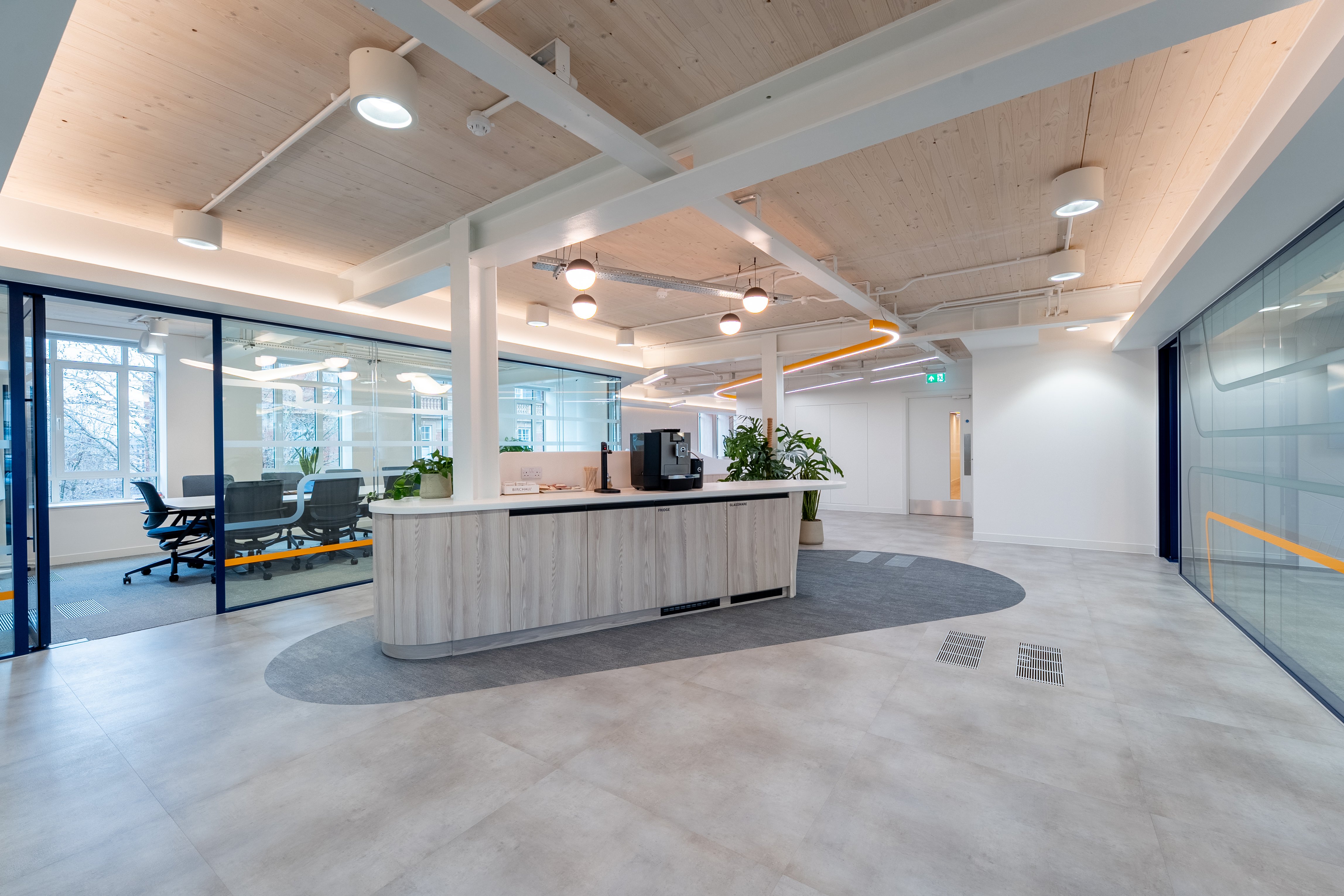
When Gresham Tech moved into its London headquarters, the brief wasn't simply to put desks into a new floor.
The organisation wanted a workplace that reflected its culture of innovation and collaboration while making the most of its London location.
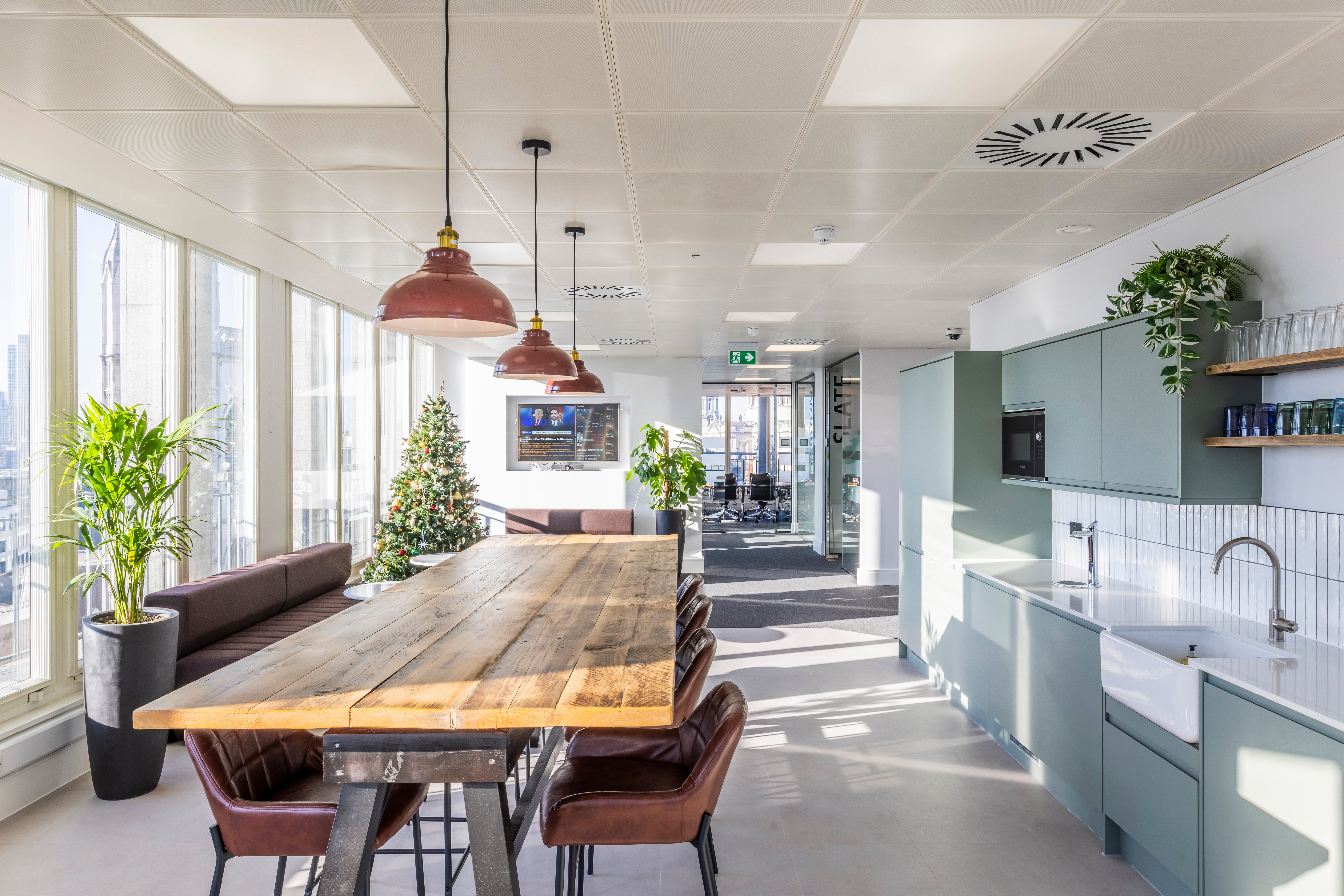
Habit Action created a CAT B fit-out with professional meeting spaces alongside breakout and lounge areas. A light-filled boardroom makes use of the views across London, while the kitchen and relaxed seating areas provide places for people to connect away from their desks. The project was designed to support collaboration, focus and wellbeing while aligning the space with Gresham Tech's identity.
That's workplace design in practice. The space isn't just decorated.
It has been designed to say something about the organisation and help people use the workplace in the way the organisation needs.
What does workplace design change?
This is where workplace design becomes much more interesting than simply making an office look good.
It changes how the workplace feels.
Think about walking into a hotel, restaurant or shop you immediately recognise. The colours, materials, lighting, furniture and layout all contribute to a particular feeling.
Your workplace can do the same.
That doesn't mean covering every wall in your brand colours. In fact, please don't. Brand identity can be much more subtle.
It can appear through materials, textures, furniture choices, artwork, lighting, signage, feature walls, meeting spaces and the overall character of the environment.
A workplace should feel like an extension of the organisation, rather than a generic office with a logo stuck on afterwards.
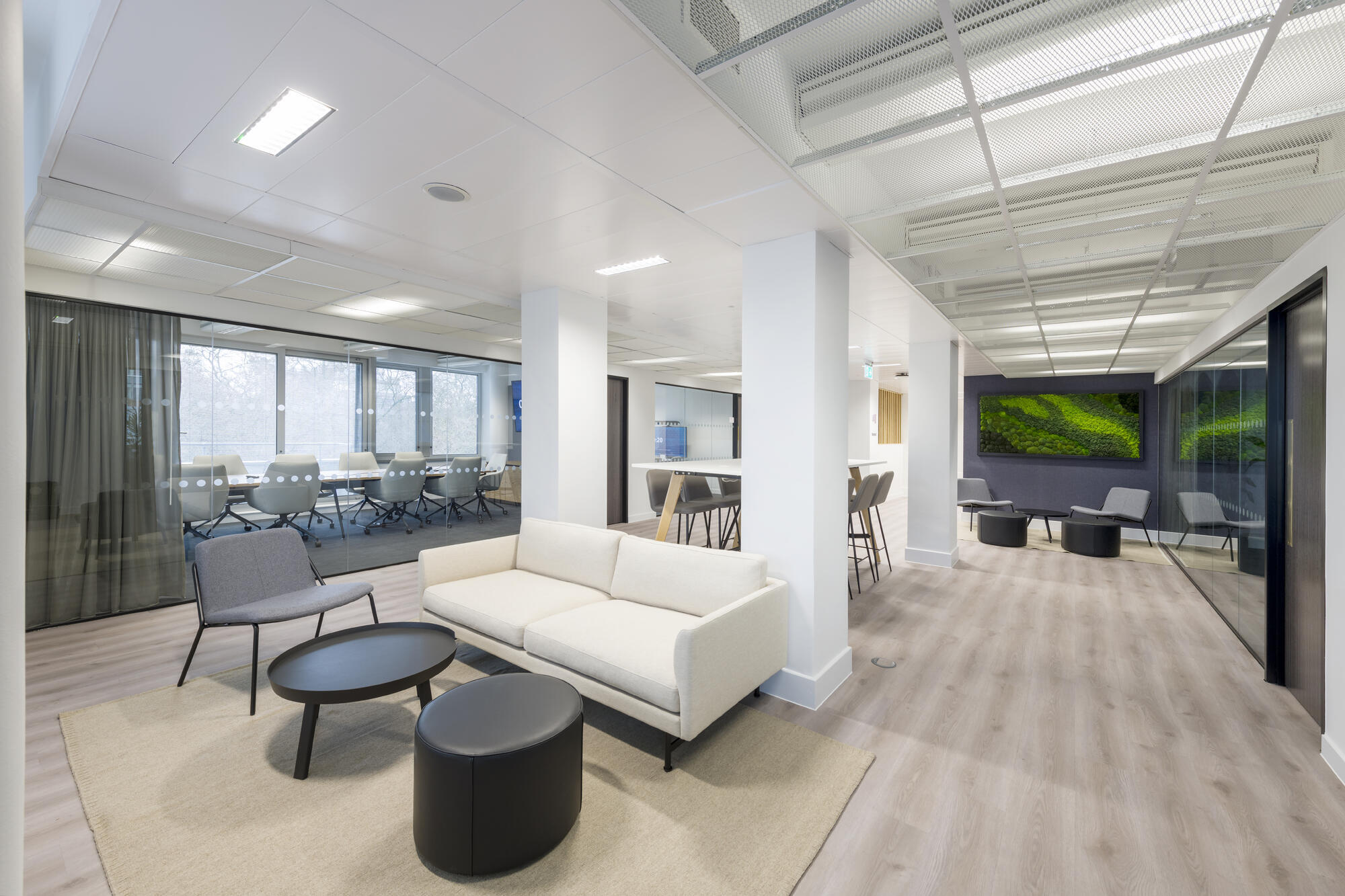
The Canadian-based investment firm project is a good example.
Habit Action worked with the business to create a vibrant London workplace that supported collaboration and connectivity while fitting with its wider international presence. The design used natural tones and textures, including stone, wood and woven materials, alongside moss and foliage. The finished workplace included boardrooms, meeting rooms, collaboration space, a canteen, open-plan workspace and phone booths.
The result wasn't loud for the sake of being memorable. It used the setting and materials to create a particular character. That is brand identity through space.
Can workplace design improve employee experience?
Yes, but not because employees suddenly become happier when someone buys a nice sofa.
It's about giving people an environment that makes their working day easier.
If someone needs to concentrate, can they find somewhere suitable?
If a team needs to collaborate, is there somewhere they can work together without disturbing everyone around them?
If someone needs a private conversation, do they have somewhere to go?
If employees want to take a break, is there somewhere that actually feels like a break?
These are workplace design questions.
A workplace that forces every activity to happen at the same desk is asking the space to do too much.
Different types of work need different environments.
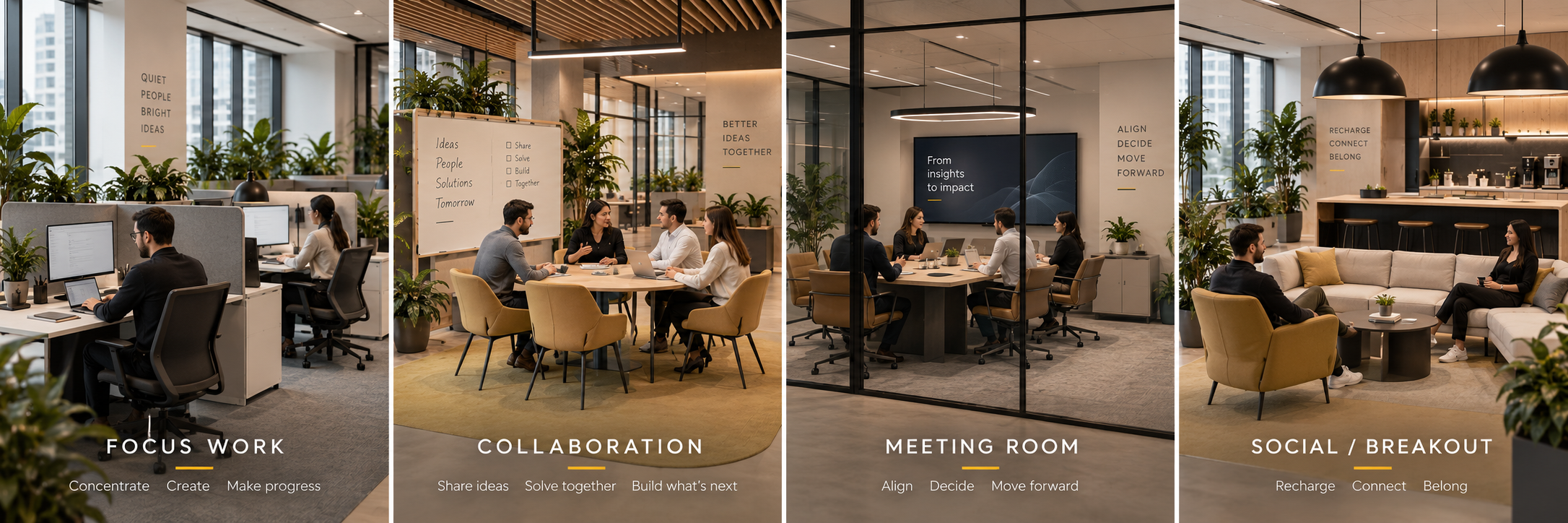
That might mean quiet areas, meeting rooms, collaboration zones, informal spaces, social areas and comfortable individual work settings.
The point isn't to fill a floor with as many different types of rooms as possible.
The point is to understand what people need the space to do, then design around it.
What does workplace design have to do with employee engagement?
More than many organisations realise.
Employee engagement isn't something you can manufacture with a brightly coloured breakout area.
But the workplace can either support engagement or make everyday working unnecessarily difficult.
Consider how much of the working day is shaped by the physical environment.
People move through it. They meet colleagues in it. They have conversations in it. They concentrate in it. They host clients in it. They take breaks in it.
If the environment makes those things easier, it is doing its job.
If it constantly gets in the way, people notice that too.
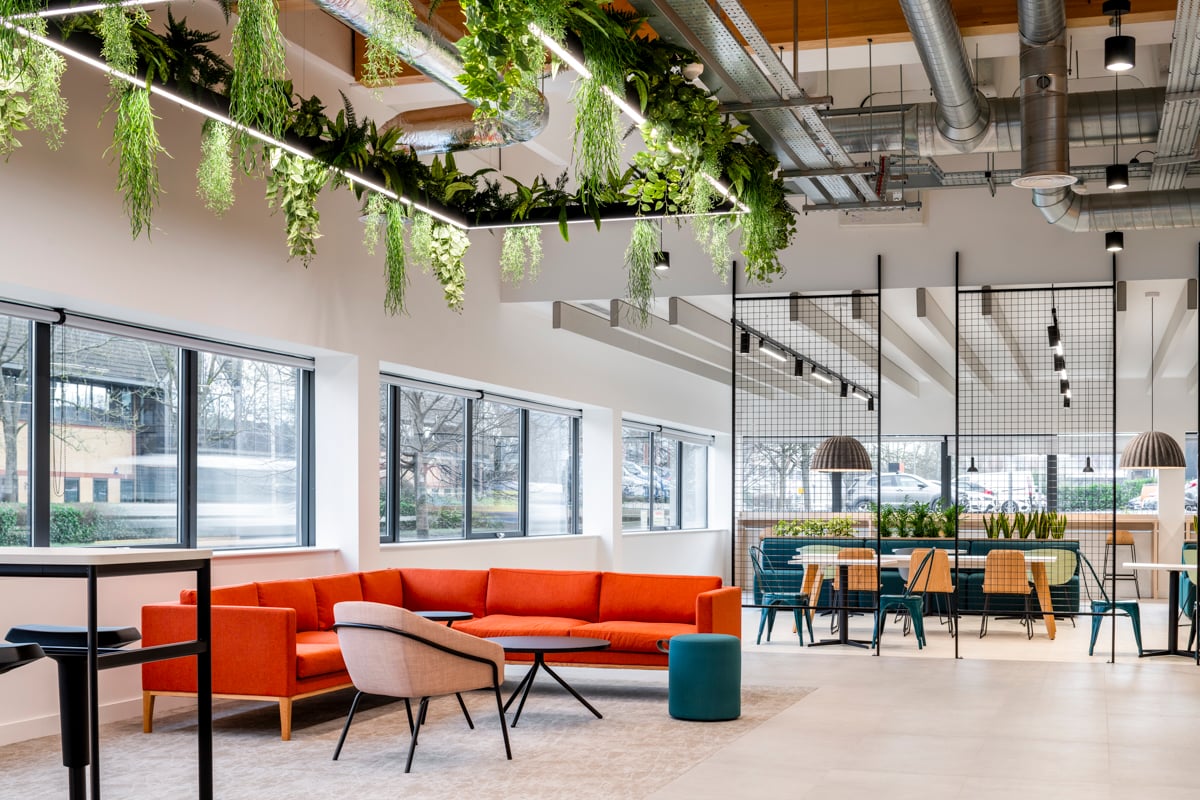
O'Connor Utilities is a useful example.
Habit Action designed the company's 14,000 sq ft Stockport headquarters around the organisation's culture and growth. The workplace combines open-plan workstations, private meeting areas and relaxed breakout zones, giving people different settings for focused work, informal conversations and team interaction.
The design also uses bold graphics, warm wood finishes, industrial elements and vibrant colour to strengthen the connection between the physical environment and the organisation's values.
The important point isn't that every organisation needs bold graphics or warm wood.
It is that the design choices were made to support a particular business and the people working within it.
That's the difference between decoration and workplace design.
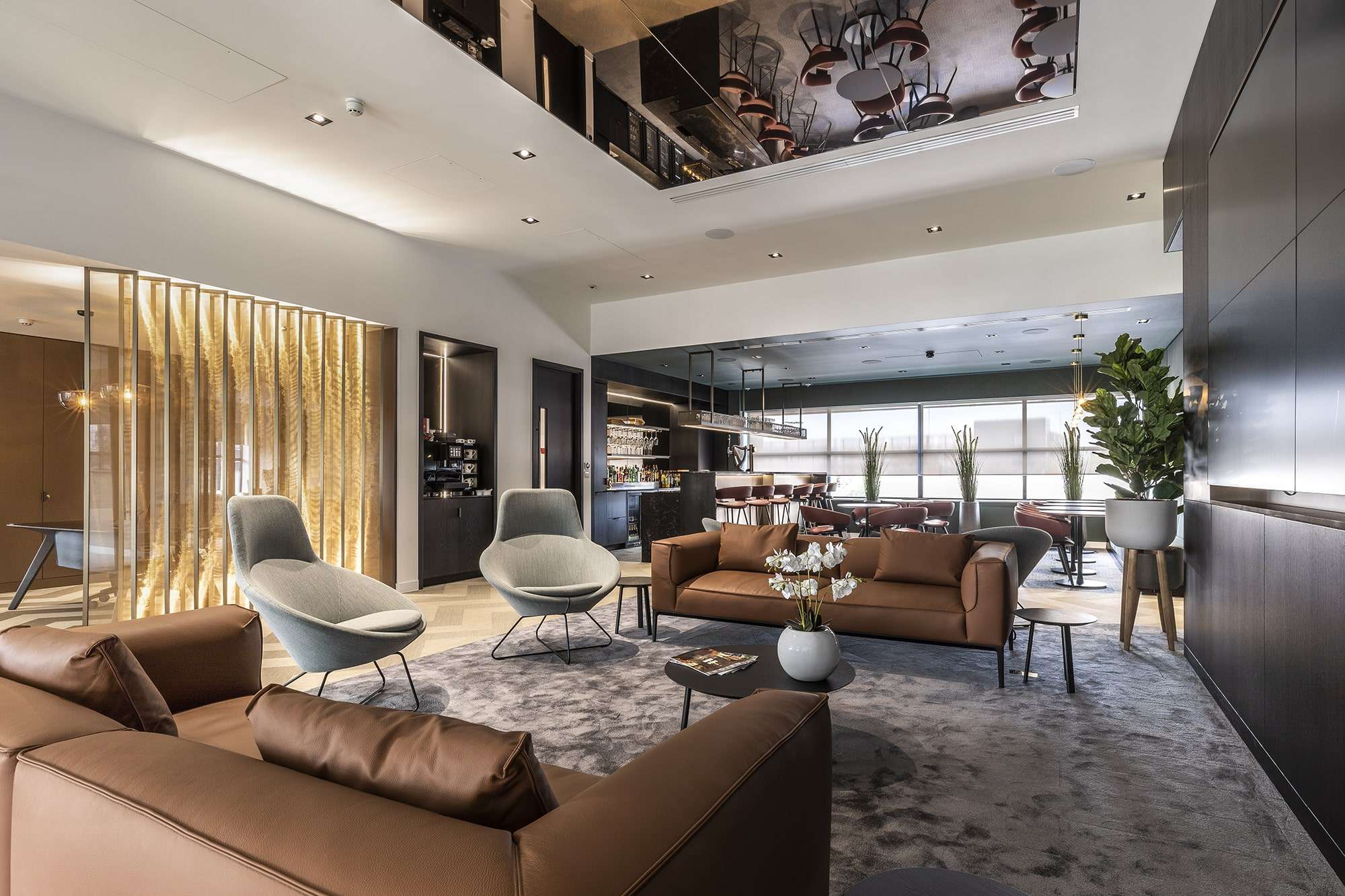
How should workplace design reflect your brand?
Start with the brand, but don't stop at the brand guidelines.
A common mistake is to think: We have our colours. Let's put them on the walls.
That's not really workplace design.
Instead, ask what your brand actually feels like.
- Are you formal or relaxed?
- Technical or creative?
- Established or disruptive?
- Client-facing or highly private?
- Premium or deliberately informal?
- Fast-moving or methodical?
Then consider how those characteristics could translate into physical space. That might influence:
Materials – timber, stone, metal, textiles and other finishes can create very different impressions.
Furniture – formal executive furniture communicates something very different from relaxed lounge seating.
Lighting – bright, functional lighting creates a different atmosphere from layered, softer lighting.
Spatial planning – a workplace designed around interaction will feel very different from one dominated by private offices.
Graphics and artwork – these can reinforce identity without turning the workplace into a giant advert.
Meeting spaces – the boardroom, client meeting room and informal meeting area can each play a different role.
Reception and arrival – often the first physical expression of the organisation.
And yes, your office can absolutely have a huge painting on the wall. Especially if it works. The trick is making the whole environment feel intentional.
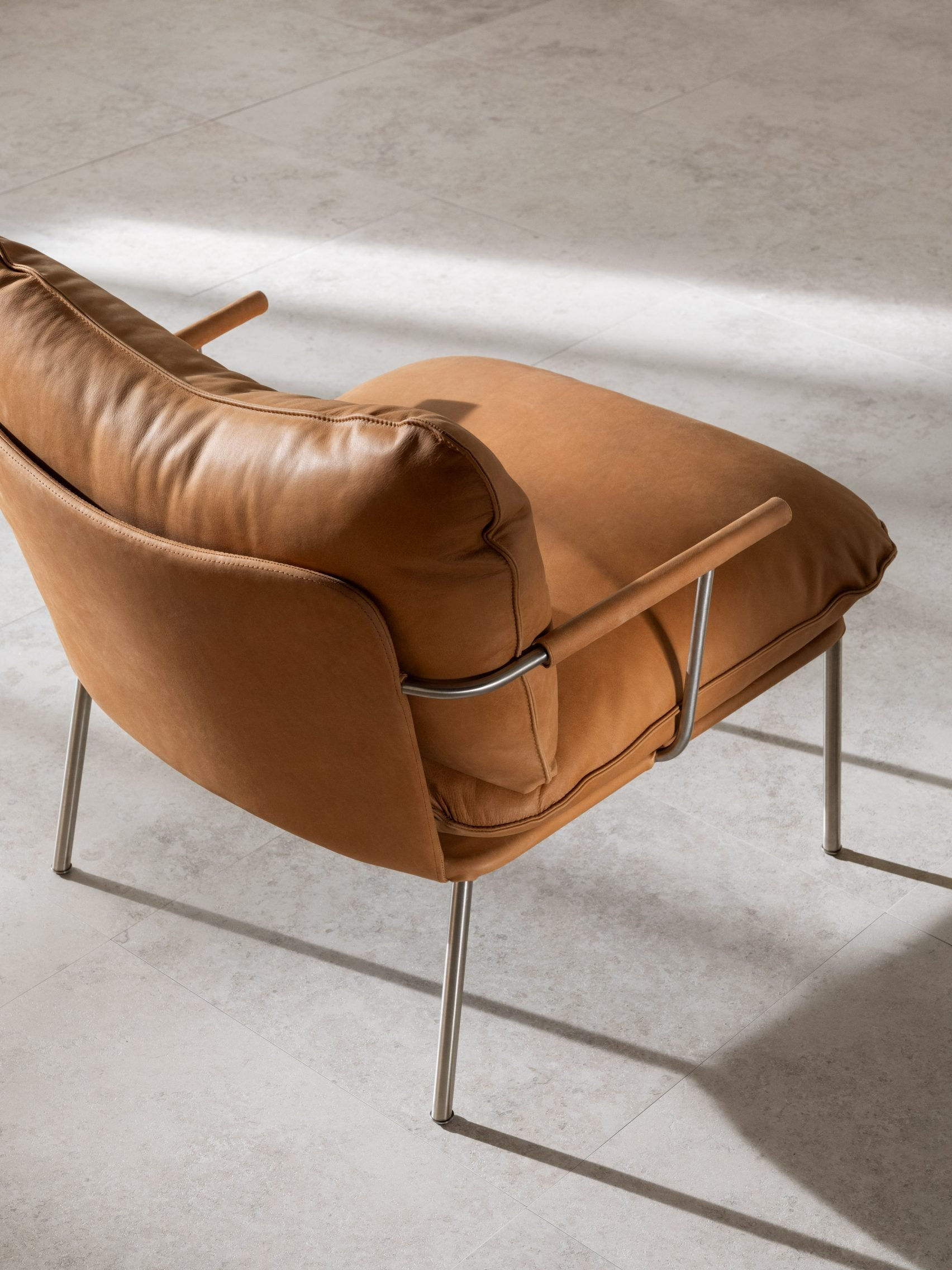
How do you design a workplace around the people using it?
This is where workplace design needs to move beyond assumptions.
Don't simply decide that everyone wants open-plan desks, collaboration areas and a coffee bar because that's what modern offices are supposed to have.
Find out what your people actually need. Useful information can come from:
- Employee surveys
- Interviews and workshops
- Occupancy information
- Desk and meeting-room utilisation
- Workplace observations
- Heatmaps
- Existing floor plans
- Technology requirements
- Feedback from different teams and departments
The aim isn't to collect data because data sounds impressive.
It is to understand the gap between how the workplace was intended to be used and how people actually use it.
Because those two things aren't always the same. A floor plan tells you where the desks are. It doesn't necessarily tell you why everyone keeps leaving them.
That distinction can completely change a workplace design.
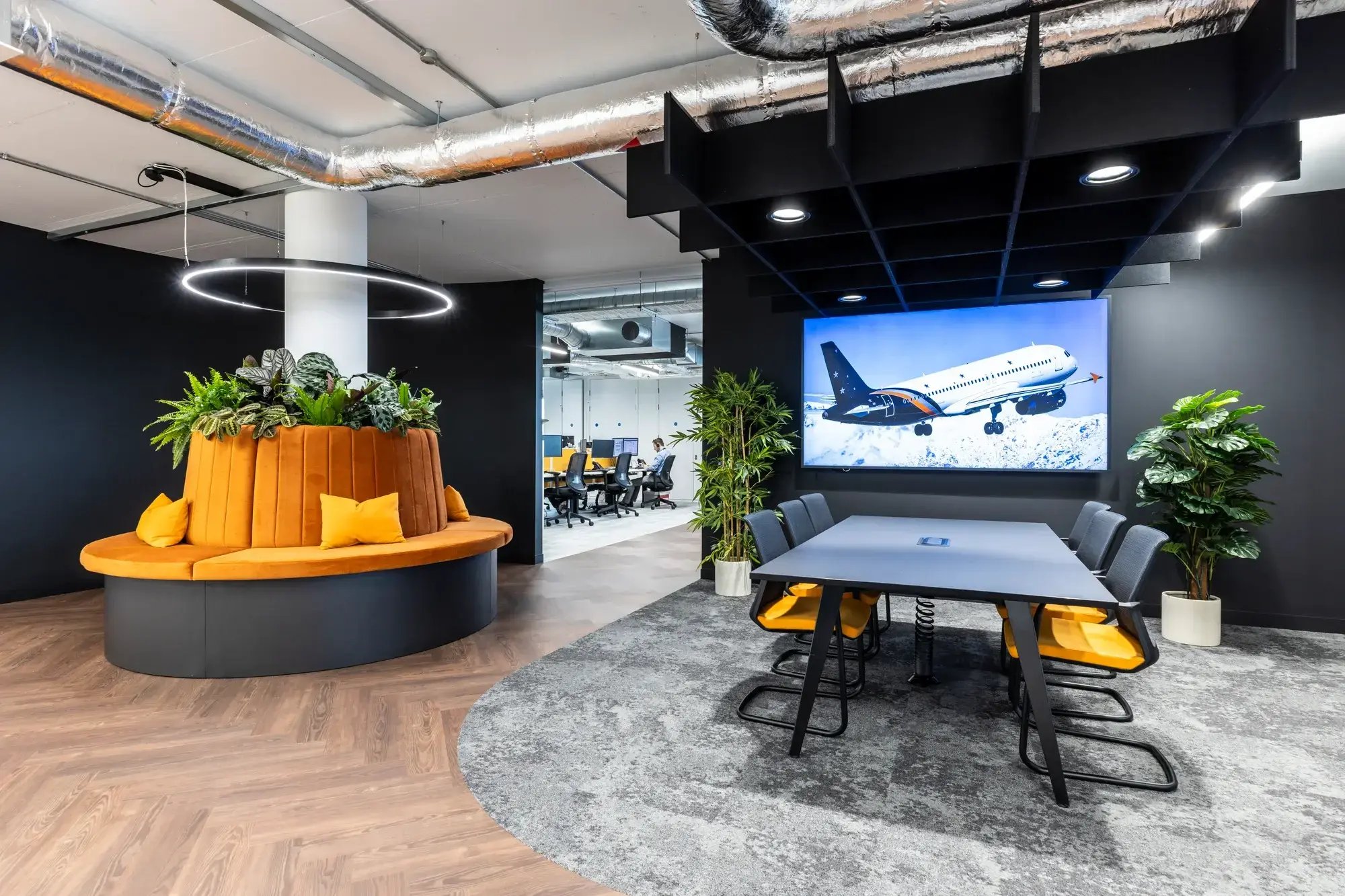
What should you consider when planning workplace design?
There are four questions worth keeping in mind.
1. What does the organisation need the workplace to say?
Your workplace should make sense alongside your brand.
If the business is innovative, but the office feels dated and generic, there is a disconnect.
If the organisation is highly client-focused, but visitors are squeezed into a random meeting room beside the printer, there is another disconnect.
Start with the experience you want people to have.
2. What do people actually need to do?
List the activities rather than simply counting desks.
People might need to:
- Focus
- Collaborate
- Meet clients
- Hold confidential conversations
- Present
- Socialise
- Take breaks
- Work remotely with colleagues
- Have informal conversations
- Host larger groups
Then consider what physical settings support those activities. This creates a workplace that is based on behaviour rather than fashion.
Once you understand the different activities your workplace needs to support, the next question is how much space you'll need to accommodate them. Our Office Space Calculator can help you estimate your organisation's space requirements, giving you a useful starting point before developing the floor plan.
3. How should the space feel?
This is where the design language comes in.
Think about materials, furniture, lighting, colour, acoustics, artwork and planting.
But consider them as a whole. A beautiful chair in the wrong environment is still just a chair.
4. Will the workplace still work in a few years?
A workplace isn't finished simply because the fit-out is finished.
Teams change. Businesses grow. Technology changes. Working patterns change.
Good workplace design leaves enough flexibility for the organisation to evolve without immediately needing another major transformation.
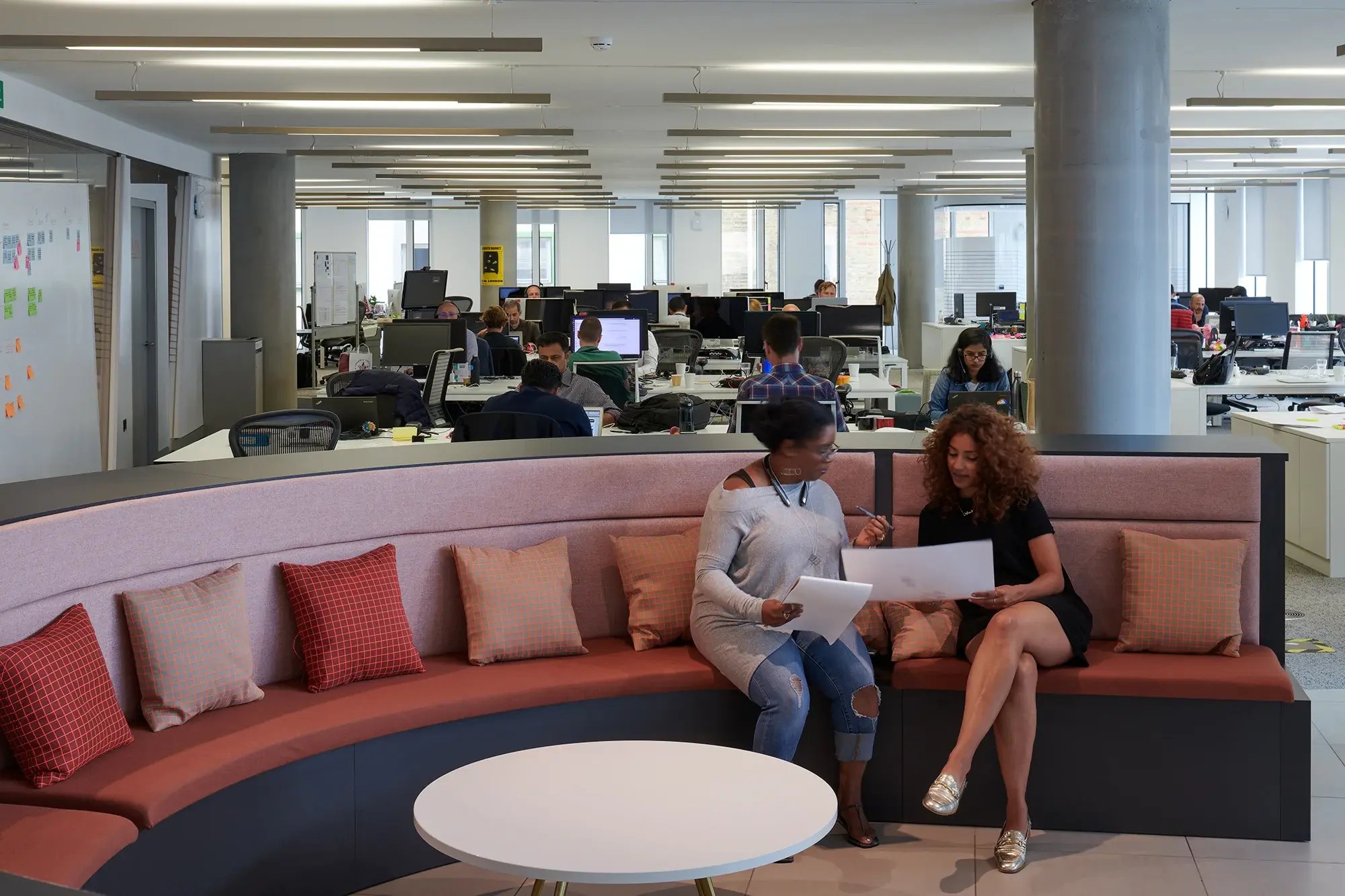
What does good workplace design look like in practice?
Sometimes the best way to understand workplace design is to look at what happens when all the pieces come together.
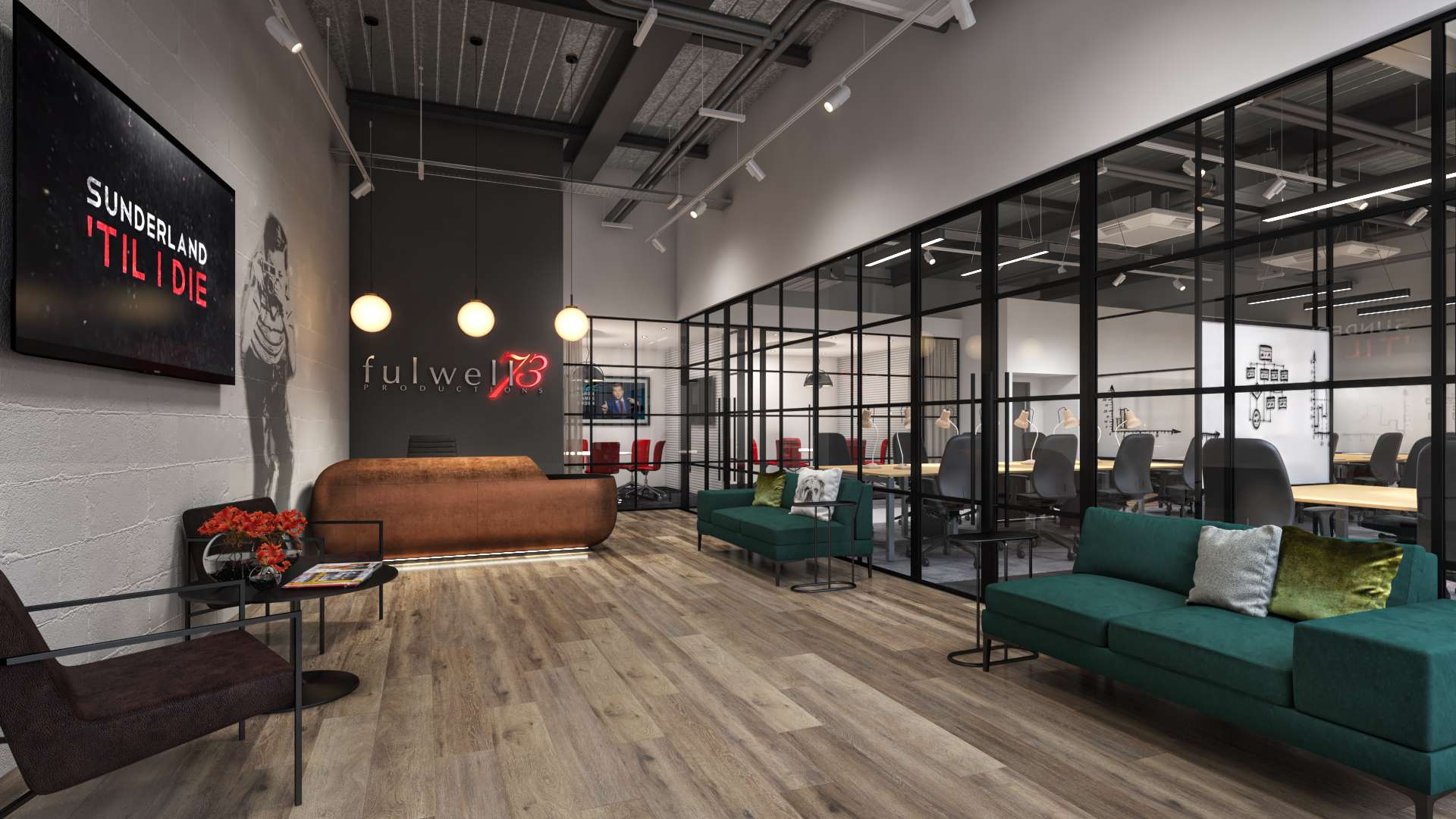
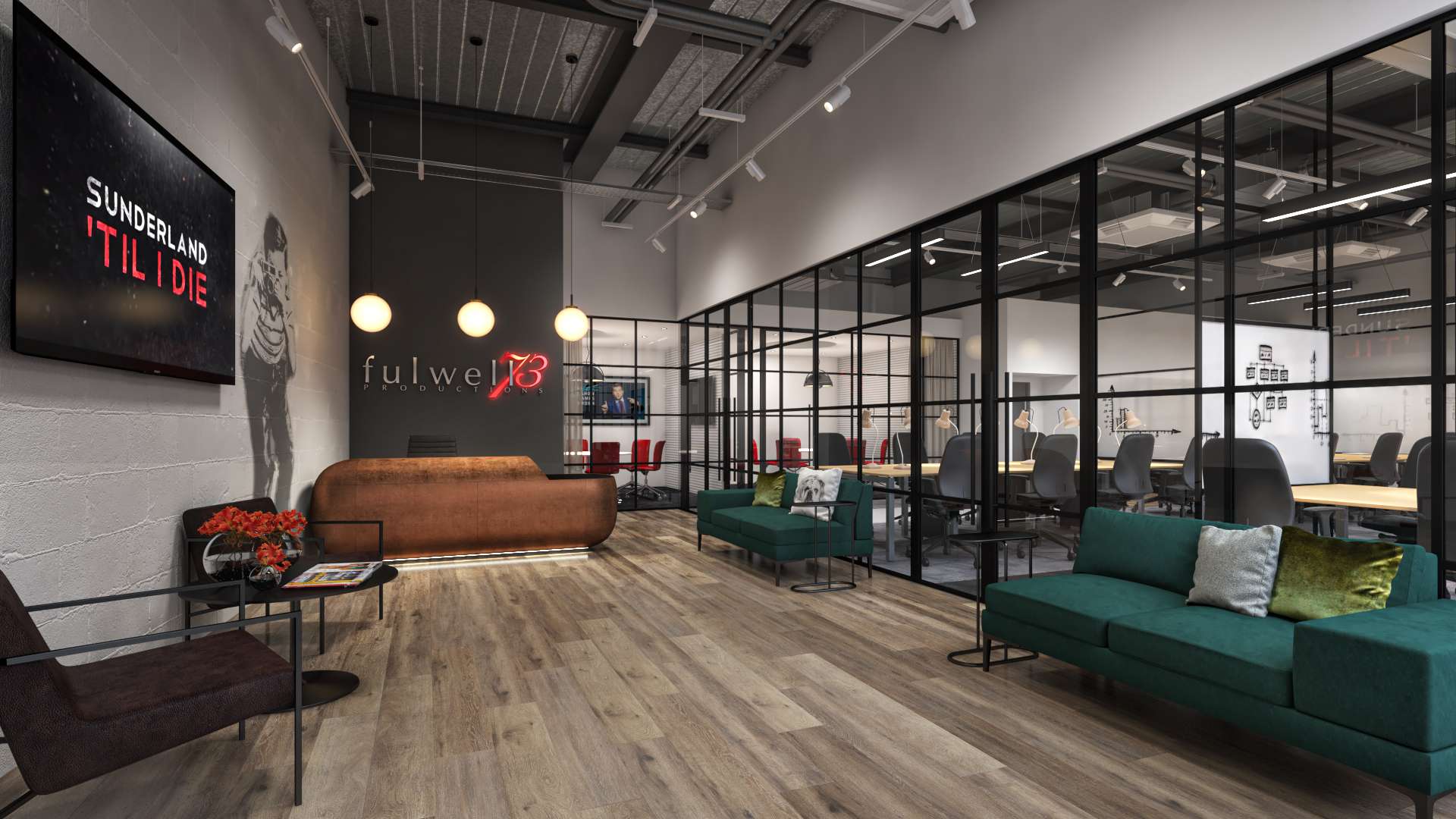
Fulwell 73 Productions' 12,000 sq ft London project was designed as a significant transformation for the production company, with facilities and spaces intended to encourage creativity and collaboration. Habit Action delivered the £2.8 million project over six months.
That is a very different workplace requirement from an investment firm or an infrastructure engineering business.
And that's the point. There is no single version of "good workplace design". Good workplace design is specific to the organisation.
A workplace should not look like every other workplace because every business doesn't work in exactly the same way.
Is workplace design really necessary if the office already works?
This is probably the question many organisations are quietly asking. If people have desks, meeting rooms, Wi-Fi and somewhere to make coffee, isn't that enough?
Technically, perhaps. But an office can function without being particularly good.
The better question is: Is your workplace helping your organisation achieve what it needs to achieve?
If employees struggle to find somewhere quiet, that's a design issue.
If teams can't collaborate without booking a room three weeks in advance, that's a design issue.
If clients walk into a space that bears little resemblance to your brand, that's a design issue.
If your office looks like it could belong to almost any organisation, that's a design issue too.
And if you regularly find yourself thinking, "this just doesn't feel like us," pay attention to that feeling. It is probably telling you something useful.
So, what should you do before starting a workplace design project?
Don't begin with the colour palette. Start with the business. Before choosing furniture or finishes, establish: What are we trying to achieve?
Then understand: How are people working today?
Next ask: What isn't working?
Then: What should the workplace feel like?
And finally: How does the design translate our brand and ways of working into physical space?
That gives the design something to respond to. Without that thinking, it is very easy to end up with an attractive office that doesn't actually solve the problems you started with.
The big takeaway: your workplace is part of your brand
Workplace design isn't about making an office look expensive. It isn't about copying whatever workplace trend is currently doing the rounds. And it definitely isn't about choosing a wall colour and calling it a strategy.
Workplace design is about making the physical environment work for the organisation that occupies it.
It should support the people using it, make everyday work easier, create the right experience for visitors and reflect the character of the business.
Most importantly, it should feel like your workplace. Because when you walk into the office and think, "where actually am I? This doesn't feel like us," something is missing.
The answer isn't necessarily more colour. It is better design. And that is where a workplace design partner earns their place.
At Habit Action, we look at the whole picture: how your people work, what your organisation needs, how the space should feel and how those things can come together in a workplace that is genuinely yours.
The best workplace design doesn't simply give you an office. It gives your organisation a physical expression of who it is.
Key takeaways
- Workplace design is more than office aesthetics. It connects your space with your people, brand and business requirements.
- Your workplace communicates your brand whether you intend it to or not. Layout, materials, furniture, lighting and finishes all contribute to the experience.
- Good design starts with how people actually work. Don't design around trends; understand the activities your workplace needs to support.
- Employee experience is shaped by the physical environment. Focus, collaboration, privacy, wellbeing and social interaction all need appropriate settings.
- Brand identity doesn't mean covering the office in corporate colours. Materials, furniture, artwork, spatial planning and atmosphere can communicate your identity more naturally.
- There is no universal workplace design. What works for a production company may be completely wrong for an investment firm or engineering business.
- The best workplace design starts before the fit-out. Understand the organisation, people and problems first, then design the space around them.
FAQs
What is workplace design?
Workplace design is the process of creating a physical working environment around an organisation's people, ways of working, brand and business requirements. It covers more than appearance, including space planning, furniture, meeting spaces, lighting, materials, acoustics, technology and the overall employee experience.
Why is workplace design important?
Workplace design is important because the physical environment affects how people use the office, how the organisation is experienced and how well the space supports different types of work. A well-designed workplace can make it easier to focus, collaborate, meet clients and create an environment that reflects the organisation's identity.
Is workplace design the same as office design?
Not quite. Office design focuses primarily on the physical design of the office, while workplace design takes a broader view of how the space needs to support people, business objectives, brand identity and different ways of working.
How does workplace design affect employee experience?
Workplace design can affect employee experience by providing appropriate environments for different activities, including focused work, collaboration, meetings, informal conversations and downtime. The aim is to make the workplace easier and more comfortable to use rather than expecting one type of space to support everything.
How can workplace design reflect a company's brand?
Brand identity can be reflected through materials, furniture, lighting, artwork, finishes, signage, spatial planning and the overall atmosphere of the workplace. The strongest workplace designs interpret the character of the organisation rather than simply applying its logo and corporate colours throughout the office.
When should workplace design start?
Workplace design should start early in an office transformation project, before detailed fit-out decisions are made. Understanding how people work, what the organisation needs and what isn't currently working gives the design a clear purpose and helps prevent costly decisions being made around aesthetics alone.