 ·
11 minute read
·
11 minute read
There are probably more office fit-out companies than you know what to do with.
You open ten tabs. Everyone has impressive project photographs, experienced teams and plenty to say about quality, service and value. Everyone understands your business, apparently. And somehow, after an hour of research, you're less sure who to choose than when you started.
The difficulty isn't necessarily finding a good fit-out company. There are plenty of capable businesses out there.
It's working out which one is right for yours.
For a large organisation, an office fit-out is a substantial investment. You're trusting someone to make decisions about your workplace, your people, your operations and, quite possibly, where your business will be working for the next ten years.
Choosing the right office fit-out partner starts with understanding what your organisation needs, shortlisting companies with relevant experience, and assessing which team can deliver those requirements within your budget and programme.
That might sound straightforward. But there's quite a difference between a company that can build an attractive office and one that understands the challenges your particular project involves.
Key takeaways
- Start with your organisation, not the fit-out companies. Understand what your people, workplace and business actually need before comparing suppliers.
- Look at how your office works today. Employee feedback, occupancy data and observations can reveal problems that aren't obvious from a floor plan.
- Define what the workplace needs to achieve. Consider collaboration, focus, technology, brand, security, sustainability, growth and business continuity.
- Don't choose on cost alone. The cheapest quote isn't necessarily the quickest, best value or most suitable for your requirements.
- Ask potential partners the same questions. A consistent brief makes it much easier to compare how different companies approach your specific challenges.
- Look for evidence, not promises. Previous projects, relevant experience and the questions a supplier asks can tell you far more than a polished portfolio.
- Choose a partner that understands your business. The best fit-out isn't a showroom for the contractor — it should feel like it belongs to the organisation using it.
We've broken the process into three stages, from defining what you need to making the final appointment.
Part 1: Know what you're looking for before you start looking
Start with your organisation, not the fit-out companies
Before asking who should deliver the project, it's worth establishing what you're actually trying to achieve.
Perhaps your existing headquarters no longer supports how people work. Maybe you're bringing several business divisions together, relocating to a new building or creating additional space for growth.
You might also be trying to solve a much more specific problem. Meeting rooms are constantly occupied, teams are struggling to collaborate or the building's infrastructure can't support the technology the business now relies on.
These situations require different solutions, and potentially different expertise from the company delivering them.
A business looking to create a new 50,000 sq ft headquarters has different priorities from one refurbishing an occupied office over several phases. And an organisation incorporating workshops, laboratories or secure environments will have another set of requirements altogether.
You don't need a completely developed design before approaching potential partners. In fact, involving the right expertise early can help you make better decisions.
But you should have a clear understanding of why the project is happening, what needs to change and what success would look like.
Otherwise, you're asking fit-out companies to propose solutions before you've properly explained the problem.
Look at what your current workplace is telling you
One of the most useful places to start is the office you already have.
Not necessarily how it was intended to work when it was designed, but how people use it now.
Which meeting rooms are constantly booked? Are there areas nobody seems particularly interested in using? Do people struggle to find somewhere to concentrate? Are certain departments separated when they really need to work together?
Employee feedback, occupancy data and workplace observations can reveal quite a lot about what an organisation actually needs.
You might discover that a shortage of meeting rooms is really a shortage of small spaces for private calls. Or that you're considering taking more office space when better utilisation of your existing workplace could achieve much the same result.
These findings help shape the brief and give potential partners something meaningful to respond to.
For organisations still working through those early decisions, our guide to planning a large corporate office fit-out explores how workplace research, property requirements, budget and programme should develop together.
Establish what matters most
Every organisation has priorities, but they won't all carry the same weight.
One business might be particularly concerned about continuity because employees need to remain in the building throughout the refurbishment. Another might need consistent brand standards across several international locations.
Others may be focused on reducing environmental impact, integrating specialist technology or making the most of a limited budget.
It's worth distinguishing between requirements that are essential and those where there's room for flexibility.
That helps when you start comparing potential fit-out partners, because you can assess them against what actually matters to the business rather than being distracted by everything they can offer.
And yes, that includes the impressive coffee machines in the project photographs.
.jpg?width=2000&height=1499&name=Sapient-1-1%20(1).jpg)
Part 2: Build a shortlist based on evidence, not promises
Look for experience that matches your challenges
Once you understand the project requirements, choosing who to approach becomes much easier.
Relevant experience matters, but relevant doesn't always mean a project of exactly the same size or value.
An organisation planning a technically complex headquarters should be interested in whether a potential partner has dealt with similar infrastructure requirements, operational constraints and stakeholder challenges.
If your project involves an occupied workplace, ask how they've managed construction around employees. If you're bringing multiple departments together, look for evidence that they've successfully integrated different business functions.
And if your headquarters includes specialist technical environments, make sure the proposed team understands those spaces as well as the office surrounding them.
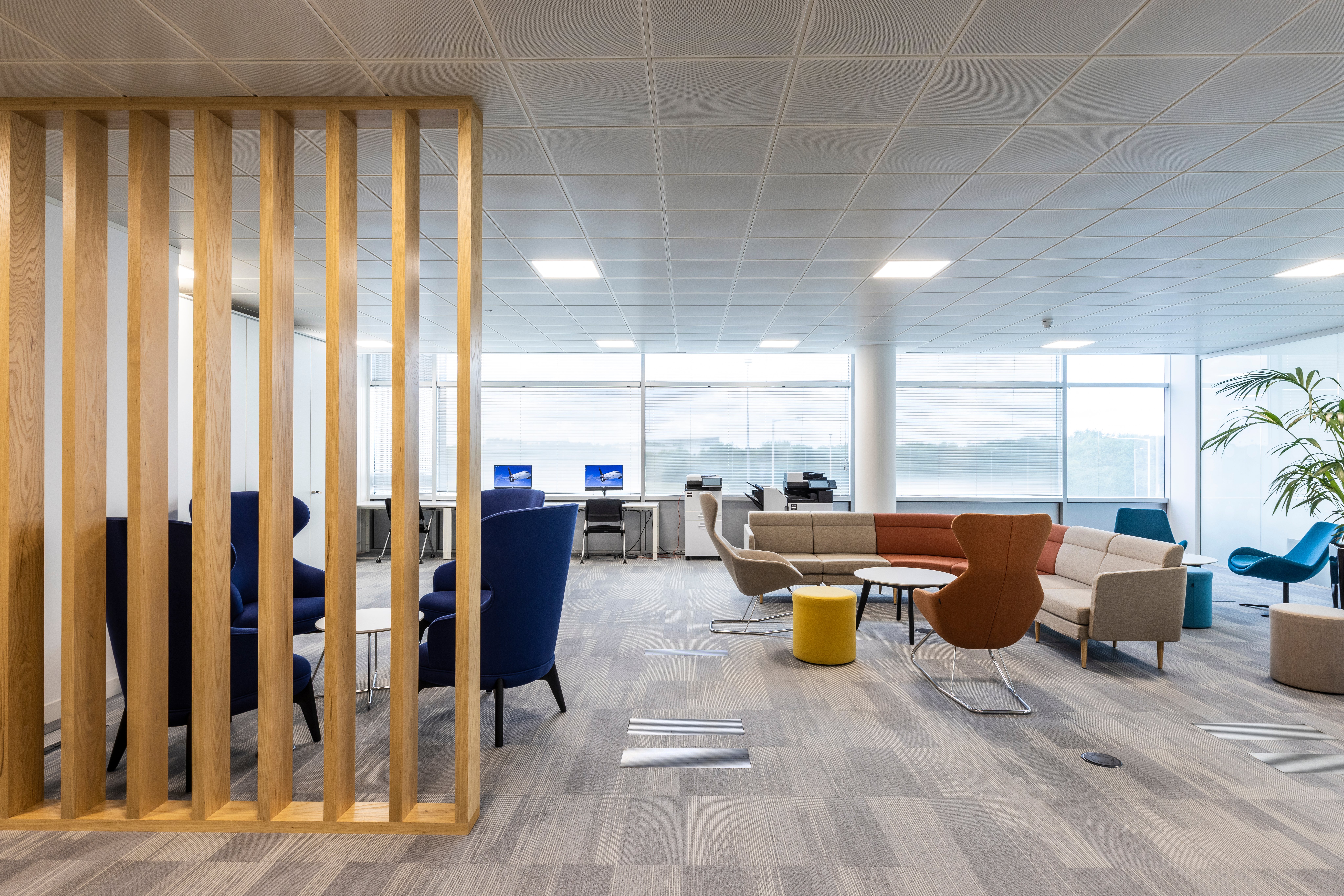
Our work with Atlas Copco is a useful example. The 55,000 sq ft headquarters transformation brought five business divisions together and included office, workshop and operational facilities.
The completed project supported a 30% increase in office occupancy and delivered 40% more workshop capacity.
Those outcomes tell you considerably more about what the project achieved than a collection of finished photographs alone.
A good portfolio should demonstrate what changed for the client, what challenges had to be overcome and how the proposed solution responded to the business.
Find out whether they understand the whole workplace
A headquarters is rarely just a collection of desks and meeting rooms.
It may need to support client visits, demonstrations, training, specialist equipment, secure areas, hybrid working and a growing range of technology.
These things need to work together.
A company might have an excellent design team, but how closely does that team work with the people responsible for technical coordination, cost planning and construction?
At what point are the building's limitations investigated? How are designs tested against the available budget? And who is responsible for resolving conflicts between the different parts of the project?
These are useful questions because many of the problems that emerge during construction began as assumptions made much earlier.
There's also a difference between understanding the design intent and knowing how to deliver it.
A beautifully designed collaboration space isn't particularly useful if the ventilation, acoustics or technology don't support the number of people expected to use it.
You want a partner who understands both what the workplace is supposed to achieve and what it will take to make that happen.
Consider the requirements beyond the immediate project
For larger organisations, it's worth looking beyond the opening day.
Will the workplace need to accommodate growth? Could departments be reorganised? Are there sustainability targets that will influence material selection and building performance? Will the organisation be delivering similar projects at other locations?
These considerations can affect the type of partner you need.
For example, businesses with multiple offices may value a company that can maintain consistent workplace standards while recognising the differences between individual buildings and locations.
Our work with Veeva Systems across London, Paris and Budapest demonstrates how workplace delivery can support a wider organisational identity while responding to the requirements of individual properties.
Sustainability is another area where we'd look for evidence rather than general commitments.
Ask what a potential partner has actually done to reduce waste, retain existing materials or improve building performance. If environmental certification is a project requirement, ask how that will be incorporated into the design and delivery process.
Credentials and management-system certifications can provide useful reassurance, but it's important to understand what they cover. For example, ISO certifications relate to organisational management systems, while BREEAM, WELL and SKA assess different aspects of building or workplace performance.
You should also understand what happens after handover.
A new workplace may need adjustments as employees settle in, particularly if it's introducing different ways of working. Knowing what support will be available after completion can make the transition considerably easier.

Give potential partners something consistent to respond to
One of the simplest ways to compare fit-out companies fairly is to give them the same information.
That doesn't mean producing an enormous tender document before you've even spoken to anyone.
An initial brief covering the business objectives, approximate space requirements, technical constraints, budget expectations and programme can be enough to start a useful conversation.
What's important is that each company understands the same underlying requirements.
Otherwise, you might receive three impressive proposals that are effectively answering three different questions.
And when that happens, comparing them becomes considerably more difficult than it needs to be.
Pay attention to the questions each company asks in return.
A good potential partner should want to understand your people, operations, building and future plans before getting too carried away with the design.
They should also be comfortable challenging parts of the brief.
Sometimes the most useful response isn't an enthusiastic yes. It's explaining why a different approach might deliver a better result.
-1.png?width=1920&height=1080&name=Untitled%20design%20(19)-1.png)
Part 3: Make the final decision with confidence
Meet the people who will actually deliver the project
By the time you've shortlisted two or three companies, their portfolios and presentations might all look fairly convincing.
This is where we'd start looking more closely at the people behind the proposal.
Who will lead the design? Who manages construction? Who is responsible for programme and cost? Who will you speak to when a decision needs to be made?
And, importantly, will those be the people you've already met?
The relationship matters because you're likely to be working closely with this team for months, sometimes through fairly demanding situations.
A project might involve difficult building conditions, changing stakeholder requirements or decisions that need to be made quickly to protect the programme.
You need to feel confident that the team will tell you what's happening, explain your options and work with you when things don't go entirely to plan.
A polished presentation is a good start. Knowing who will answer the phone when something unexpected happens is rather more useful.
.png?width=4320&height=2430&name=Website%20photos%20(5).png)
Ask what concerns them about your project
This is one of the most revealing questions you can ask a potential fit-out partner.
Every substantial project carries some level of risk.
There might be uncertainty around the existing building services, outstanding landlord approvals, specialist equipment lead times or the challenge of keeping employees operational during construction.
An experienced team should be able to identify likely risks and explain how they would investigate or manage them.
If you're presented with a programme that looks unusually straightforward and nobody can identify anything worth checking, it might be worth asking a few more questions.
The aim isn't to find a company that can promise there will never be a problem.
It's to find one that understands where problems could arise and is prepared to deal with them properly.

Compare the actual proposals, not just the final prices
Cost obviously matters.
But there's a reason two fit-out proposals can appear to offer much the same thing at rather different prices.
They may not be based on the same assumptions.
One company might have included technical upgrades that another has excluded. One could have allowed for out-of-hours working or specialist surveys, while another assumes uninterrupted access to the building.
The cheaper proposal might genuinely represent better value. Or it might simply include less.
Before comparing the final figures, look at the scope, exclusions, provisional sums, specifications and programme assumptions.
It's also worth considering how each company approaches value engineering.
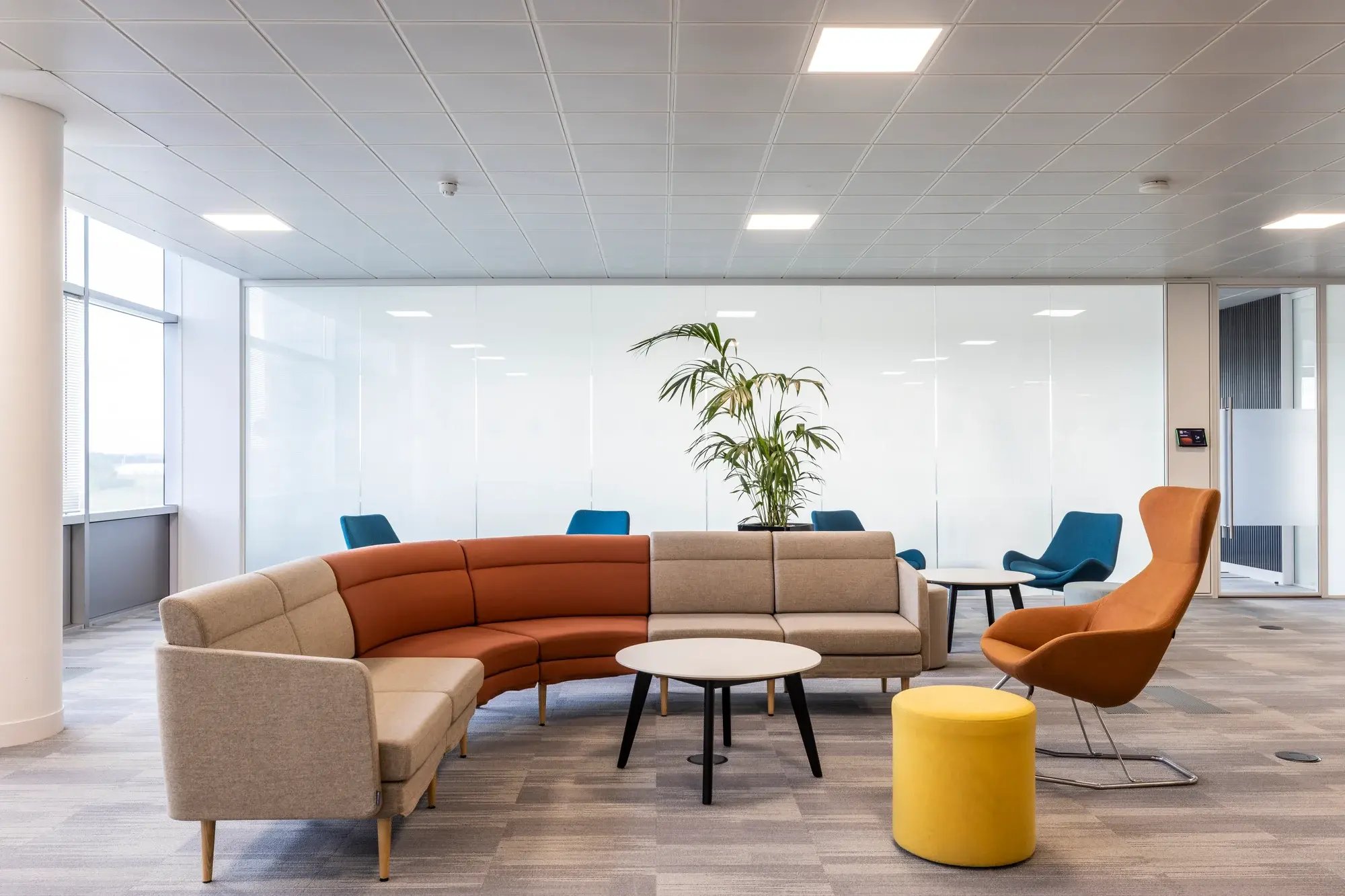
During our refurbishment of Titan Airways House, we identified an opportunity to reuse and reupholster good-quality furniture rather than replace it unnecessarily.
That helped make better use of the available budget while retaining furniture that suited the client's requirements.
It's a useful example of why value shouldn't simply be measured by the lowest initial quote.
The right partner should be prepared to help you spend your budget intelligently, not just spend it.
If you're still establishing a realistic investment range, our Commercial Fit-Out Cost Guide provides a useful starting point.
Understand how they'll work around your business
If you're refurbishing an occupied workplace, business continuity should be a significant part of the final evaluation.
It's easy for a contractor to say the project will be phased around employees.
The more useful question is how.
Where will people work while their department is being refurbished? How will power and data services remain operational? What happens to visitor access? Which activities will need to take place outside normal working hours?
Ask for practical explanations rather than general assurances.
At Titan Airways House, employees continued working on the first floor while the ground floor was being transformed. Some electrical and alarm works began at 3am, while crane activities were scheduled for a Saturday to reduce disruption.
That kind of planning requires a proper understanding of the organisation's operations, not just the construction activities.
We've explored this in more detail in How to Phase an Office Refurbishment Without Disrupting Your Business.
Think about who you'd trust when plans change
Even with a good brief, thorough investigations and a carefully developed programme, some things will change.
A building may reveal something unexpected. A product could become unavailable. A department might need to adjust its requirements.
The important question is how your fit-out partner responds.
Will they raise concerns early? Can they explain the commercial and programme implications? Will they offer workable alternatives rather than simply reporting the problem? And do you feel comfortable having those conversations with them?
When two proposals look very similar, these questions can be what makes the decision clearer.
You aren't just buying a finished workplace. You're choosing the team responsible for getting your organisation there.

A final check before appointing your office fit-out partner
Before making the appointment, you should feel confident about a few things:
- Understanding: Does the company understand what the project needs to achieve for the business?
- Experience: Can it demonstrate relevant experience with similar challenges?
- Delivery: Have you met the people who will actually manage the project?
- Risk: Have the main technical, operational and commercial uncertainties been identified?
- Value: Are you comparing consistent scopes, assumptions and realistic budgets?
- Relationship: Do you trust the team to communicate clearly, challenge decisions constructively and deal with changes?
If you're struggling to answer several of these questions, it might be worth gathering a little more information before committing.
After all, the appointment is a substantial decision. It's worth being confident about more than the presentation.
The right partner should fit your organisation, not the other way around
There isn't one office fit-out company that's right for every organisation.
Some projects require extensive workplace research and change management. Others depend heavily on technical expertise, specialist infrastructure or the ability to deliver complex construction works around an operating business.
What matters is understanding your requirements well enough to recognise which partner can genuinely support them.
That means looking beyond impressive project photographs, asking better questions and taking the time to understand how each company would approach your particular challenges.
It's also about finding people you can work with. Because however well a project is planned, there will be decisions to make, problems to solve and plenty of conversations along the way.
At Habit Action, we believe a successful workplace should reflect the organisation it belongs to, not simply the company that designed and built it.
And that starts with choosing a partner who takes the time to understand the difference.
If you're considering a major refurbishment, relocation or new headquarters, our Office Fit-Out Planning Readiness Assessment can help you understand which decisions need attention before the project progresses.
A good fit-out partner should be able to show you what they've built. A great one should be able to explain why it was right for the business.
FAQs
What should you look for in an office fit-out company?
Look for relevant project experience, technical and workplace design expertise, clear commercial proposals, an experienced delivery team and evidence of how the company has solved problems similar to yours. The right partner should also understand your business objectives and operational requirements.
How many office fit-out companies should you shortlist?
There isn't a fixed number, but a shortlist of two or three well-matched companies can provide a manageable basis for comparison. The important thing is to select businesses that are genuinely capable of delivering your requirements, rather than inviting a large number of unsuitable companies.
Should you choose the cheapest office fit-out company?
Not automatically. Different quotes may include different scopes, assumptions and exclusions. Compare what is actually being delivered, the technical risks, programme and evidence of capability before deciding which proposal offers the best overall value.
When should you involve an office fit-out partner?
Ideally, while there is still scope to influence the brief, property suitability, technical requirements, budget and programme. Early involvement can help identify potential issues before designs become difficult or expensive to change.
What questions should you ask before appointing a fit-out partner?
Ask who will deliver the project, what similar challenges they've managed, which risks they've identified, how the design will be tested against the budget and programme, and how they'll protect business operations during construction. It's also worth understanding their approach to aftercare.
Is design and build better than appointing designers and contractors separately?
Both approaches can work. An integrated design and build arrangement can provide a clearer line of accountability and earlier coordination between design, cost and construction. Separately appointed teams may offer different advantages depending on procurement priorities and governance. The right approach depends on the organisation and the project.
.png)